Pettersson Emelie, Sjölund Marie, Wallgren Torun, Lind Eva Osterman, Höglund Johan, Wallgren Per
National Veterinary Institute, SVA, 751 89, Uppsala, Sweden.
Department of Clinical Sciences, Swedish University of Agricultural Sciences, Box 7054, 750 07, Uppsala, Sweden.
Porcine Health Manag. 2021 Jan 20;7(1):12. doi: 10.1186/s40813-021-00193-3.
Internal parasites are common in pigs worldwide and may induce clinical disease or subclinical infections with negative effects such as poor weight gain and reduced welfare, which in turn affect productivity. Effective parasite control to reduce the negative impact of parasitic infections demands a combination of antiparasitic drugs as well as various hygiene and biosecurity practices. The aim of this study was to obtain information on current management practices and parasite control routines used on Swedish pig farms using an online questionnaire.
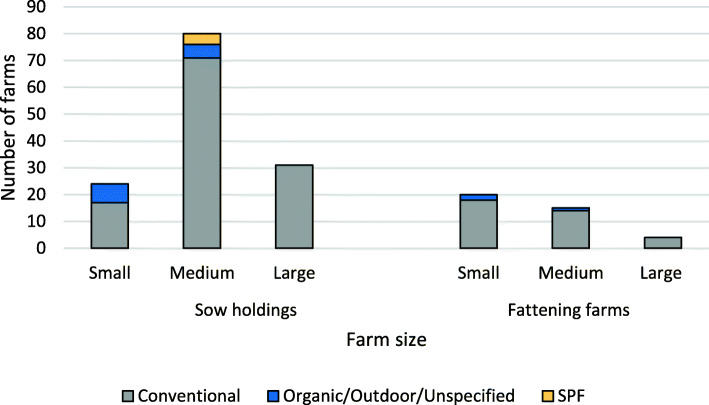
Antiparasitic drugs were used on 69% of the farms routinely and were mainly administered to sows just prior to farrowing. Less than 5% of the herds conducted faecal analysis for parasites. Batchwise, age segregated rearing was common and overall, it was practiced for piglets, growers, and fatteners on 88, 80 and 75% of the farms, respectively. Large and medium sized farms appeared to apply stricter hygiene and biosecurity measures to the growing pigs compared to small farms. Dry sows were mainly housed in groups on deep litter straw beds and cleaning, as well as disinfection, between each group was less common compared to what was practiced for growing pigs. Outdoor access was rare and only occurred on organic and small farms. Most of the farms, 54, 74 and 82% of small, medium, and large sized herds respectively, reported to have less than 5% white spot lesions, caused by migrating A. suum larvae, registered at slaughter.
Several risk factors for parasite infections, such as bedding material, group housing and solid floors, are mandatory requirements by national law. However, it was evident from this study that although strategic hygiene and biosecurity practices appeared common, they were not practiced in all herds and less so for dry sows. Antiparasitic drugs were used frequently and mainly through routine prophylactic treatments without prior testing for parasites. A holistic approach is necessary when designing efficient parasite control programs, and it is essential that management factors and routine monitoring of parasites are given attention. This to achieve efficient parasite control and reduce the risk of unnecessary use of antiparasitic drugs.
内寄生虫在全球范围内的猪群中普遍存在,可能引发临床疾病或亚临床感染,产生诸如体重增加缓慢和福利降低等负面影响,进而影响生产力。有效的寄生虫控制以减少寄生虫感染的负面影响需要抗寄生虫药物以及各种卫生和生物安全措施相结合。本研究的目的是通过在线问卷获取瑞典养猪场当前使用的管理措施和寄生虫控制程序的信息。
69%的农场常规使用抗寄生虫药物,主要在母猪分娩前给药。不到5%的猪群进行寄生虫粪便分析。分批、按年龄分阶段饲养很常见,总体而言,分别有88%、80%和75%的农场对仔猪、生长猪和育肥猪采用这种饲养方式。与小型农场相比,大中型农场似乎对生长猪采取了更严格的卫生和生物安全措施。空怀母猪主要成群饲养在厚垫草床上,与生长猪相比,每组之间的清洁和消毒不太常见。户外放养很少见,仅在有机农场和小型农场出现。大多数农场,分别有54%、74%和82%的小型、中型和大型猪群报告称,屠宰时由猪蛔虫幼虫移行引起的白斑病变少于5%。
一些寄生虫感染的风险因素,如垫料、群养和实心地面,是国家法律的强制性要求。然而,从本研究中可以明显看出,尽管战略性的卫生和生物安全措施似乎很常见,但并非所有猪群都实施了这些措施,空怀母猪实施得更少。抗寄生虫药物使用频繁,主要通过常规预防性治疗,且未事先进行寄生虫检测。在设计有效的寄生虫控制方案时,需要采取整体方法,必须关注管理因素和寄生虫的常规监测。这对于实现有效的寄生虫控制和降低不必要使用抗寄生虫药物的风险至关重要。