Fell Shaun, Wang Zhuo, Blanchard Andy, Nanthakumar Carmel, Griffin Martin
School of Life and Health Sciences, Aston University, Birmingham, UK.
Fibrosis Discovery Performance Unit, Respiratory Therapy Area, Medicines Research Centre, GlaxoSmithKline R and D, Stevenage, UK.
Amino Acids. 2021 Feb;53(2):205-217. doi: 10.1007/s00726-020-02938-w. Epub 2021 Jan 21.
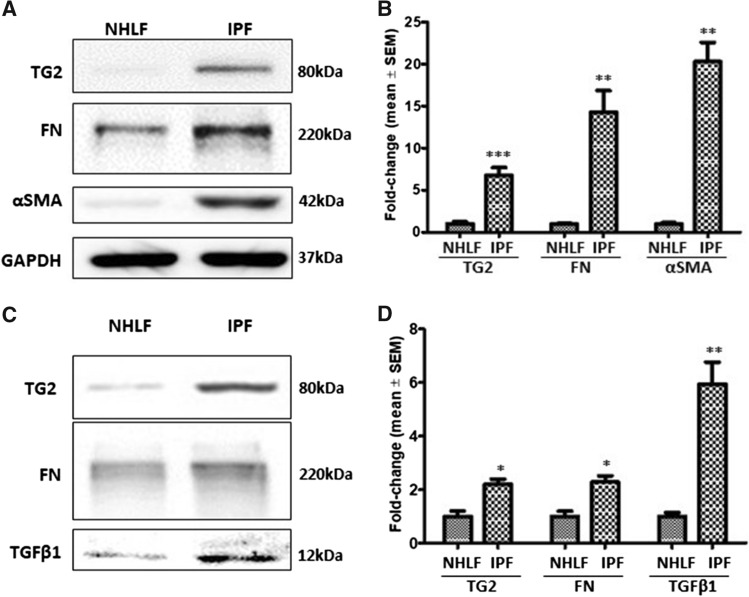
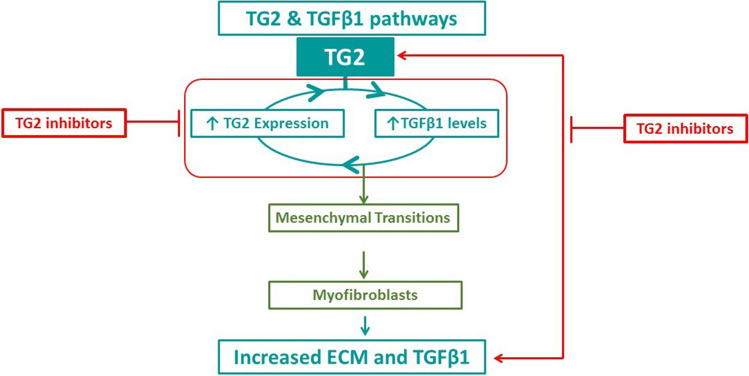
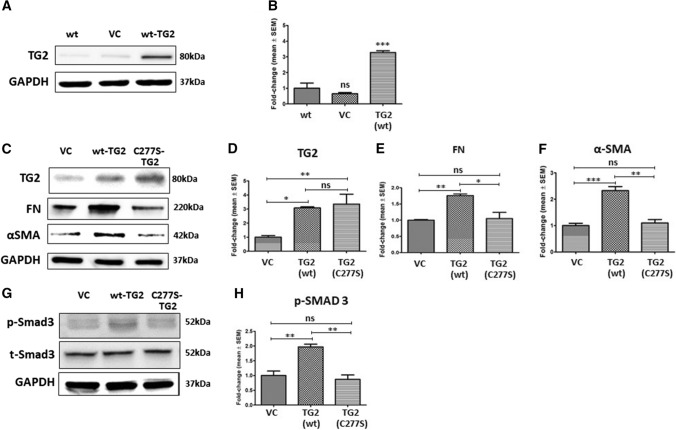
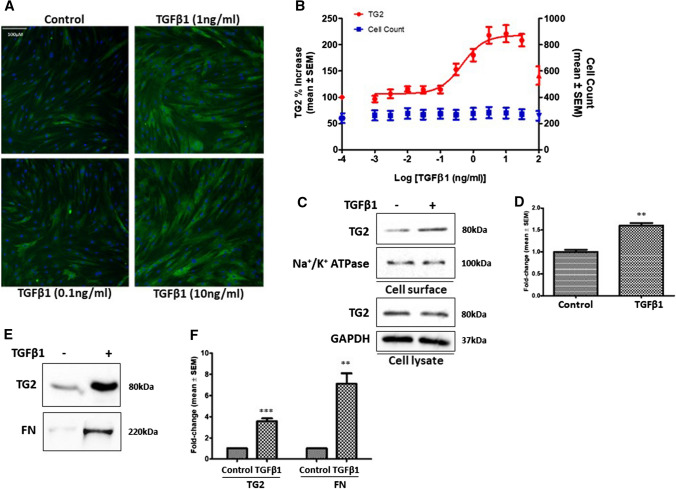
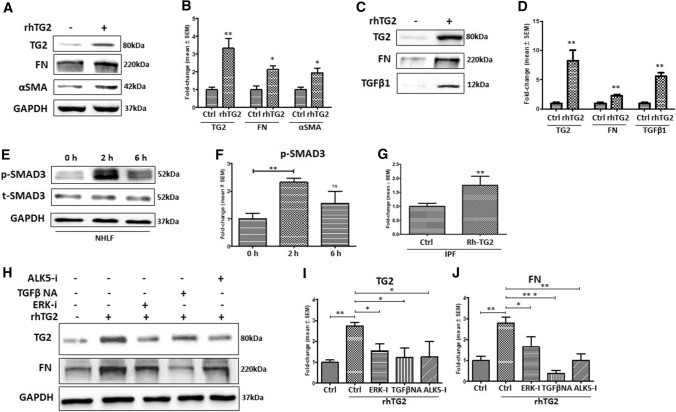
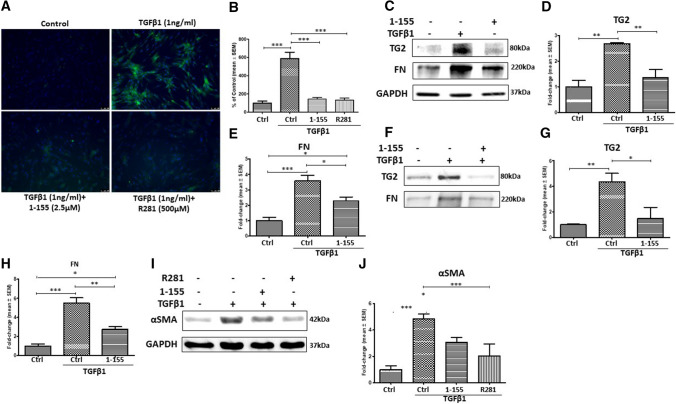
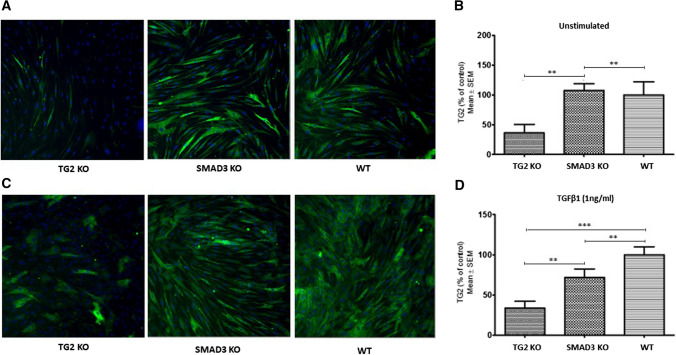
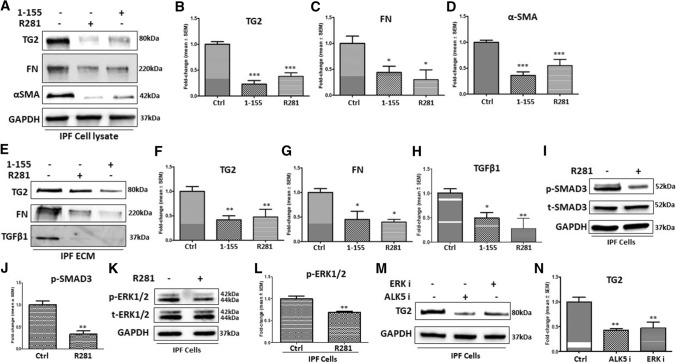
This study investigates the effects of a site-directed TG2-selective inhibitor on the lung myofibroblast phenotype and ECM deposition to elucidate TG2 as a novel therapeutic target in idiopathic pulmonary fibrosis (IPF)-an incurable progressive fibrotic disease. IPF fibroblasts showed increased expression of TG2, α smooth muscle actin (αSMA) and fibronectin (FN) with increased extracellular TG2 and transforming growth factor β1 (TGFβ1) compared to normal human lung fibroblasts (NHLFs) which do not express αSMA and express lower levels of FN. The myofibroblast phenotype shown by IPF fibroblasts could be reversed by selective TG2 inhibition with a reduction in matrix FN and TGFβ1 deposition. TG2 transduction or TGFβ1 treatment of NHLFs led to a comparable phenotype to that of IPF fibroblasts which was reversible following selective TG2 inhibition. Addition of exogenous TG2 to NHLFs also induced the myofibroblast phenotype by a mechanism involving TGFβ1 activation which could be ameliorated by selective TG2 inhibition. SMAD3-deleted IPF fibroblasts via CRISPR-cas9 genome editing, showed reduced TG2 protein levels following TGFβ1 stimulation. This study demonstrates a key role for TG2 in the induction of the myofibroblast phenotype and shows the potential for TG2-selective inhibitors as therapeutic agents for the treatment of fibrotic lung diseases like IPF.
本研究调查了一种位点特异性转谷氨酰胺酶2(TG2)选择性抑制剂对肺肌成纤维细胞表型和细胞外基质(ECM)沉积的影响,以阐明TG2作为特发性肺纤维化(IPF,一种无法治愈的进行性纤维化疾病)的新型治疗靶点。与不表达α平滑肌肌动蛋白(αSMA)且纤连蛋白(FN)表达水平较低的正常人肺成纤维细胞(NHLFs)相比,IPF成纤维细胞中TG2、αSMA和FN的表达增加,细胞外TG2和转化生长因子β1(TGFβ1)水平升高。IPF成纤维细胞所呈现的肌成纤维细胞表型可通过选择性抑制TG2来逆转,同时基质FN和TGFβ1沉积减少。对NHLFs进行TG2转导或TGFβ1处理会导致其表型与IPF成纤维细胞相当,而在选择性抑制TG2后该表型可逆转。向NHLFs中添加外源性TG2也通过涉及TGFβ1激活的机制诱导了肌成纤维细胞表型,而选择性抑制TG2可改善这种情况。通过CRISPR-cas9基因组编辑缺失SMAD3的IPF成纤维细胞在TGFβ1刺激后TG2蛋白水平降低。本研究证明了TG2在诱导肌成纤维细胞表型中起关键作用,并表明TG2选择性抑制剂作为治疗IPF等纤维化肺病治疗药物的潜力。