Heart Center, Kuopio University Hospital and University of Eastern Finland, Kuopio, Finland.
Department of Acute Internal Medicine, Turku University Hospital, Turku, Finland.
Ann Med. 2021 Dec;53(1):287-294. doi: 10.1080/07853890.2021.1875499.
Women with atrial fibrillation (AF) may be treated less actively with oral anticoagulation (OAC) than men.
We assessed sex differences in the implementation of stroke risk stratification with CHADS and CHADS-VASc scores and reasons not to use OAC in 1747 AF patients suffering their first cerebrovascular event after the AF diagnosis.
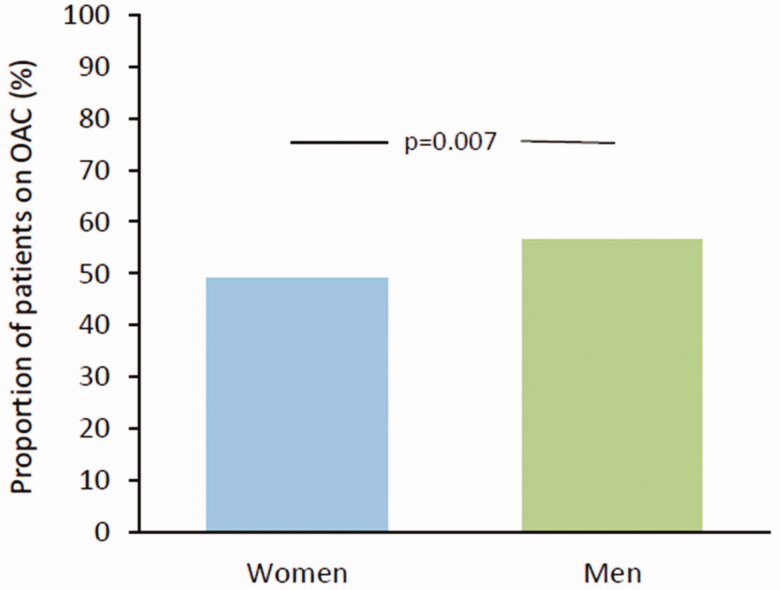
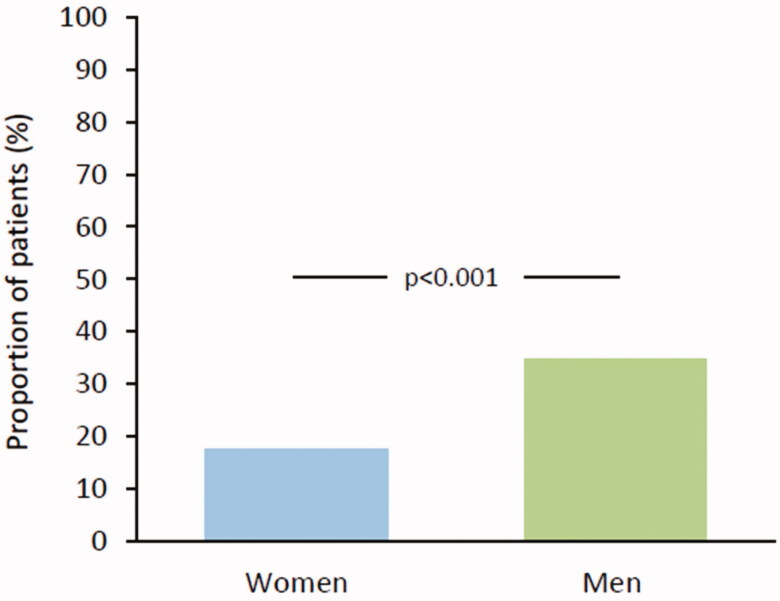
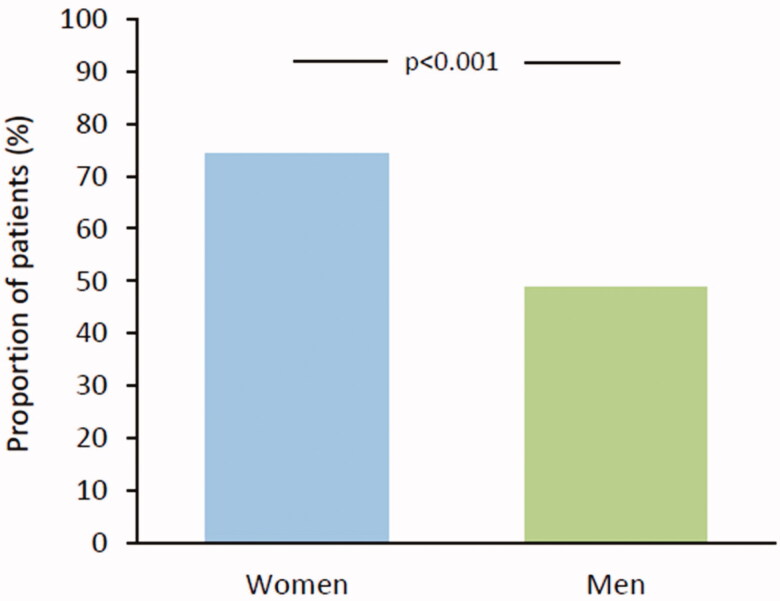
Women were older and had more often a high stroke risk (CHADS/CHADS-VASc ≥2) than men ( < .001). On admission, 46.4% of women and 48.2% of men were on OAC with no sex difference ( = .437). However, of patients without OAC, 74.4% of women and 49.5% of men should have been on OAC based on CHADS/CHADS-VASc ≥2 ( < .001). Conversely, 34.8% of men and 17.5% of women on OAC had a low or moderate risk (CHADS/CHADS-VASc 0-1, < .001). A valid reason to omit OAC was reported in 38.6% of patients and less often in women ( < .001).
OAC was underused in high-risk AF patients, particularly women, but prescribed often in men with low or moderate stroke risk. Reasons for omitting OAC treatment were poorly reported, particularly for women. KEY MESSAGE Women were at higher stroke risk, but were less often treated with oral anticoagulation (OAC). Men were more often on OAC at low or moderate stroke risk. Reasons for omitting guideline based OAC were poorly reported, particularly for women.
患有心房颤动(AF)的女性可能比男性接受的口服抗凝治疗(OAC)更为保守。
我们评估了 1747 名首次发生 AF 后脑血管事件的 AF 患者,评估了 CHADS 和 CHADS-VASc 评分在卒中风险分层中的性别差异,以及不使用 OAC 的原因。
女性年龄较大,且卒中风险较高(CHADS/CHADS-VASc≥2)的比例高于男性( < .001)。入院时,46.4%的女性和 48.2%的男性正在服用 OAC,但性别差异无统计学意义( = .437)。然而,在未服用 OAC 的患者中,74.4%的女性和 49.5%的男性应根据 CHADS/CHADS-VASc≥2 来使用 OAC( < .001)。相反,34.8%的男性和 17.5%的女性服用 OAC 但风险较低或中等(CHADS/CHADS-VASc 0-1, < .001)。38.6%的患者报告了一个有效的不使用 OAC 的理由,女性的比例较低( < .001)。
高风险 AF 患者(尤其是女性)OAC 的使用不足,但低或中度卒中风险的男性却经常使用 OAC。不使用 OAC 治疗的原因报告不充分,尤其是女性。
女性卒中风险较高,但接受口服抗凝治疗(OAC)的比例较低。男性在低或中度卒中风险时更常使用 OAC。报告的不使用基于指南的 OAC 的理由不充分,尤其是女性。