Department of Pathology, Microbiology, and Immunology, Vanderbilt University Medical Center, Nashville, United States of America.
PLoS Pathog. 2021 Jan 21;17(1):e1009190. doi: 10.1371/journal.ppat.1009190. eCollection 2021 Jan.
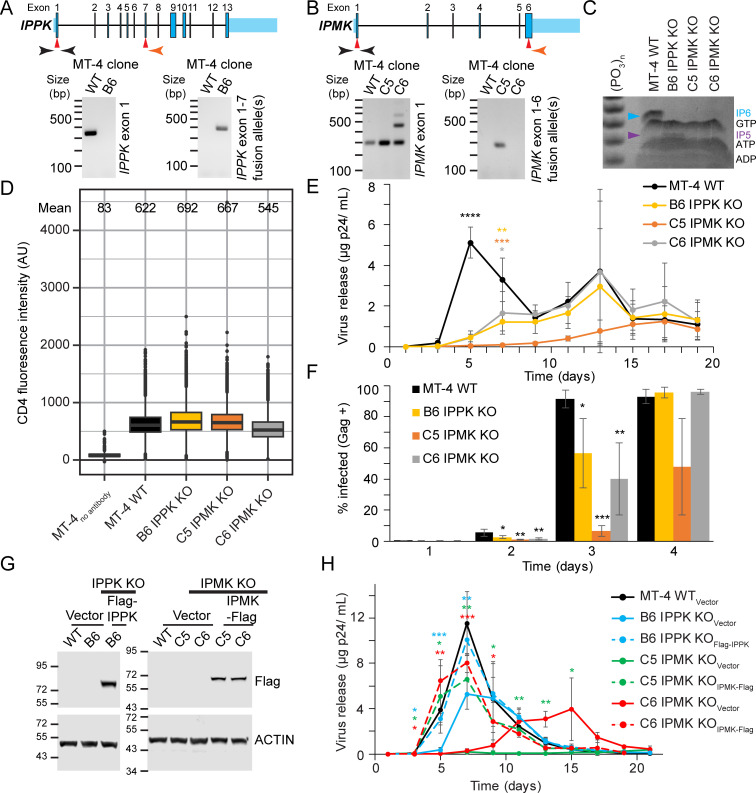
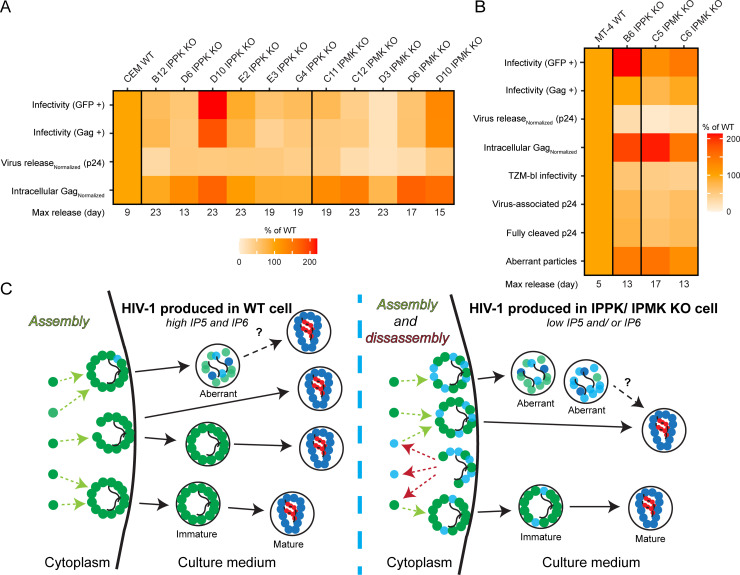
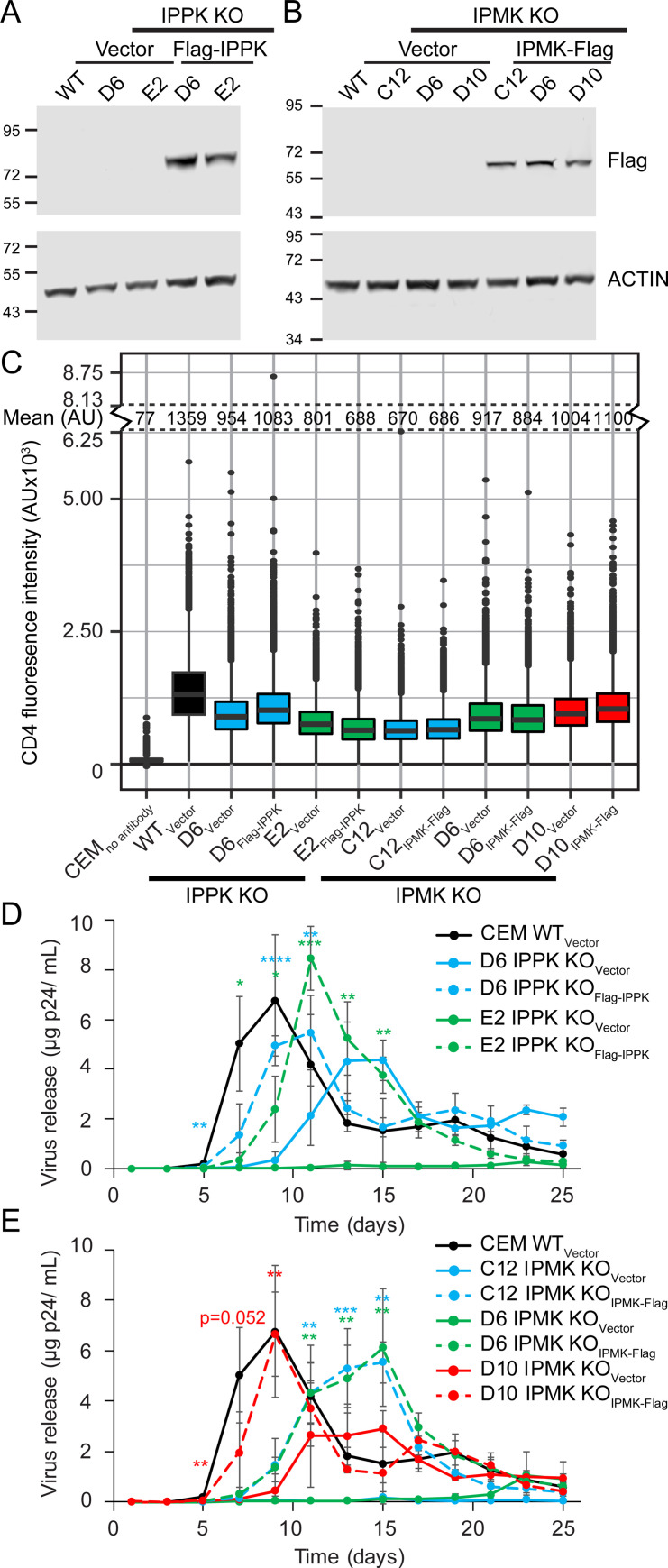
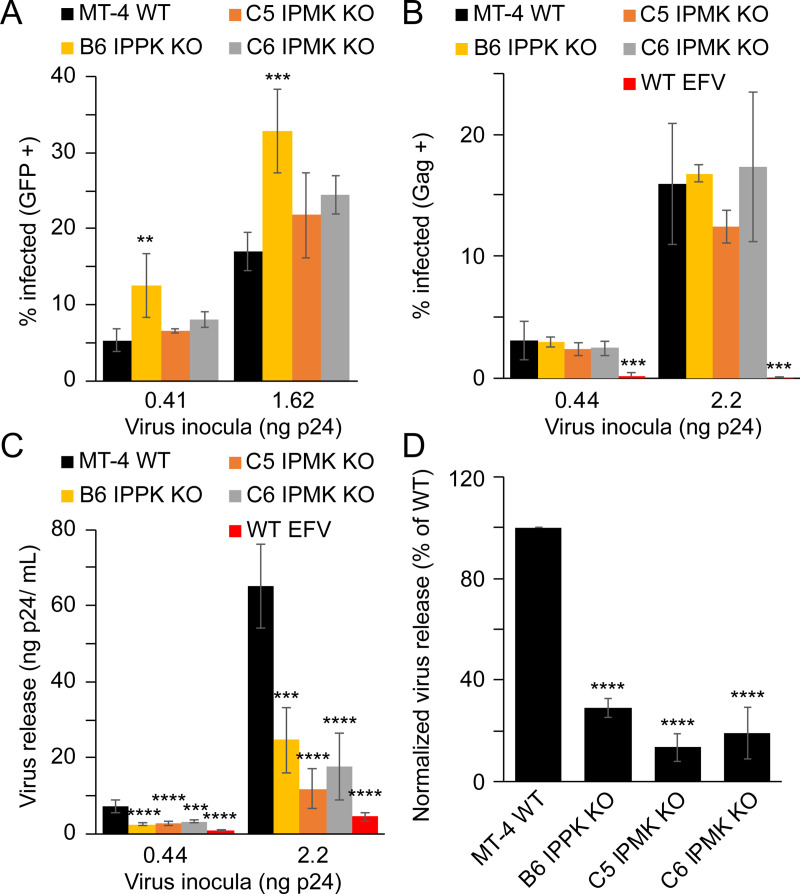
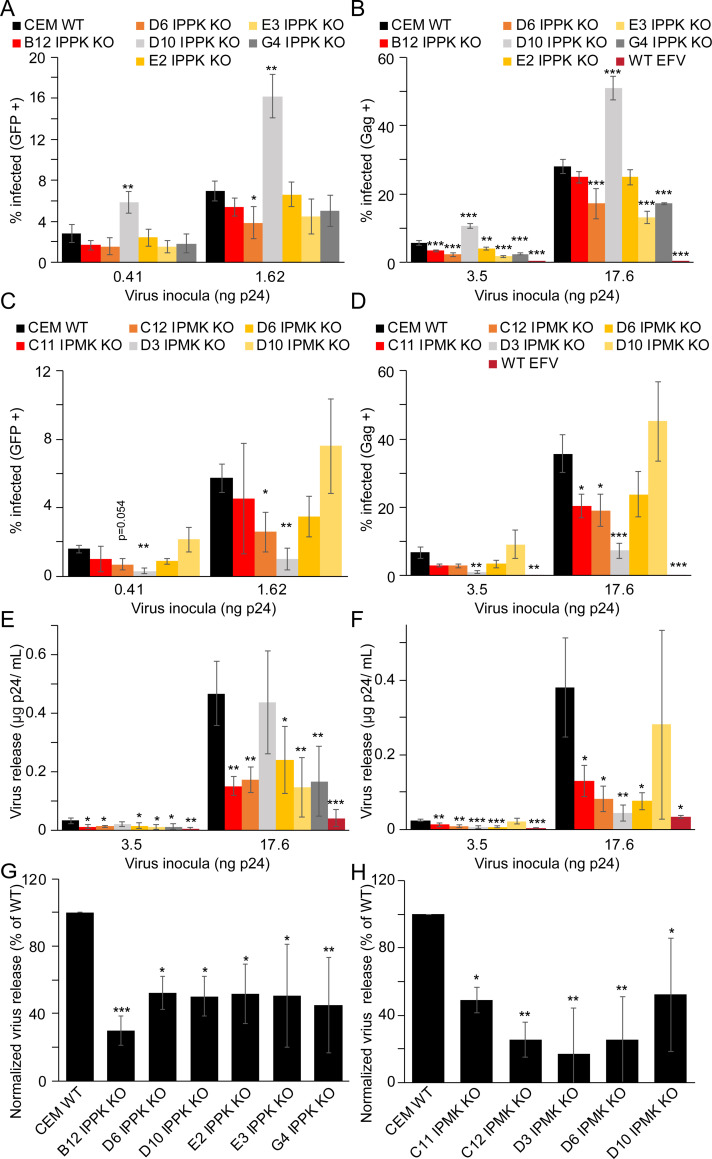
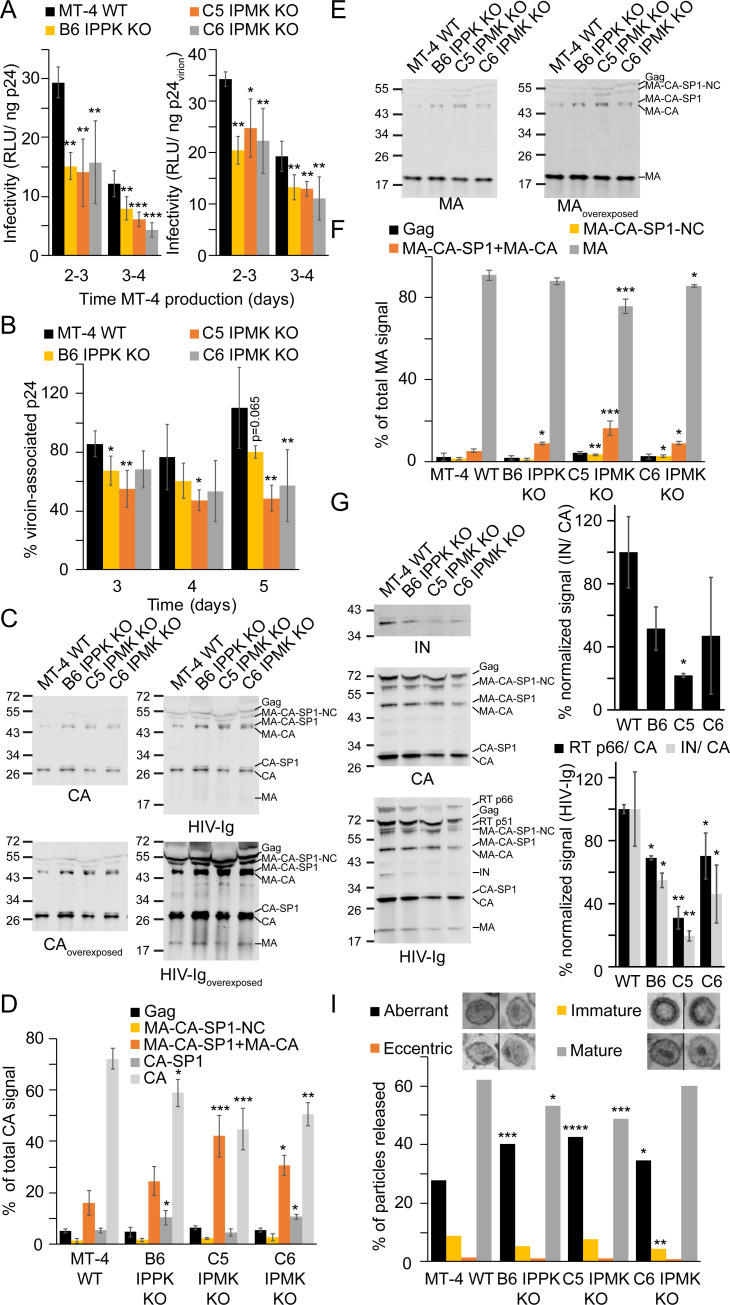
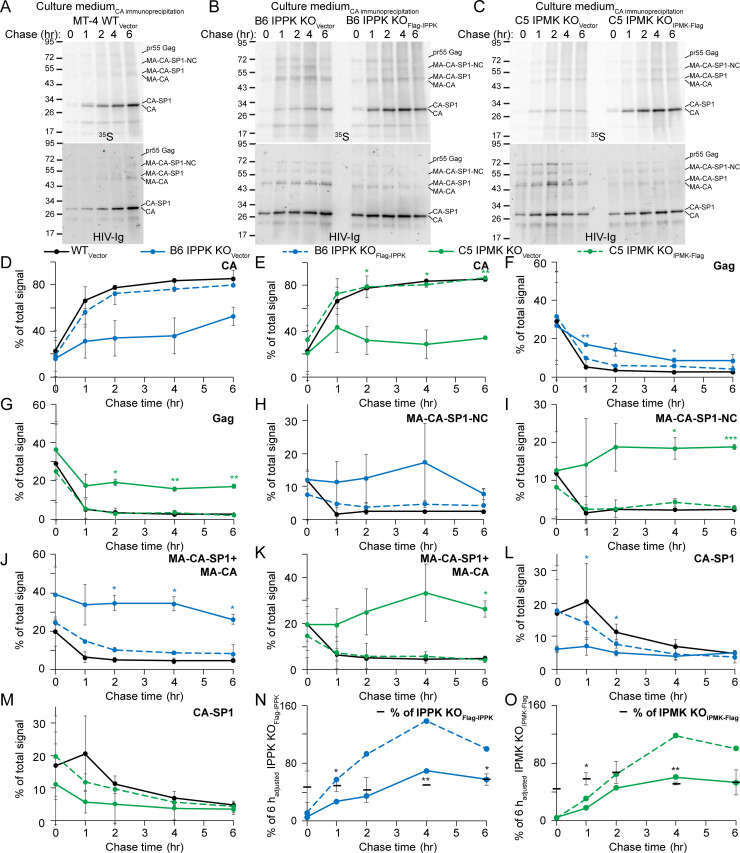
Gag polymerization with viral RNA at the plasma membrane initiates HIV-1 assembly. Assembly processes are inefficient in vitro but are stimulated by inositol (1,3,4,5,6) pentakisphosphate (IP5) and inositol hexakisphosphate (IP6) metabolites. Previous studies have shown that depletion of these inositol phosphate species from HEK293T cells reduced HIV-1 particle production but did not alter the infectivity of the resulting progeny virions. Moreover, HIV-1 substitutions bearing Gag/CA mutations ablating IP6 binding are noninfectious with destabilized viral cores. In this study, we analyzed the effects of cellular depletion of IP5 and IP6 on HIV-1 replication in T cells in which we disrupted the genes encoding the kinases required for IP6 generation, IP5 2-kinase (IPPK) and Inositol Polyphosphate Multikinase (IPMK). Knockout (KO) of IPPK from CEM and MT-4 cells depleted cellular IP6 in both T cell lines, and IPMK disruption reduced the levels of both IP5 and IP6. In the KO lines, HIV-1 spread was delayed relative to parental wild-type (WT) cells and was rescued by complementation. Virus release was decreased in all IPPK or IPMK KO lines relative to WT cells. Infected IPMK KO cells exhibited elevated levels of intracellular Gag protein, indicative of impaired particle assembly. IPMK KO compromised virus production to a greater extent than IPPK KO suggesting that IP5 promotes HIV-1 particle assembly in IPPK KO cells. HIV-1 particles released from infected IPPK or IPMK KO cells were less infectious than those from WT cells. These viruses exhibited partially cleaved Gag proteins, decreased virion-associated p24, and higher frequencies of aberrant particles, indicative of a maturation defect. Our data demonstrate that IP6 enhances the quantity and quality of virions produced from T cells, thereby preventing defects in HIV-1 replication.
在质膜上用病毒 RNA 进行 Gag 聚合作用,从而引发 HIV-1 组装。体外组装过程效率低下,但可被肌醇(1,3,4,5,6)五磷酸(IP5)和肌醇六磷酸(IP6)代谢物刺激。先前的研究表明,从 HEK293T 细胞中耗尽这些肌醇磷酸盐会降低 HIV-1 颗粒的产生,但不会改变产生的后代病毒颗粒的感染力。此外,带有 Gag/CA 突变的 HIV-1 取代物不能感染具有不稳定病毒核心的 IP6 结合的病毒。在这项研究中,我们分析了细胞中 IP5 和 IP6 的耗竭对感染了 HIV-1 的 T 细胞中的 HIV-1 复制的影响,我们破坏了产生 IP6 的激酶所需的基因,即 IP5 2-激酶(IPPK)和肌醇多磷酸激酶(IPMK)。在 CEM 和 MT-4 细胞中敲除 IPPK 会耗尽这两种 T 细胞系中的细胞内 IP6,而 IPMK 破坏则降低了 IP5 和 IP6 的水平。在 KO 系中,HIV-1 的传播相对于亲本野生型(WT)细胞延迟,并且通过互补得到挽救。与 WT 细胞相比,所有 IPPK 或 IPMK KO 系中的病毒释放均减少。感染的 IPMK KO 细胞表现出升高的细胞内 Gag 蛋白水平,表明颗粒组装受损。与 IPPK KO 相比,IPMK KO 对病毒产生的影响更大,这表明 IP5 在 IPPK KO 细胞中促进 HIV-1 颗粒组装。从感染的 IPPK 或 IPMK KO 细胞释放的 HIV-1 颗粒比从 WT 细胞释放的 HIV-1 颗粒的感染力更低。这些病毒表现出部分切割的 Gag 蛋白、减少的病毒相关 p24 以及更高频率的异常颗粒,表明成熟缺陷。我们的数据表明,IP6 可增强从 T 细胞产生的病毒颗粒的数量和质量,从而防止 HIV-1 复制的缺陷。