Lordo Matthew R, Scoville Steven D, Goel Akul, Yu Jianhua, Freud Aharon G, Caligiuri Michael A, Mundy-Bosse Bethany L
Biomedical Sciences Graduate Program, Medical Scientist Training Program, Columbus, OH 43210, USA.
Comprehensive Cancer Center, The Ohio State University, Columbus, OH 43210, USA.
Cancers (Basel). 2021 Jan 17;13(2):320. doi: 10.3390/cancers13020320.
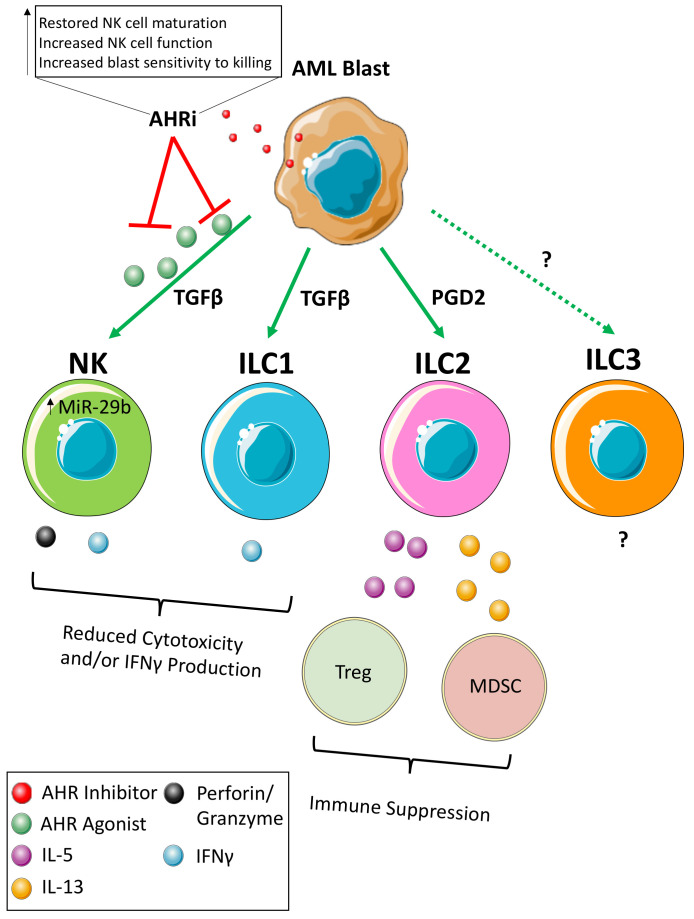
Over the past 50 years, few therapeutic advances have been made in treating acute myeloid leukemia (AML), an aggressive form of blood cancer, despite vast improvements in our ability to classify the disease. Emerging evidence suggests the immune system is important in controlling AML progression and in determining prognosis. Natural killer (NK) cells are important cytotoxic effector cells of the innate lymphoid cell (ILC) family that have been shown to have potent anti-leukemic functions. Recent studies are now revealing impairment or dysregulation of other ILCs in various types of cancers, including AML, which limits the effectiveness of NK cells in controlling cancer progression. NK cell development and function are inhibited in AML patients, which results in worse clinical outcomes; however, the specific roles of other ILC populations in AML are just now beginning to be unraveled. In this review, we summarize what is known about the role of ILC populations in AML.
在过去50年里,尽管我们对急性髓系白血病(AML,一种侵袭性血癌)的分类能力有了巨大提升,但在治疗方面却鲜有进展。新出现的证据表明,免疫系统在控制AML进展和决定预后方面很重要。自然杀伤(NK)细胞是固有淋巴细胞(ILC)家族重要的细胞毒性效应细胞,已被证明具有强大的抗白血病功能。最近的研究发现,包括AML在内的各种癌症中,其他ILC存在功能受损或失调的情况,这限制了NK细胞在控制癌症进展方面的有效性。AML患者中NK细胞的发育和功能受到抑制,导致临床预后更差;然而,其他ILC群体在AML中的具体作用才刚刚开始被揭示。在这篇综述中,我们总结了目前已知的ILC群体在AML中的作用。