Chen Ya-Fei, Zhan Qi, Wu Chen-Zhou, Yuan Yi-Hang, Chen Wen, Yu Fan-Yuan, Li Yi, Li Long-Jiang
State Key Laboratory of Oral Diseases and National Clinical Research Center for Oral Diseases, West China Hospital of Stomatology, Sichuan University, Chengdu, China.
Department of Head and Neck Oncology, West China Hospital of Stomatology, Sichuan University, Chengdu, China.
Diabetes Ther. 2021 May;12(5):1249-1278. doi: 10.1007/s13300-021-01000-6. Epub 2021 Jan 22.
The question of whether periodontal therapy is an effective strategy for achieving glycemic control in people with type 2 diabetes mellitus (T2DM) and periodontitis continues to be open to debate. To clarify this issue, we conducted a systematic review and meta-analysis.
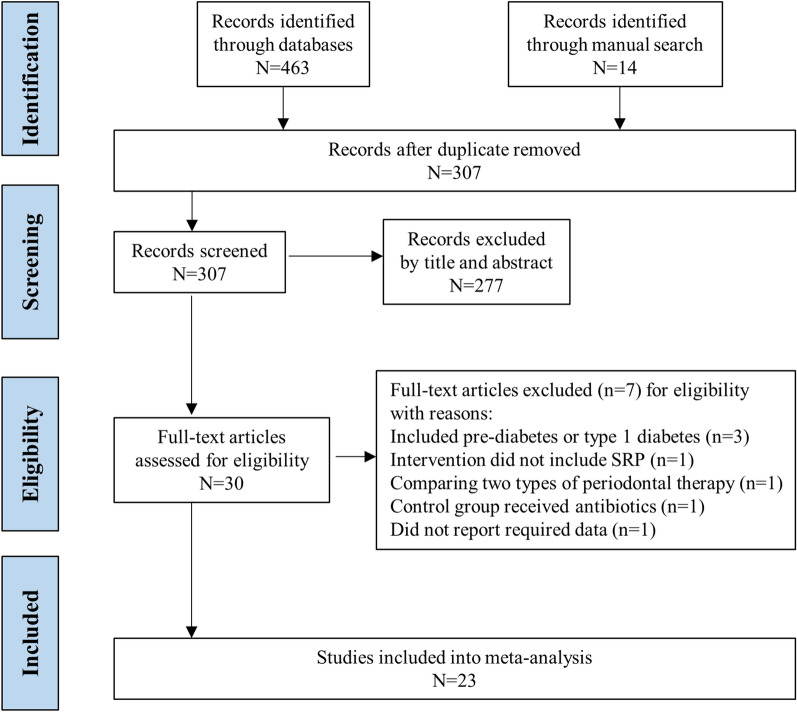
A systematic literature search of randomized controlled trials (RCTs) was carried out by searching four electronic databases and four journals up to April 2020. RCTs that evaluated the effect of periodontal therapy on glycemic control in people with T2DM were included.
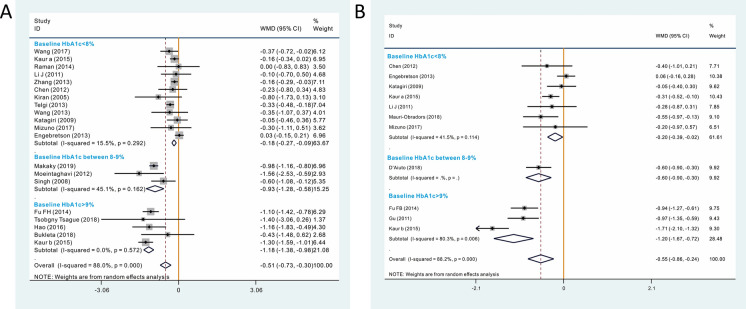
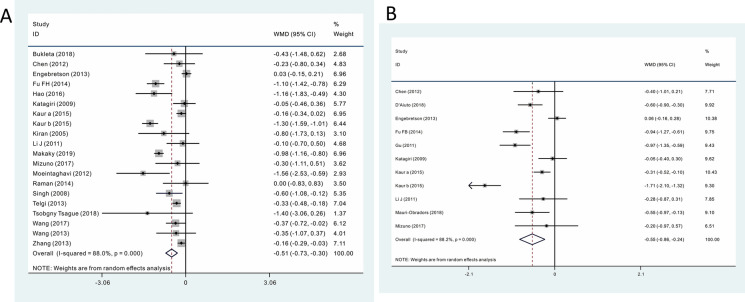
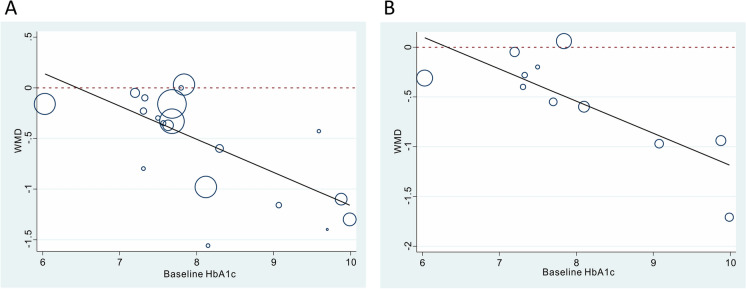
A total of 23 RCTs were included in this systematic review and meta-analysis. We found that after 3 and 6 months, periodontal therapy could significantly reduce glycosylated hemoglobin (HbA1c) level (3-month: weighted mean difference [WMD] - 0.514, 95% confidence interval [CI] - 0.730, - 0.298, p = 0.000; 6-month: WMD - 0.548, 95% CI - 0.859, - 0.238, p = 0.000). However, huge heterogeneity existed. Further analyses on 11 potential sources of heterogeneity found that baseline HbA1c of the included studies was the most significant factor causing heterogeneity. The benefit of periodontal therapy on glycemic control was much more obvious in studies with a higher baseline HbA1c level than in those with a lower baseline HbA1c level.
Periodontal therapy significantly contributed to glycemic control in T2DM patients, especially in patients with higher baseline HbA1c level.
牙周治疗是否是2型糖尿病(T2DM)合并牙周炎患者实现血糖控制的有效策略这一问题仍存在争议。为了阐明这一问题,我们进行了一项系统评价和荟萃分析。
通过检索四个电子数据库和四本期刊,对截至2020年4月的随机对照试验(RCT)进行系统文献检索。纳入评估牙周治疗对T2DM患者血糖控制效果的RCT。
本系统评价和荟萃分析共纳入23项RCT。我们发现,在3个月和6个月时,牙周治疗可显著降低糖化血红蛋白(HbA1c)水平(3个月时:加权平均差[WMD]-0.514,95%置信区间[CI]-0.730,-0.298,p=0.000;6个月时:WMD -0.548,95% CI -0.859,-0.238,p=0.000)。然而,存在巨大的异质性。对11个潜在异质性来源的进一步分析发现,纳入研究的基线HbA1c是导致异质性的最主要因素。与基线HbA1c水平较低的研究相比,牙周治疗对血糖控制的益处在基线HbA1c水平较高的研究中更为明显。
牙周治疗对T2DM患者的血糖控制有显著作用,尤其是对基线HbA1c水平较高的患者。