Almouhanna Fadi, Blagojevic Biljana, Can Suzan, Ghanem Ali, Wölfl Stefan
Institute of Pharmacy and Molecular Biotechnology, Heidelberg University, Im Neuenheimer Feld 364, 69120, Heidelberg, Germany.
Cancer Metab. 2021 Jan 22;9(1):5. doi: 10.1186/s40170-021-00239-8.
Aerobic glycolysis, discovered by Otto Warburg, is a hallmark of cancer metabolism even though not yet fully understood. The low activity of the cancerous pyruvate kinase isozyme (M2) is thought to play an important role by facilitating the conversion of glycolytic intermediates to other anabolic pathways to support tumors' high proliferation rate.
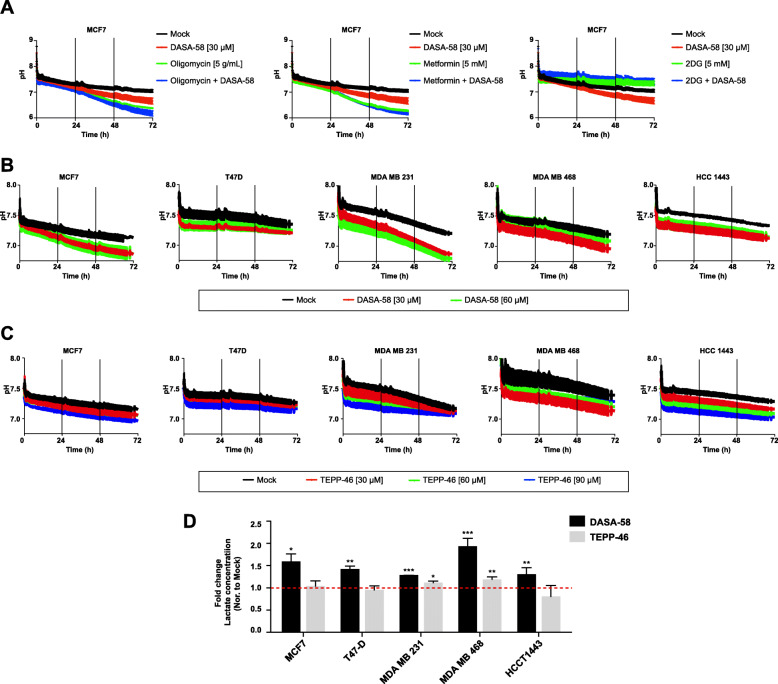
Five breast cancer cell lines representing different molecular subtypes were used in this study where real time measurements of cellular bioenergetics and immunoblotting analysis of energy- and nutrient-sensing pathways were employed to investigate the potential effects of PKM2 allosteric activator (DASA-58) in glucose rewiring.
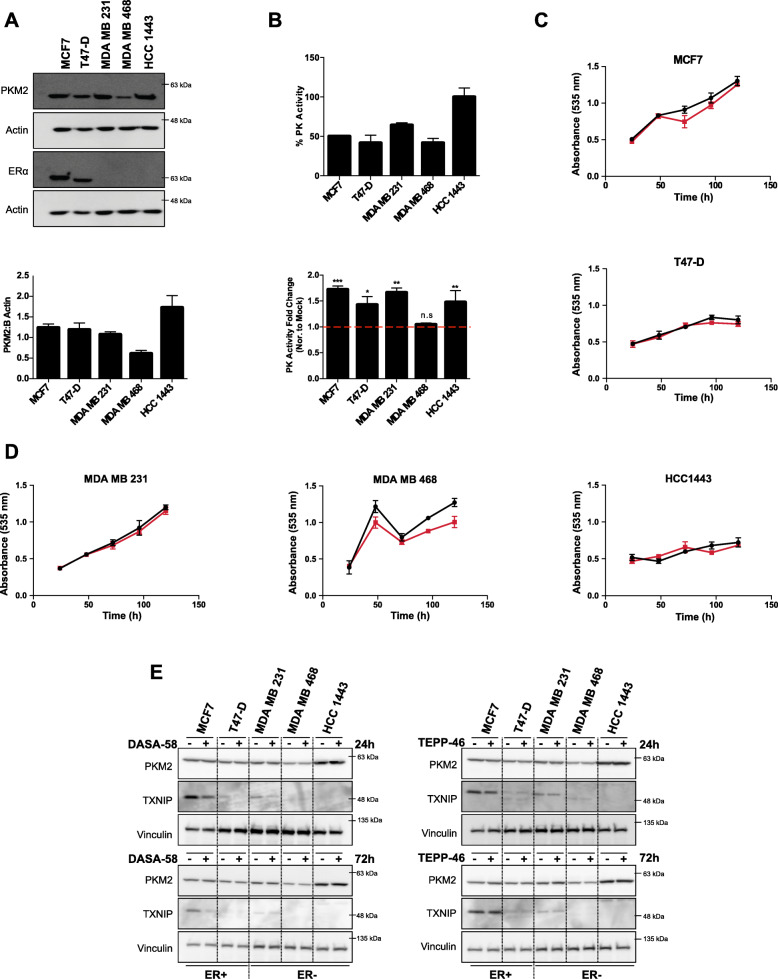
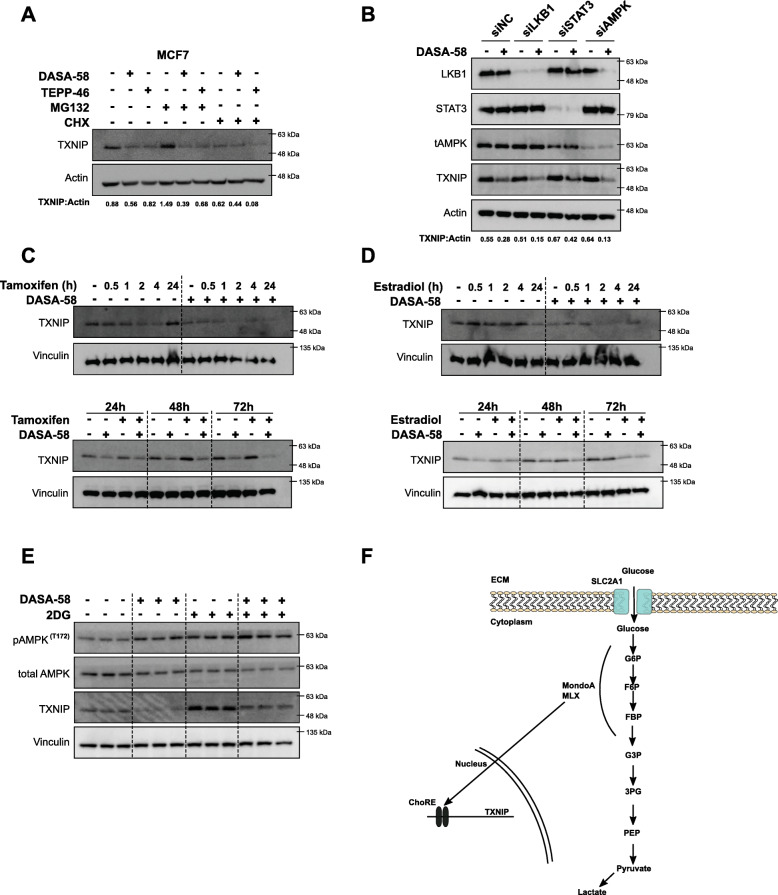
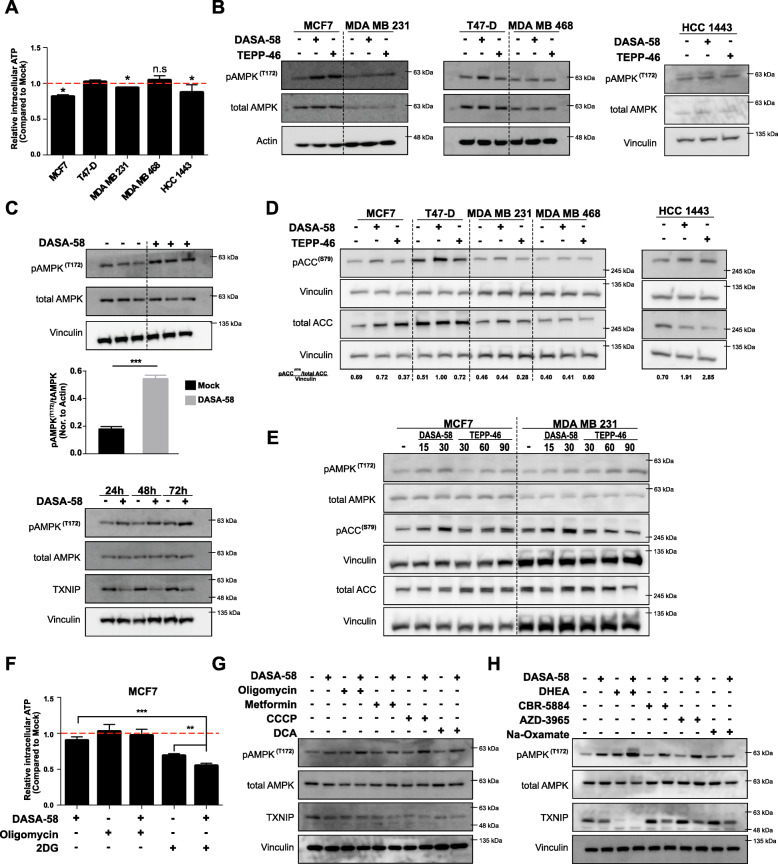
In this study, we show that DASA-58 can induce pyruvate kinase activity in breast cancer cells without affecting the overall cell survival. The drug is also able to reduce TXNIP levels (an intracellular glucose sensor) probably through depletion of upstream glycolytic metabolites and independent of AMPK and ER signaling. AMPK shows an induction in phosphorylation (T172) in response to treatment an effect that can be potentiated by combining DASA-58 with other metabolic inhibitors.
Altogether, the multifaceted metabolic reprogramming induced by DASA-58 in breast cancer cells increases their susceptibility to other therapeutics suggesting the suitability of the intracellular glucose sensor TXNIP as a marker of PK activity.
有氧糖酵解由奥托·瓦尔堡发现,是癌症代谢的一个标志,尽管尚未被完全理解。癌性丙酮酸激酶同工酶(M2)的低活性被认为通过促进糖酵解中间产物向其他合成代谢途径的转化以支持肿瘤的高增殖率而发挥重要作用。
本研究使用了代表不同分子亚型的五种乳腺癌细胞系,通过对细胞生物能量学的实时测量以及对能量和营养感应途径的免疫印迹分析,来研究丙酮酸激酶M2变构激活剂(DASA-58)在葡萄糖重编程中的潜在作用。
在本研究中,我们表明DASA-58可在不影响乳腺癌细胞总体存活率的情况下诱导丙酮酸激酶活性。该药物还可能通过消耗上游糖酵解代谢物,且独立于AMPK和内质网信号传导,来降低TXNIP水平(一种细胞内葡萄糖传感器)。AMPK在接受治疗后显示出磷酸化(T172)的诱导,将DASA-58与其他代谢抑制剂联合使用可增强这种效应。
总之,DASA-58在乳腺癌细胞中诱导的多方面代谢重编程增加了它们对其他疗法的敏感性,这表明细胞内葡萄糖传感器TXNIP适合作为丙酮酸激酶活性的标志物。