Shandong Provincial Key Laboratory of Animal Cells and Developmental Biology, School of Life Sciences, Shandong University, Qingdao, China.
Shandong Provincial Key Laboratory of Animal Cells and Developmental Biology, School of Life Sciences, Shandong University, Qingdao, China.
J Biol Chem. 2021 Jan-Jun;296:100318. doi: 10.1016/j.jbc.2021.100318. Epub 2021 Jan 20.
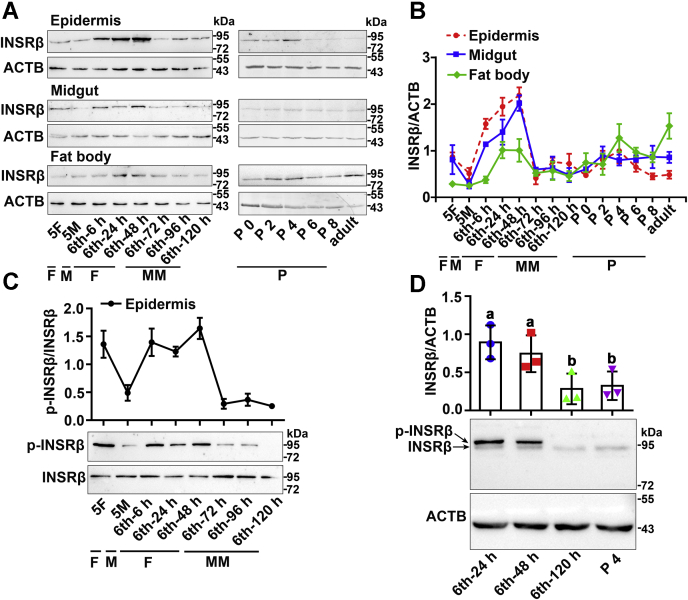
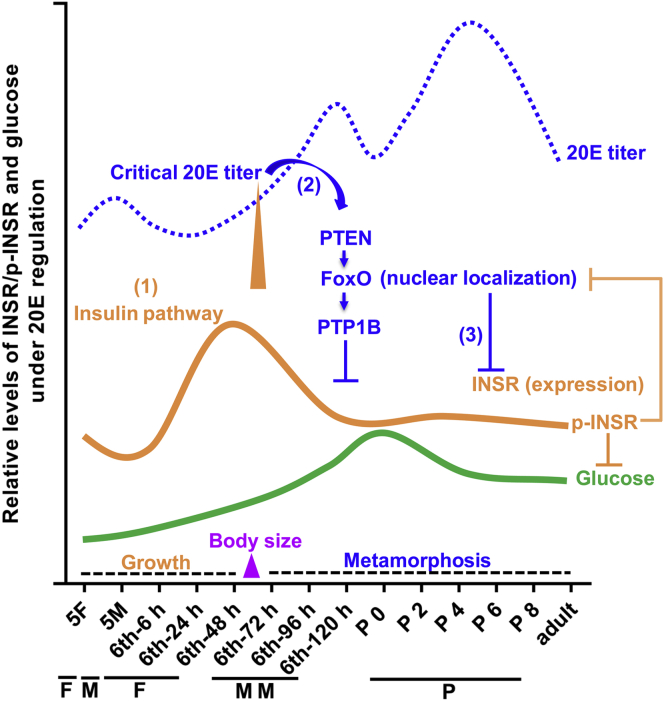
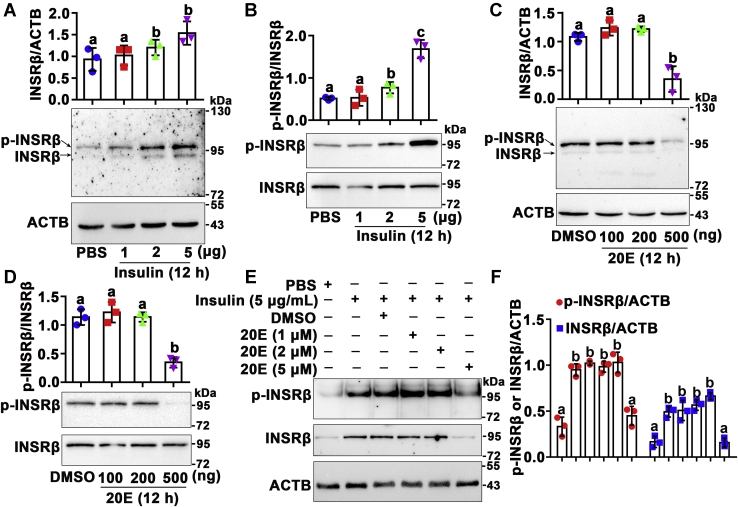
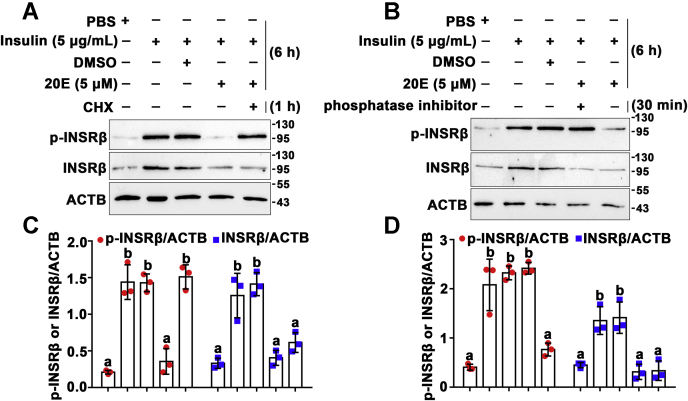
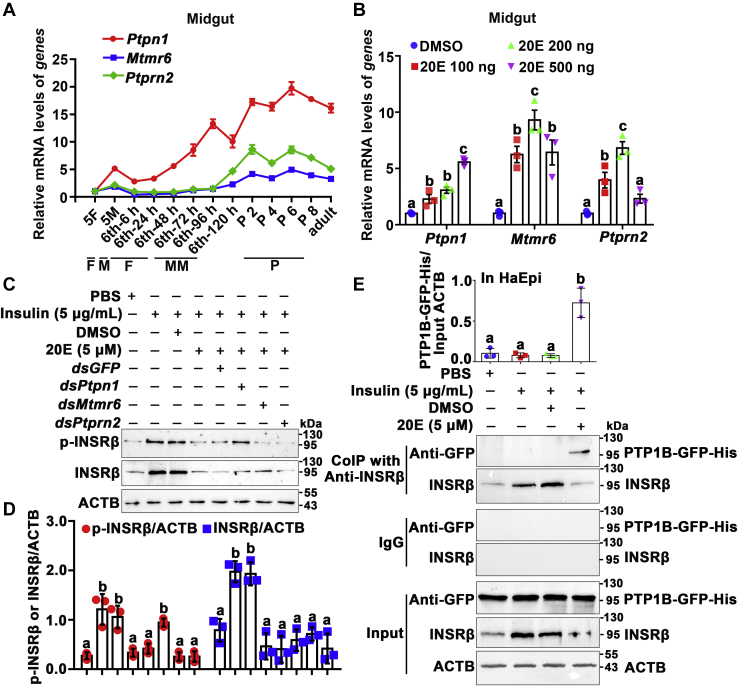
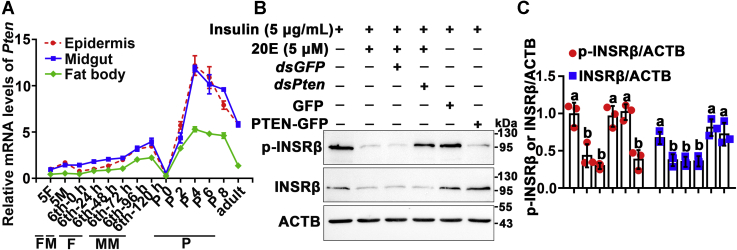
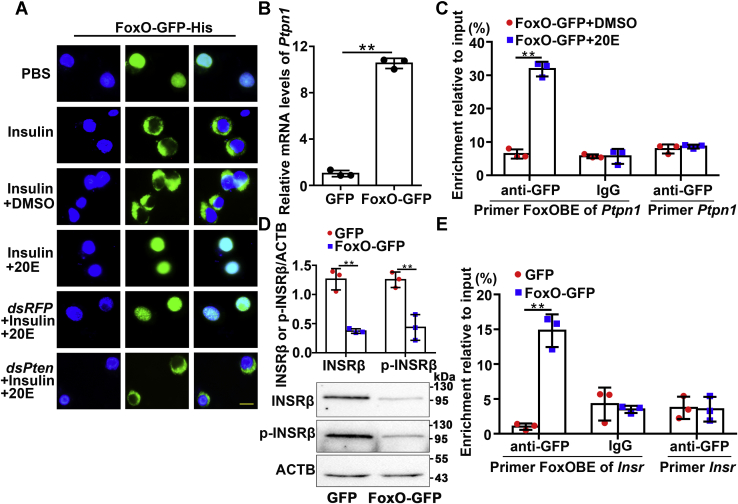
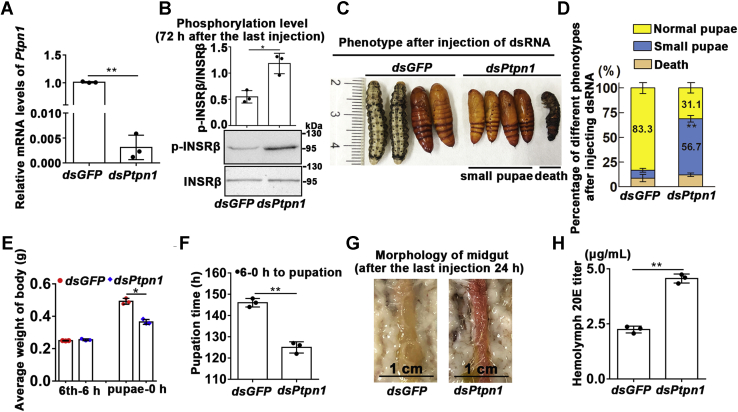
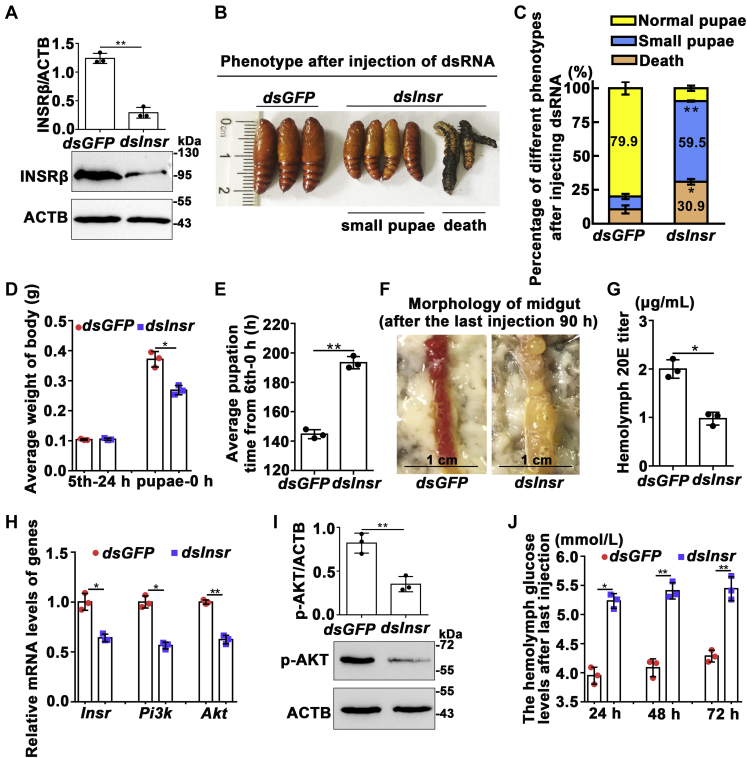
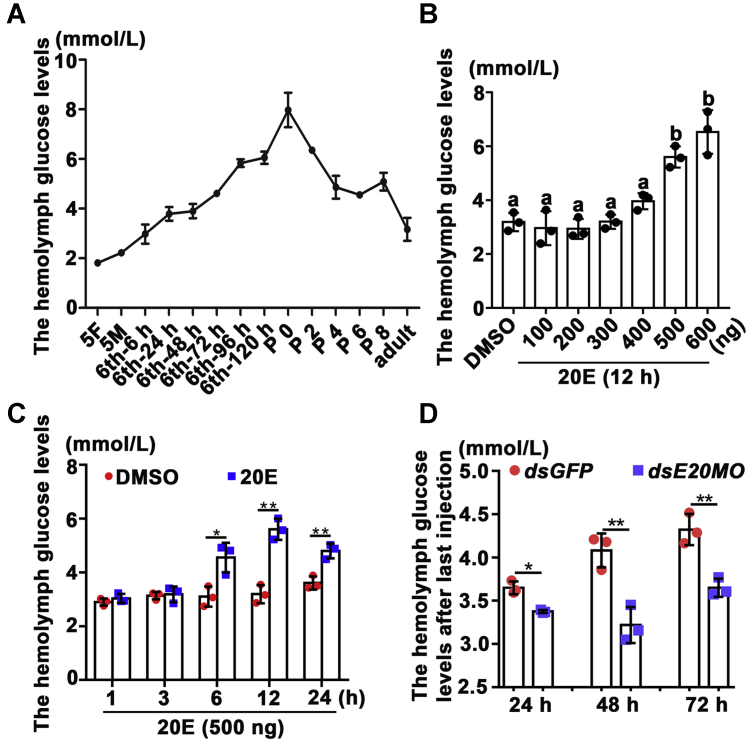
The insulin receptor (INSR) binds insulin to promote body growth and maintain normal blood glucose levels. While it is known that steroid hormones such as estrogen and 20-hydroxyecdysone counteract insulin function, the molecular mechanisms responsible for this attenuation remain unclear. In the present study, using the agricultural pest lepidopteran Helicoverpa armigera as a model, we proposed that the steroid hormone 20-hydroxyecdysone (20E) induces dephosphorylation of INSR to counteract insulin function. We observed high expression and phosphorylation of INSR during larval feeding stages that decreased during metamorphosis. Insulin upregulated INSR expression and phosphorylation, whereas 20E repressed INSR expression and induced INSR dephosphorylation in vivo. Protein tyrosine phosphatase 1B (PTP1B, encoded by Ptpn1) dephosphorylated INSR in vivo. PTEN (phosphatase and tensin homolog deleted on chromosome 10) was critical for 20E-induced INSR dephosphorylation by maintaining the transcription factor Forkhead box O (FoxO) in the nucleus, where FoxO promoted Ptpn1 expression and repressed Insr expression. Knockdown of Ptpn1 using RNA interference maintained INSR phosphorylation, increased 20E production, and accelerated pupation. RNA interference of Insr in larvae repressed larval growth, decreased 20E production, delayed pupation, and accumulated hemolymph glucose levels. Taken together, these results suggest that a high 20E titer counteracts the insulin pathway by dephosphorylating INSR to stop larval growth and accumulate glucose in the hemolymph.
胰岛素受体(INSR)结合胰岛素以促进身体生长并维持正常的血糖水平。虽然已知类固醇激素如雌激素和 20-羟蜕皮酮会拮抗胰岛素的功能,但负责这种衰减的分子机制仍不清楚。在本研究中,我们以农业害虫鳞翅目昆虫棉铃虫为模型,提出类固醇激素 20-羟蜕皮酮(20E)诱导 INSR 去磷酸化以拮抗胰岛素功能。我们观察到 INSR 在幼虫取食阶段的高表达和磷酸化,而在变态期间则减少。胰岛素上调 INSR 的表达和磷酸化,而 20E 则在体内抑制 INSR 的表达并诱导 INSR 去磷酸化。蛋白酪氨酸磷酸酶 1B(PTP1B,由 Ptpn1 编码)在体内使 INSR 去磷酸化。PTEN(染色体 10 上缺失的磷酸酶和张力蛋白同源物)对于 20E 诱导的 INSR 去磷酸化至关重要,通过将转录因子 Forkhead box O(FoxO)维持在核内,FoxO 促进 Ptpn1 表达并抑制 Insr 表达。使用 RNA 干扰敲低 Ptpn1 可维持 INSR 磷酸化,增加 20E 产生,并加速蛹化。幼虫中的 Insr RNA 干扰抑制幼虫生长,减少 20E 产生,延迟蛹化,并积累血液葡萄糖水平。总之,这些结果表明,高 20E 滴度通过使 INSR 去磷酸化来拮抗胰岛素途径,从而停止幼虫生长并在血液中积累葡萄糖。