Department of Neurology, Johns Hopkins School of Medicine, Baltimore, Maryland, USA.
Department of Molecular Microbiology and Immunology, Johns Hopkins Bloomberg School of Public Health, Baltimore, Maryland, USA.
J Biol Chem. 2021 Jan-Jun;296:100317. doi: 10.1016/j.jbc.2021.100317. Epub 2021 Jan 21.
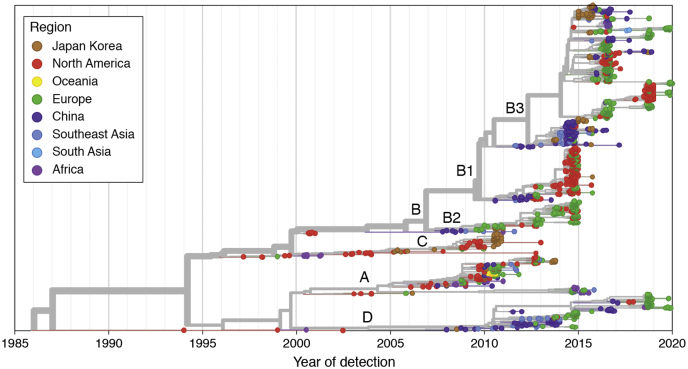
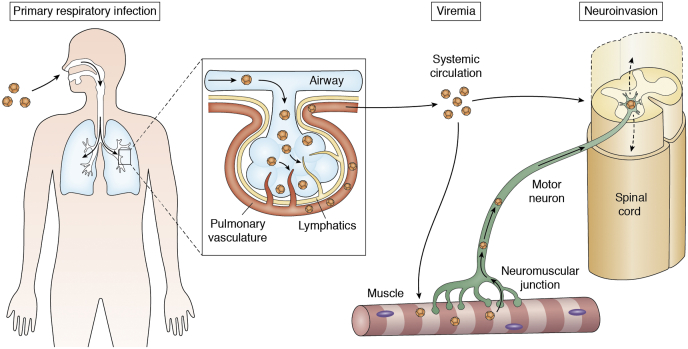
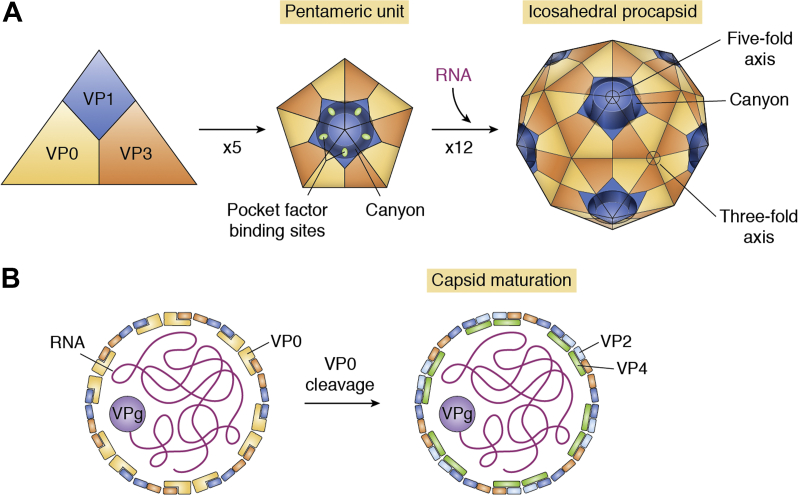
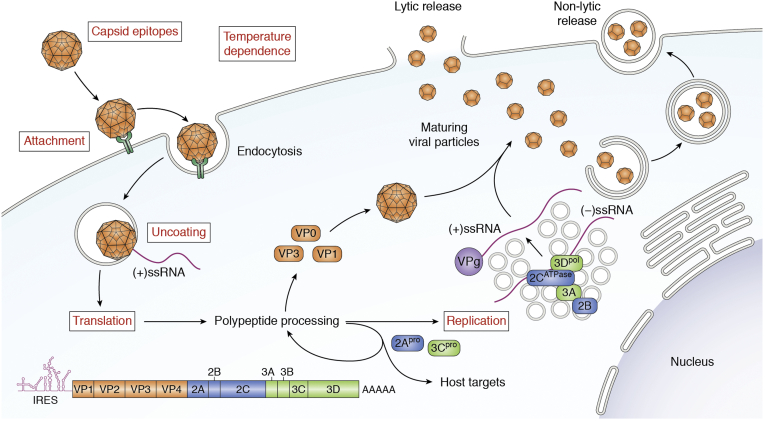
In recent years, enterovirus D68 (EV-D68) has advanced from a rarely detected respiratory virus to a widespread pathogen responsible for increasing rates of severe respiratory illness and acute flaccid myelitis (AFM) in children worldwide. In this review, we discuss the accumulating data on the molecular features of EV-D68 and place these into the context of enterovirus biology in general. We highlight similarities and differences with other enteroviruses and genetic divergence from own historical prototype strains of EV-D68. These include changes in capsid antigens, host cell receptor usage, and viral RNA metabolism collectively leading to increased virulence. Furthermore, we discuss the impact of EV-D68 infection on the biology of its host cells, and how these changes are hypothesized to contribute to motor neuron toxicity in AFM. We highlight areas in need of further research, including the identification of its primary receptor and an understanding of the pathogenic cascade leading to motor neuron injury in AFM. Finally, we discuss the epidemiology of the EV-D68 and potential therapeutic approaches.
近年来,肠道病毒 D68(EV-D68)已从一种罕见的呼吸道病毒发展成为一种广泛存在的病原体,导致全球儿童严重呼吸道疾病和急性弛缓性脊髓炎(AFM)的发病率上升。在这篇综述中,我们讨论了关于 EV-D68 的分子特征的累积数据,并将其置于肠道病毒生物学的背景下。我们强调了它与其他肠道病毒的相似之处和差异,以及与 EV-D68 自身历史原型株的遗传分化。这些变化包括衣壳抗原、宿主细胞受体使用和病毒 RNA 代谢的变化,共同导致了毒力的增加。此外,我们还讨论了 EV-D68 感染对宿主细胞生物学的影响,以及这些变化如何导致 AFM 中的运动神经元毒性。我们强调了需要进一步研究的领域,包括其主要受体的鉴定以及导致 AFM 中运动神经元损伤的致病级联反应的理解。最后,我们讨论了 EV-D68 的流行病学和潜在的治疗方法。