Bell Andrew, Ward Patrick, Tamal Md Ehsanul Haque, Killilea Mary
Department of Environmental Studies, New York University, 285 Mercer St., New York, NY 10003, USA.
Master of Environmental Policy Program, Duke Kunshan University, No. 8 Duke Avenue, Kunshan, Jiangsu 215316, China.
Popul Environ. 2019;40:325-345. doi: 10.1007/s11111-019-0314-1. Epub 2019 Feb 7.
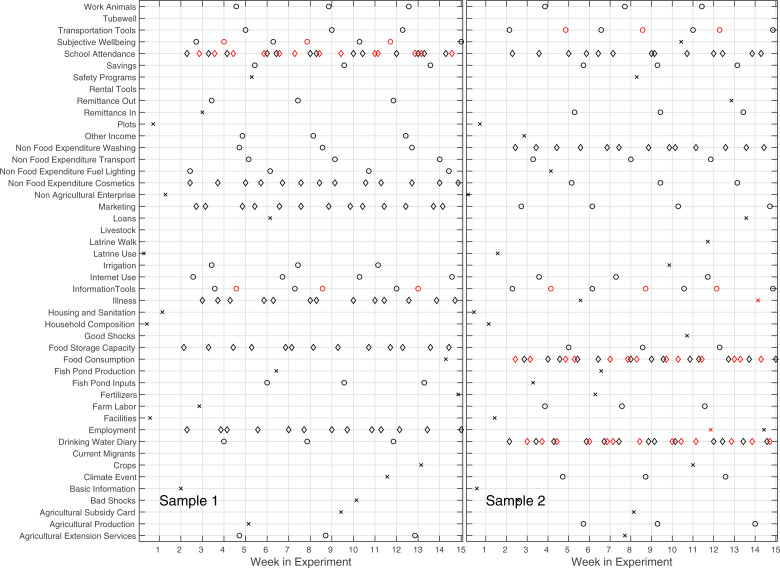
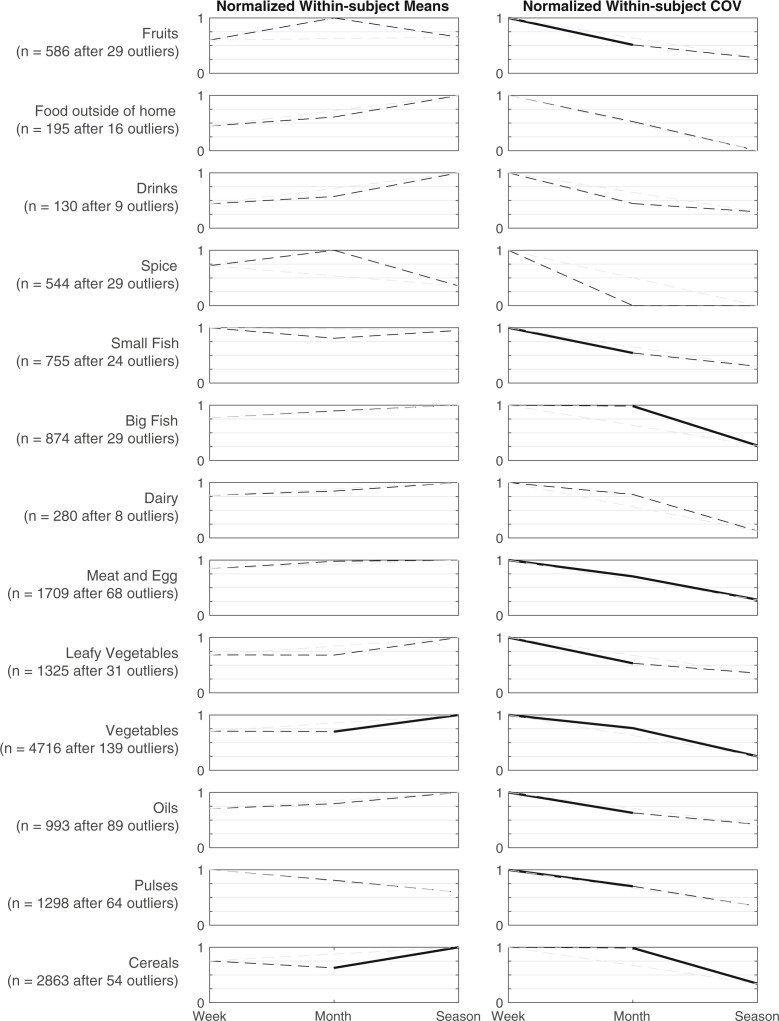
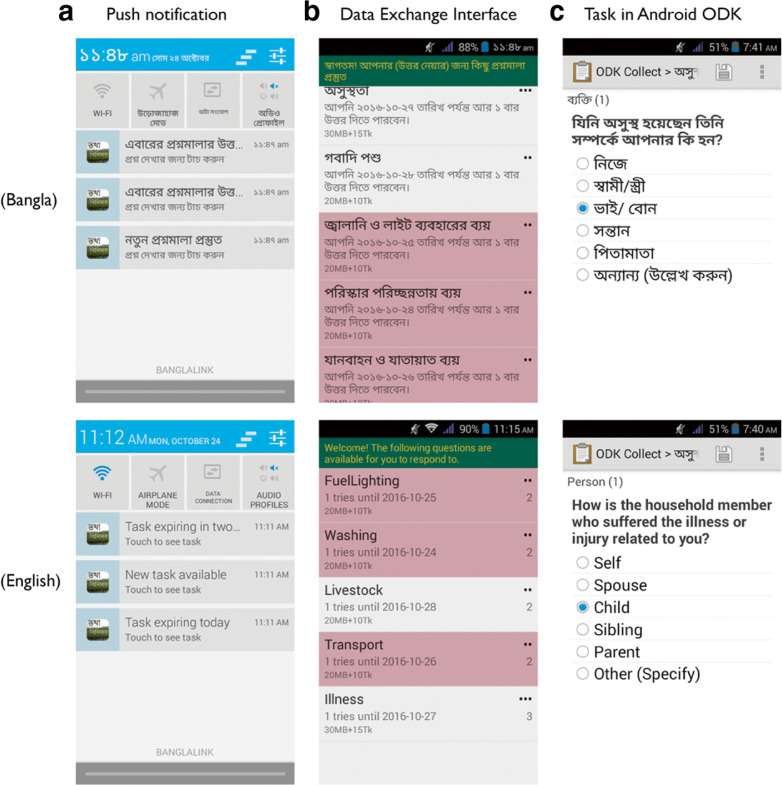
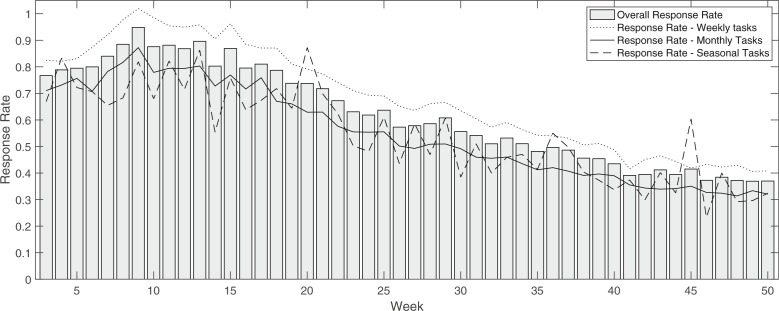
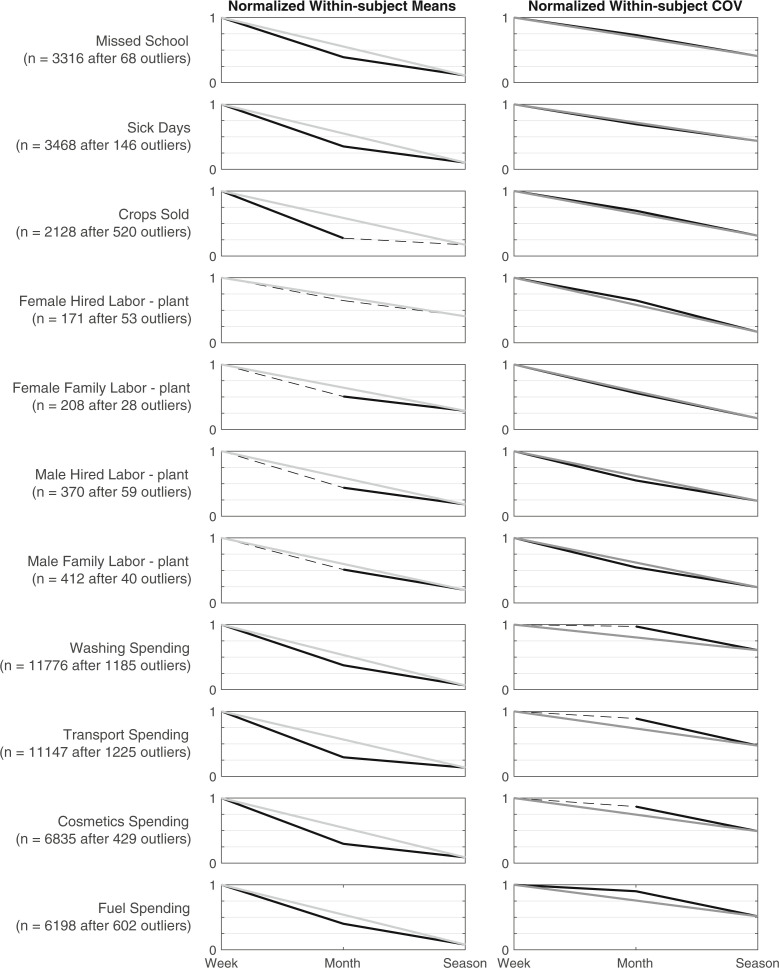
A major impediment to understanding human-environment interactions is that data on social systems are not collected in a way that is easily comparable to natural systems data. While many environmental variables are collected with high frequency, gridded in time and space, social data is typically conducted irregularly, in waves that are far apart in time. These efforts typically engage respondents for hours at a time, and suffer from decay in participants' ability to recall their experiences over long periods of time. Systematic use of mobile and smartphones has the potential to transcend these challenges, with a critical first step being an evaluation of where survey respondents experience the greatest recall decay. We present results from, to our knowledge, the first systematic evaluation of recall bias in components of a household survey, using the Open Data Kit (ODK) platform on Android smartphones. We tasked approximately 500 farmers in rural Bangladesh with responding regularly to components of a large household survey, randomizing the frequency of each task to be received weekly, monthly, or seasonally. We find respondents' recall of consumption and experience (such as sick days) to suffer much more greatly than their recall of the use of their households' time for labor and farm activities. Further, we demonstrate a feasible and cost-effective means of engaging respondents in rural areas to create and maintain a true socio-economic "baseline" to mirror similar efforts in the natural sciences.
理解人类与环境相互作用的一个主要障碍是,社会系统数据的收集方式难以与自然系统数据进行轻松比较。虽然许多环境变量是高频收集的,并在时间和空间上进行网格化处理,但社会数据通常是不定期收集的,时间间隔很长。这些调查通常每次让受访者参与数小时,而且受访者长时间回忆经历的能力会下降。系统地使用移动设备和智能手机有可能克服这些挑战,关键的第一步是评估调查受访者在哪些方面回忆能力下降最为严重。据我们所知,我们展示了使用安卓智能手机上的开放数据工具包(ODK)平台对家庭调查组成部分中的回忆偏差进行首次系统评估的结果。我们让孟加拉国农村地区约500名农民定期回复一项大型家庭调查的组成部分,将每项任务接收的频率随机设定为每周、每月或季节性。我们发现,受访者对消费和经历(如生病天数)的回忆比他们对家庭劳动和农业活动时间使用情况的回忆受到的影响要大得多。此外,我们展示了一种可行且具有成本效益的方法,让农村地区的受访者参与创建和维护一个真正的社会经济“基线”,以反映自然科学领域的类似努力。