Haji Jumana Yusuf, Mehra Sanyam, Doraiswamy Prakash
Aster CMI Hospital Bangalore, 43/2, New Airport Road, NH.7, Sahakara Nagar, Bengaluru, Karnataka 560092 India.
Indian J Thorac Cardiovasc Surg. 2021 Apr;37(Suppl 2):309-318. doi: 10.1007/s12055-020-01075-z. Epub 2021 Jan 18.
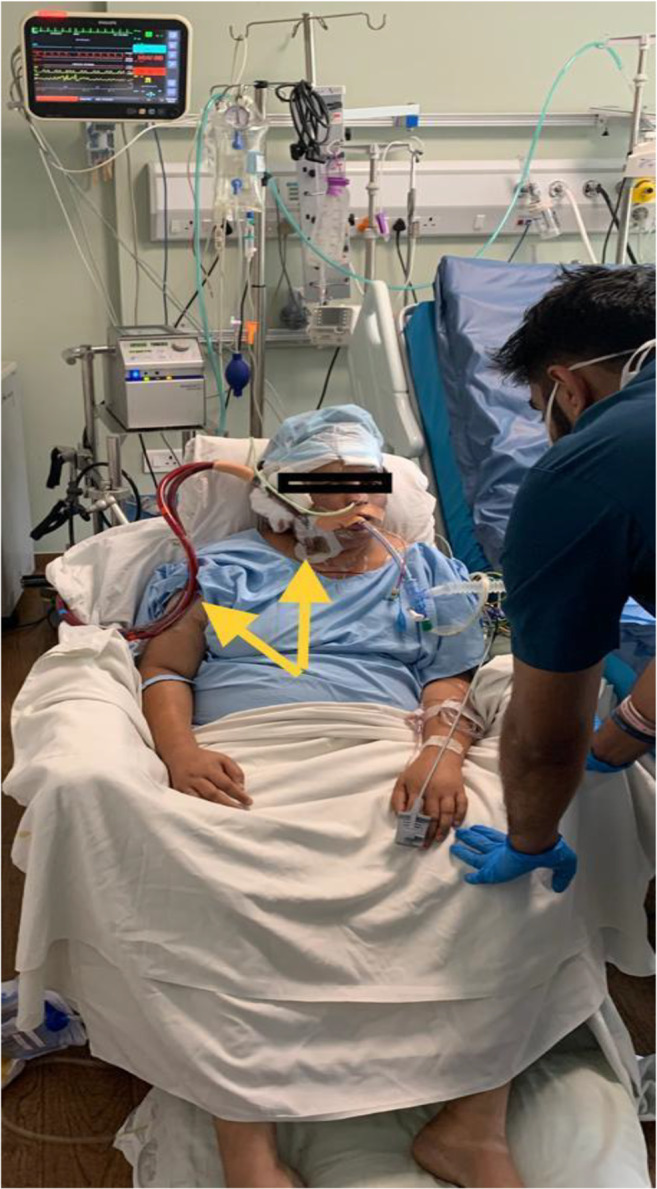
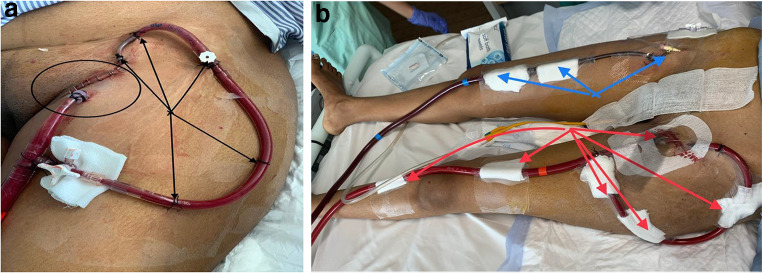
Extracorporeal membrane oxygenation (ECMO) is a lifesaving technology in critically ill patients who present with cardiac/pulmonary/combined cardiopulmonary failure. These patients are the sickest of all patients in any critical care unit and will invariably have a prolonged course and rehabilitation. Spontaneous breathing and early mobilization can reduce the intensive care unit (ICU)-acquired weakness, improve functional recovery, and reduce superadded infections and length of stay in the hospital, thus decreasing the cost of treatment. In low socioeconomic countries, there is an associated challenge of the availability of specially trained personnel necessary to manage patients on ECMO. Managing and ambulating an awake patient on ECMO is very labour-intensive and poses various challenges. Every ECMO program should aim to develop goals, methods, and protocols to this end. These can be derived from best practices worldwide by suitably adapting to available personnel and equipment. In this review, we aim to highlight the advantages and associated challenges of awake ECMO and describe protocols to aid safe ambulation and physiotherapy for ECMO patients.
The online version contains supplementary material available at 10.1007/s12055-020-01075-z.
体外膜肺氧合(ECMO)是一种用于治疗心脏/肺部/心肺联合衰竭危重症患者的救命技术。这些患者是所有重症监护病房中病情最严重的,病程和康复时间必然会延长。自主呼吸和早期活动可减少重症监护病房(ICU)获得性肌无力,改善功能恢复,减少额外感染和住院时间,从而降低治疗成本。在社会经济水平较低的国家,管理接受ECMO治疗的患者需要具备经过专门培训的人员,这是一个相关挑战。管理清醒的ECMO患者并使其活动非常耗费人力,且存在各种挑战。每个ECMO项目都应为此制定目标、方法和方案。这些可通过适当调整以适应现有人员和设备,从全球最佳实践中借鉴而来。在本综述中,我们旨在强调清醒ECMO的优势及相关挑战,并描述有助于ECMO患者安全活动和物理治疗的方案。
在线版本包含可在10.1007/s12055-020-01075-z获取的补充材料。