From the Department of Surgery (M.B.W.), Department of Anesthesiology and Intensive Care (M.S.), Faculty of Medicine and Health, School of Health Sciences (C.K.), Örebro University, Örebro; Centre for Clinical Research and Education (A.S.H.), County Council of Värmland, Karlstad; and Department of Cardiothoracic and Vascular Surgery (T.M.H., K.F.N.), Faculty of Medicine and Health, Örebro University, Örebro, Sweden.
J Trauma Acute Care Surg. 2021 May 1;90(5):817-826. doi: 10.1097/TA.0000000000003098.
Mortality from traumatic retrohepatic venous injuries is high and methods for temporary circulatory stabilization are needed. We investigated survival and hemodynamic and metabolic effects of resuscitative endovascular balloon occlusion of the aorta (REBOA) and vena cava inferior (REBOVC) in anesthetized pigs.
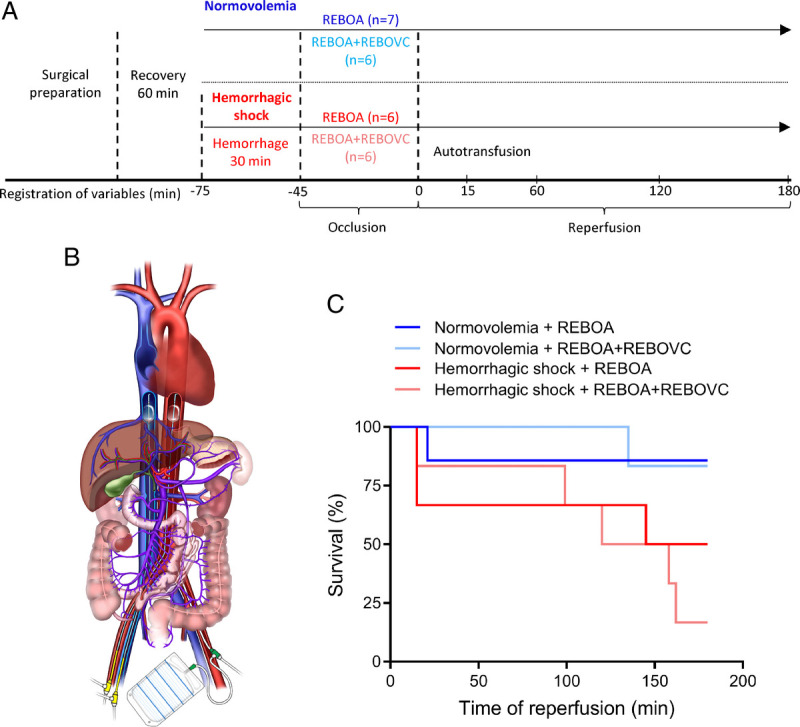
Twenty-five anesthetized pigs in normovolemia or severe hemorrhagic shock (controlled arterial bleeding in blood bags targeting systolic arterial pressure of 50 mm Hg, corresponding to 40-50% of the blood volume) were randomized to REBOA zone 1 or REBOA+REBOVC zone 1 (n = 6-7/group) for 45 minutes occlusion, followed by 3-hour resuscitation and reperfusion. Hemodynamic and metabolic variables and markers of end-organ damage were measured regularly.
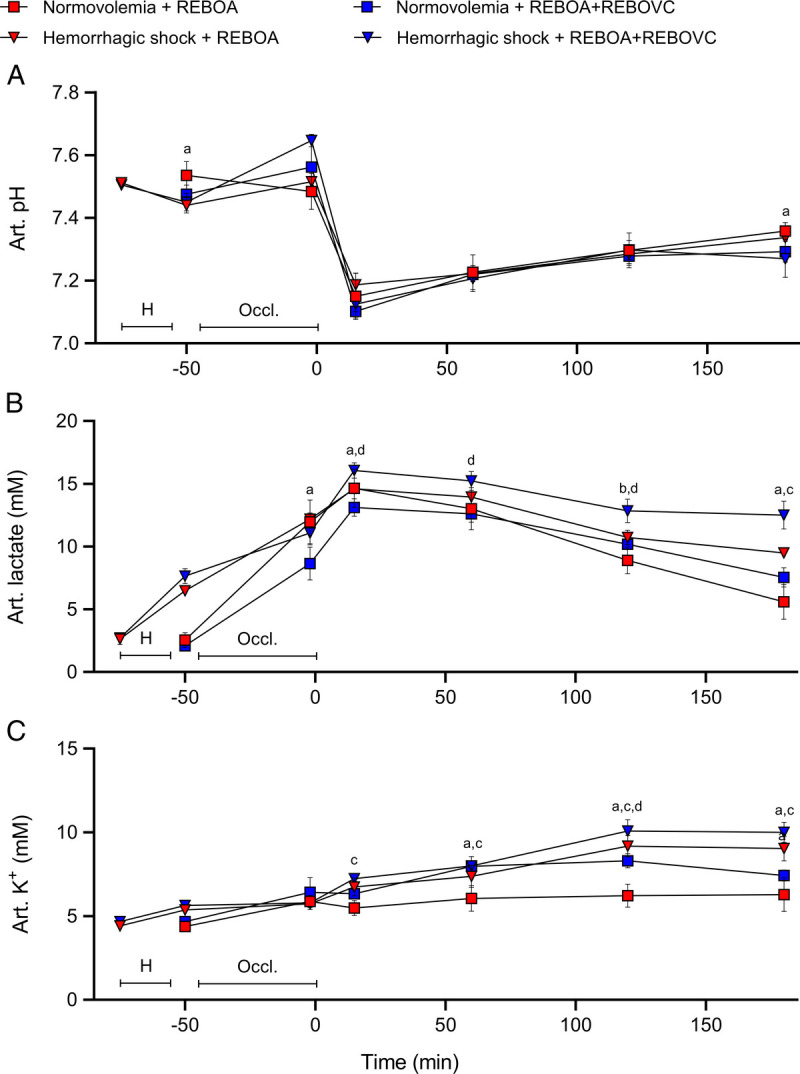
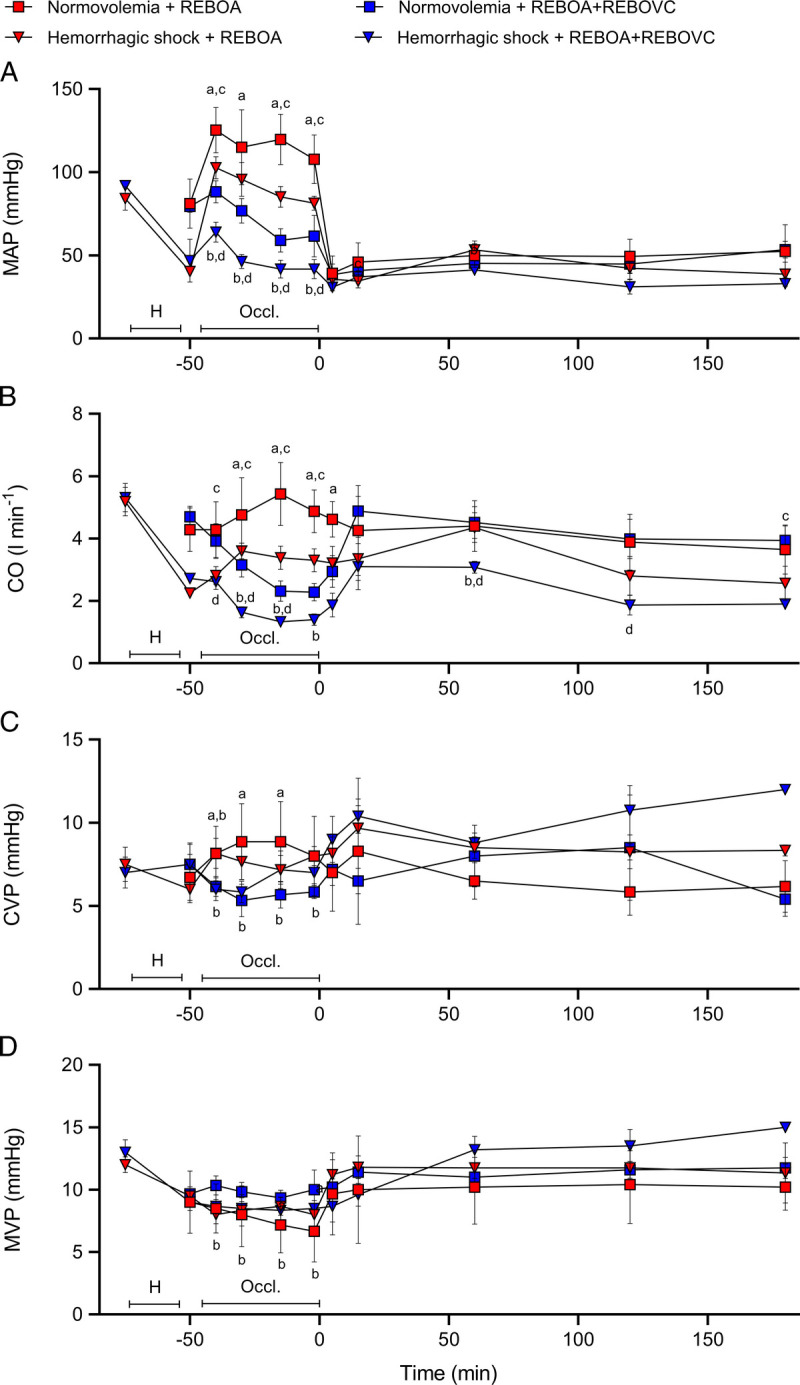
During occlusion, both the REBOA groups had higher systemic mean arterial pressure (MAP) and cardiac output (p < 0.05) compared with the two REBOA+REBOVC groups. After 60 minutes reperfusion, there were no statistically significant differences between the two REBOA groups and the two REBOA+REBOVC groups in MAP and cardiac output. The two REBOA+REBOVC groups had higher arterial lactate and potassium concentrations during reperfusion, compared with the two REBOA groups (p < 0.05). There was no major difference in end-organ damage markers between REBOA and REBOA+REBOVC. Survival after 1-hour reperfusion was 86% and 100%, respectively, in the normovolemic REBOA and REBOA+REBOVC groups, and 67% and 83%, respectively, in the corresponding hemorrhagic shock REBOA and REBOA+REBOVC groups.
Acceptable hemodynamic stability during occlusion and short-term survival can be achieved by REBOA+REBOVC with adequate resuscitation; however, the more severe hemodynamic and metabolic impacts of REBOA+REBOVC compared with REBOA must be considered.
Prospective, randomized, experimental animal study. Basic science study, therapeutic.
外伤性肝后静脉损伤的死亡率很高,需要暂时循环稳定的方法。我们研究了在麻醉猪中使用主动脉复苏性血管内球囊闭塞术(REBOA)和下腔静脉 REBOA(REBOVC)的生存和血流动力学及代谢效应。
在正常血容量或严重失血性休克(控制动脉出血,目标动脉收缩压为 50mmHg,相当于 40-50%的血容量)下,25 只麻醉猪被随机分为 REBOA 区 1 或 REBOA+REBOVC 区 1(每组 6-7 只),闭塞 45 分钟,随后进行 3 小时复苏和再灌注。定期测量血流动力学和代谢变量以及终末器官损伤标志物。
在闭塞期间,与两个 REBOA+REBOVC 组相比,两个 REBOA 组的全身平均动脉压(MAP)和心输出量(CO)更高(p<0.05)。再灌注 60 分钟后,MAP 和 CO 在两个 REBOA 组和两个 REBOA+REBOVC 组之间无统计学差异。与两个 REBOA 组相比,两个 REBOA+REBOVC 组在再灌注期间动脉乳酸和钾浓度更高(p<0.05)。REBOA 和 REBOA+REBOVC 之间的终末器官损伤标志物无明显差异。在再灌注 1 小时后,在正常血容量的 REBOA 和 REBOA+REBOVC 组中,生存率分别为 86%和 100%,在相应的失血性休克 REBOA 和 REBOA+REBOVC 组中,生存率分别为 67%和 83%。
通过适当的复苏,REBOA+REBOVC 可在闭塞期间实现可接受的血流动力学稳定和短期生存,但与 REBOA 相比,REBOA+REBOVC 对血流动力学和代谢的影响更严重,必须加以考虑。
前瞻性、随机、实验动物研究。基础科学研究,治疗。