Weitekamp Chelsea A, Kvasnicka Allison, Keely Scott P, Brinkman Nichole E, Howey Xia Meng, Gaballah Shaza, Phelps Drake, Catron Tara, Zurlinden Todd, Wheaton Emily, Tal Tamara
Center for Public Health and Environmental Assessment, US EPA, RTP, NC, USA.
Oak Ridge Institute for Science and Education, RTP, NC, USA.
Anim Microbiome. 2021 Jan 21;3(1):12. doi: 10.1186/s42523-020-00069-x.
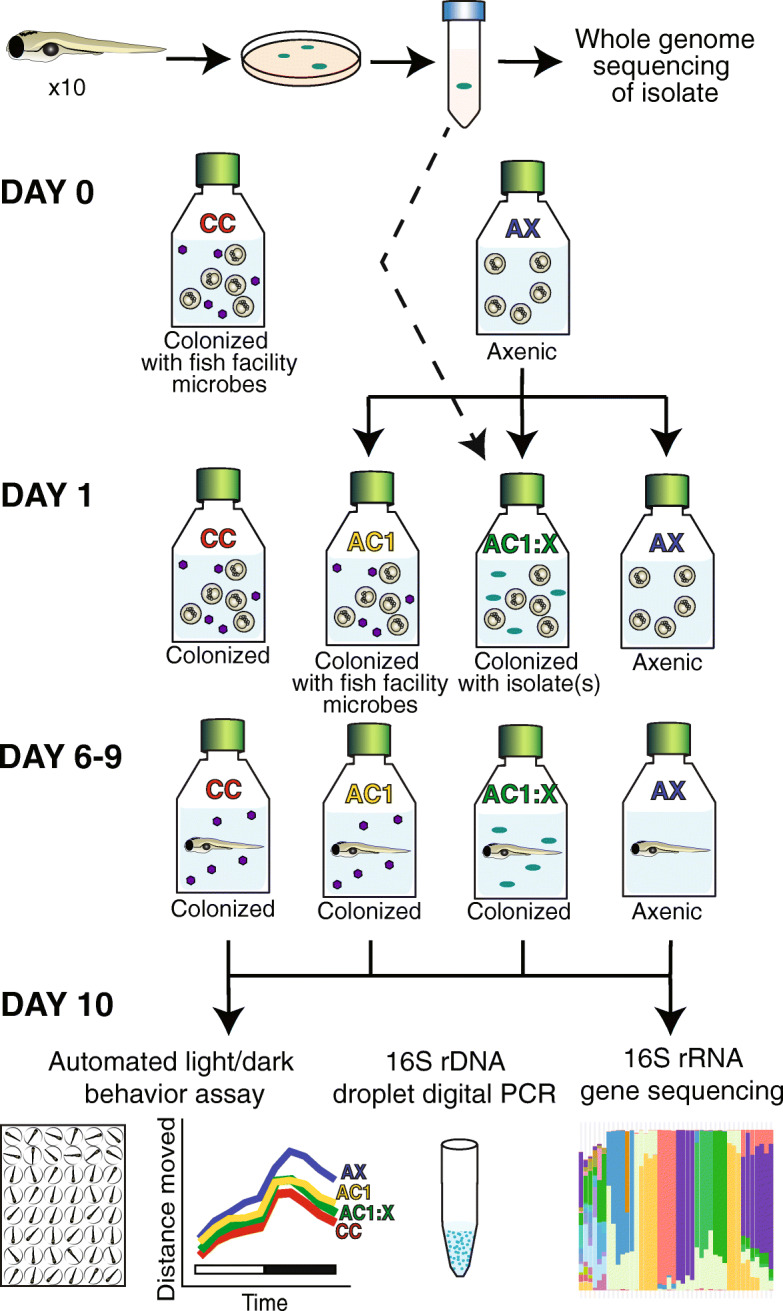
Across taxa, animals with depleted intestinal microbiomes show disrupted behavioral phenotypes. Axenic (i.e., microbe-free) mice, zebrafish, and fruit flies exhibit increased locomotor behavior, or hyperactivity. The mechanism through which bacteria interact with host cells to trigger normal neurobehavioral development in larval zebrafish is not well understood. Here, we monoassociated zebrafish with either one of six different zebrafish-associated bacteria, mixtures of these host-associates, or with an environmental bacterial isolate.
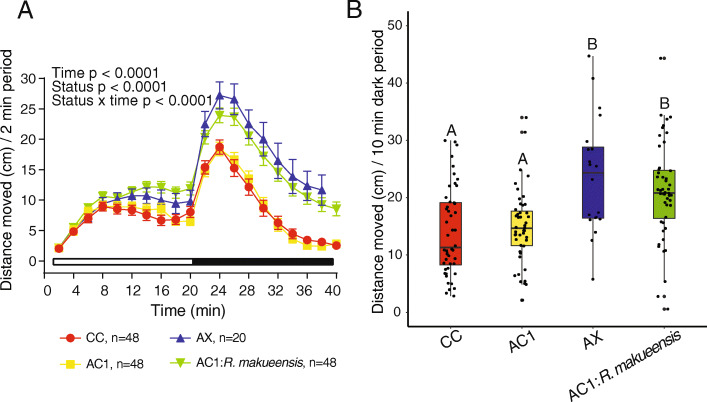
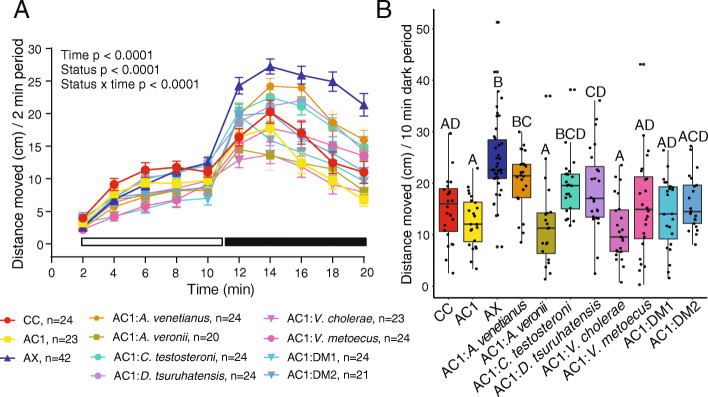
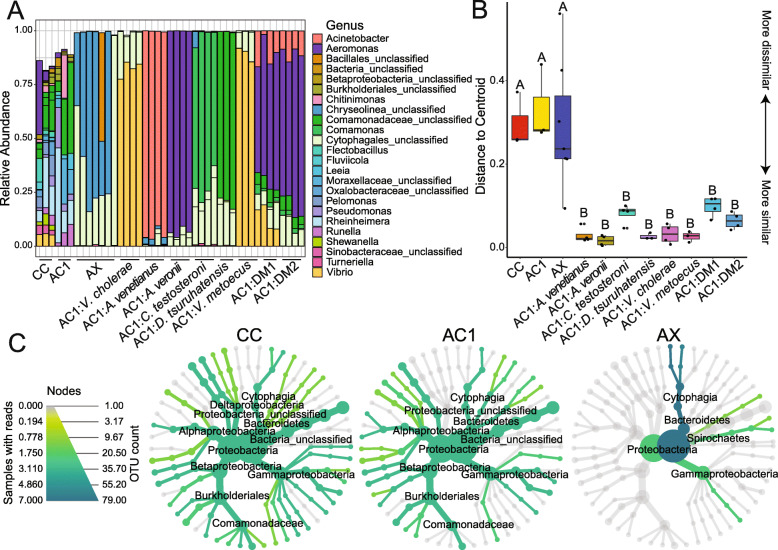
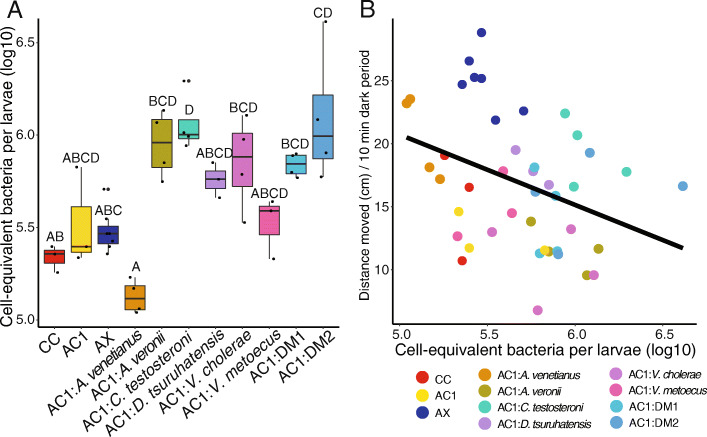
As predicted, the axenic cohort was hyperactive. Monoassociation with three different host-associated bacterial species, as well as with the mixtures, resulted in control-like locomotor behavior. Monoassociation with one host-associate and the environmental isolate resulted in the hyperactive phenotype characteristic of axenic larvae, while monoassociation with two other host-associated bacteria partially blocked this phenotype. Furthermore, we found an inverse relationship between the total concentration of bacteria per larvae and locomotor behavior. Lastly, in the axenic and associated cohorts, but not in the larvae with complex communities, we detected unexpected bacteria, some of which may be present as facultative predators.
These data support a growing body of evidence that individual species of bacteria can have different effects on host behavior, potentially related to their success at intestinal colonization. Specific to the zebrafish model, our results suggest that differences in the composition of microbes in fish facilities could affect the results of behavioral assays within pharmacological and toxicological studies.
在不同分类群中,肠道微生物群 depleted 的动物表现出行为表型紊乱。无菌(即无微生物)小鼠、斑马鱼和果蝇表现出运动行为增加,即多动。细菌与宿主细胞相互作用以触发斑马鱼幼体正常神经行为发育的机制尚不清楚。在这里,我们将斑马鱼分别与六种不同的斑马鱼相关细菌中的一种、这些宿主相关细菌的混合物或一种环境细菌分离株进行单菌定植。
正如预期的那样,无菌组表现出多动。与三种不同的宿主相关细菌物种以及混合物进行单菌定植,导致类似对照的运动行为。与一种宿主相关细菌和环境分离株进行单菌定植,导致无菌幼体特有的多动表型,而与另外两种宿主相关细菌进行单菌定植则部分阻断了这种表型。此外,我们发现每个幼体的细菌总浓度与运动行为之间存在反比关系。最后,在无菌组和定植组中,但在具有复杂群落的幼体中未检测到意外细菌,其中一些可能以兼性捕食者的形式存在。
这些数据支持了越来越多的证据,即单个细菌物种可能对宿主行为产生不同影响,这可能与其在肠道定植的成功与否有关。具体到斑马鱼模型,我们的结果表明鱼类饲养设施中微生物组成的差异可能会影响药理学和毒理学研究中行为测定的结果。