Oxford Centre for Diabetes, Endocrinology and Metabolism, NIHR Oxford Biomedical Research Centre, University of Oxford, Churchill Hospital, Oxford, Oxfordshire, UK.
Department of Biochemistry, Stellenbosch University, Stellenbosch, Western Cape, South Africa.
J Mol Endocrinol. 2021 Mar;66(3):181-194. doi: 10.1530/JME-20-0160.
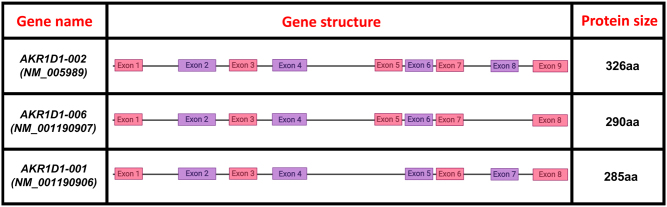
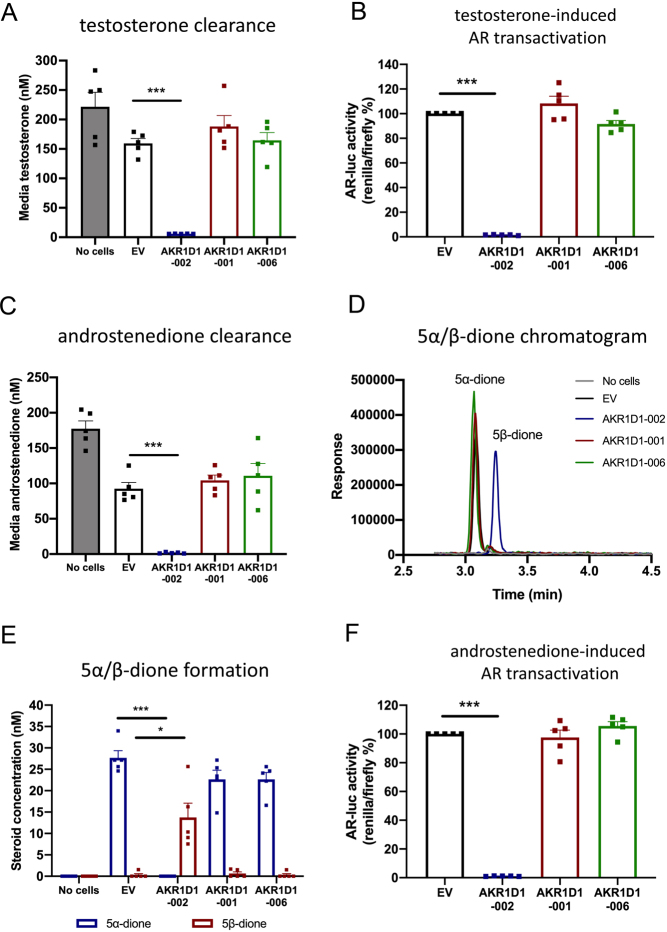
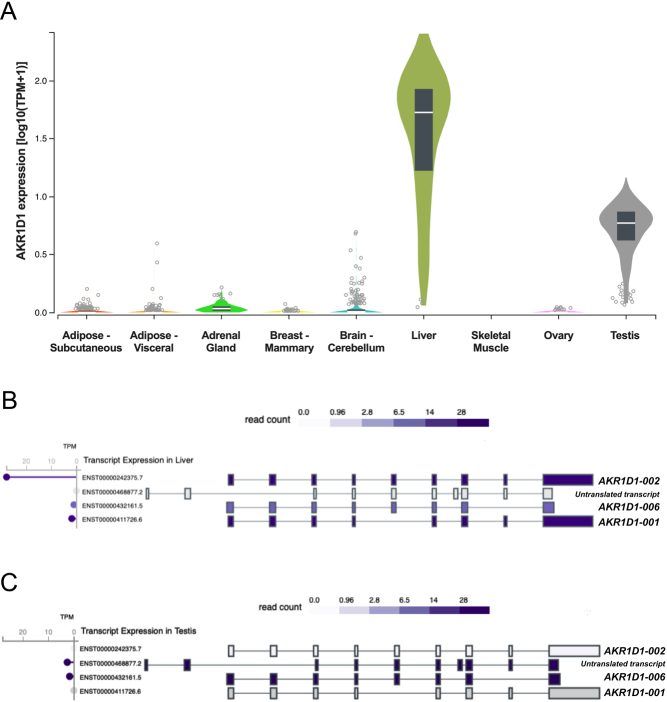
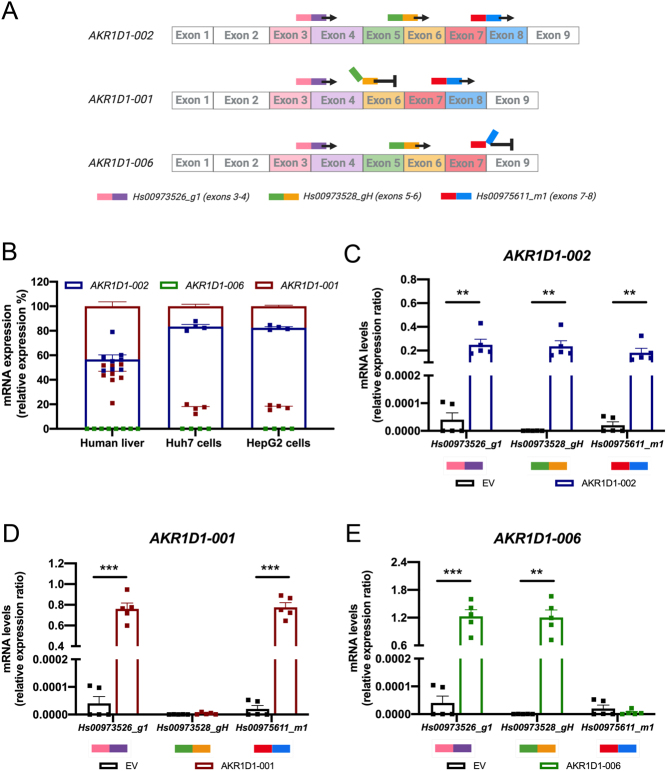
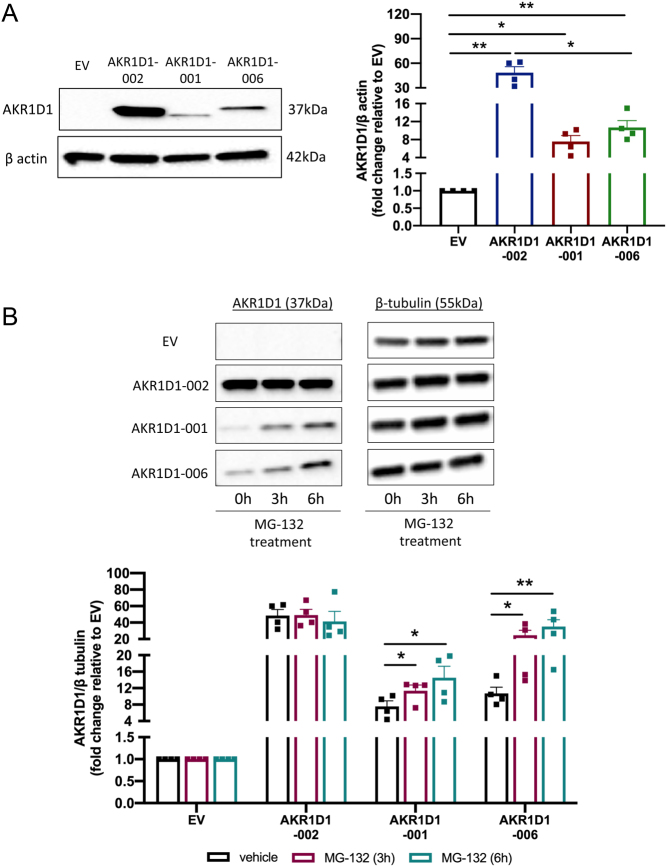
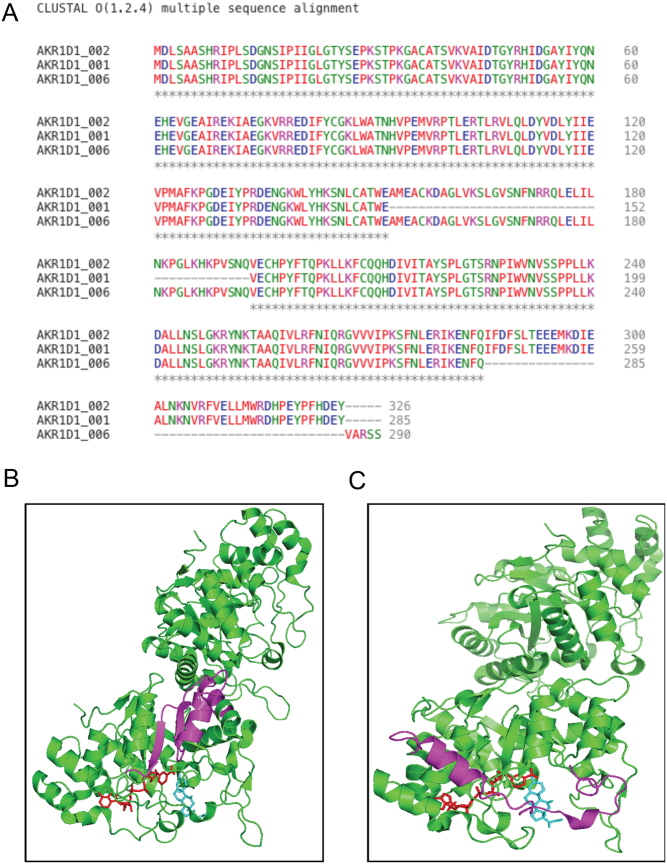
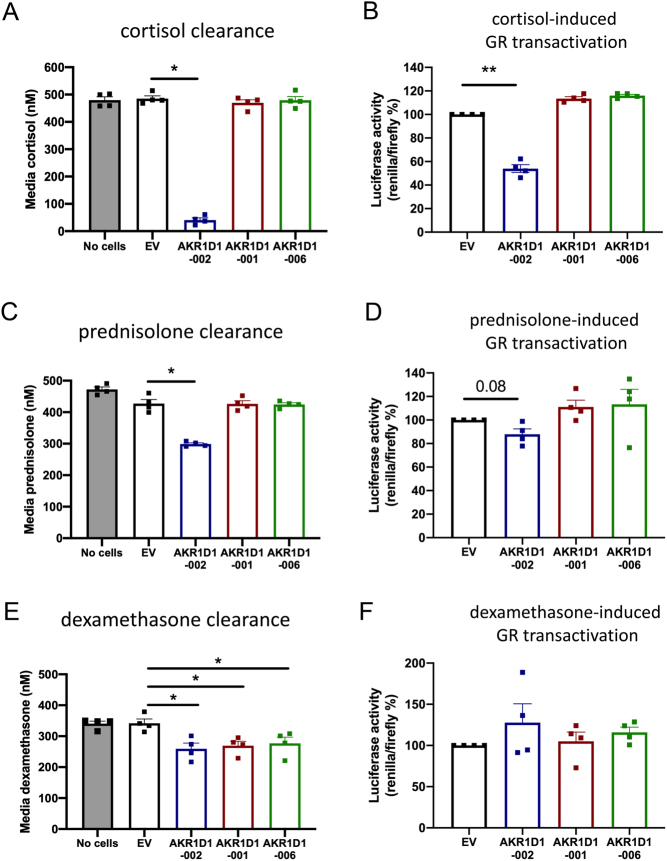
Steroid hormones, including glucocorticoids and androgens, exert a wide variety of effects in the body across almost all tissues. The steroid A-ring 5β-reductase (AKR1D1) is expressed in human liver and testes, and three splice variants have been identified (AKR1D1-001, AKR1D1-002, AKR1D1-006). Amongst these, AKR1D1-002 is the best described; it modulates steroid hormone availability and catalyses an important step in bile acid biosynthesis. However, specific activity and expression of AKR1D1-001 and AKR1D1-006 are unknown. Expression of AKR1D1 variants were measured in human liver biopsies and hepatoma cell lines by qPCR. Their three-dimensional (3D) structures were predicted using in silico approaches. AKR1D1 variants were overexpressed in HEK293 cells, and successful overexpression confirmed by qPCR and Western blotting. Cells were treated with either cortisol, dexamethasone, prednisolone, testosterone or androstenedione, and steroid hormone clearance was measured by mass spectrometry. Glucocorticoid and androgen receptor activation were determined by luciferase reporter assays. AKR1D1-002 and AKR1D1-001 are expressed in human liver, and only AKR1D1-006 is expressed in human testes. Following overexpression, AKR1D1-001 and AKR1D1-006 protein levels were lower than AKR1D1-002, but significantly increased following treatment with the proteasomal inhibitor, MG-132. AKR1D1-002 efficiently metabolised glucocorticoids and androgens and decreased receptor activation. AKR1D1-001 and AKR1D1-006 poorly metabolised dexamethasone, but neither protein metabolised cortisol, prednisolone, testosterone or androstenedione. We have demonstrated the differential expression and role of AKR1D1 variants in steroid hormone clearance and receptor activation in vitro. AKR1D1-002 is the predominant functional protein in steroidogenic and metabolic tissues. In addition, AKR1D1-001 and AKR1D1-006 may have a limited, steroid-specific role in the regulation of dexamethasone action.
甾体激素,包括糖皮质激素和雄激素,在人体的几乎所有组织中都发挥着广泛的作用。甾体 A 环 5β-还原酶(AKR1D1)在人肝和睾丸中表达,并已鉴定出三种剪接变体(AKR1D1-001、AKR1D1-002、AKR1D1-006)。在这些变体中,AKR1D1-002 描述得最为详细;它调节甾体激素的可用性,并催化胆汁酸生物合成中的重要步骤。然而,AKR1D1-001 和 AKR1D1-006 的特异性活性和表达情况尚不清楚。通过 qPCR 测量人肝活检和肝癌细胞系中 AKR1D1 变体的表达。使用计算方法预测它们的三维(3D)结构。在 HEK293 细胞中过表达 AKR1D1 变体,并通过 qPCR 和 Western blot 验证成功过表达。用皮质醇、地塞米松、泼尼松龙、睾酮或雄烯二酮处理细胞,并通过质谱法测量甾体激素清除率。通过荧光素酶报告基因测定法测定糖皮质激素和雄激素受体的激活情况。AKR1D1-002 和 AKR1D1-001 在人肝中表达,而 AKR1D1-006 仅在人睾丸中表达。过表达后,AKR1D1-001 和 AKR1D1-006 的蛋白水平低于 AKR1D1-002,但在用蛋白酶体抑制剂 MG-132 处理后显著增加。AKR1D1-002 有效地代谢糖皮质激素和雄激素,并降低受体激活。AKR1D1-001 和 AKR1D1-006 对地塞米松的代谢能力较差,但两种蛋白均不能代谢皮质醇、泼尼松龙、睾酮或雄烯二酮。我们已经证明了 AKR1D1 变体在类固醇激素清除和受体激活中的差异表达和作用在体外。AKR1D1-002 是类固醇生成和代谢组织中主要的功能性蛋白。此外,AKR1D1-001 和 AKR1D1-006 可能在调节地塞米松作用方面具有有限的、类固醇特异性的作用。