Department of Microbiology and Molecular Genetics, University of Pittsburgh School of Medicine, Pittsburgh, PA 15219, USA.
Department of Microbiology and Molecular Genetics, University of Pittsburgh School of Medicine, Pittsburgh, PA 15219, USA; Program in Microbiology and Immunology, University of Pittsburgh School of Medicine, Pittsburgh, PA 15219, USA.
Cell Rep. 2021 Jan 26;34(4):108672. doi: 10.1016/j.celrep.2020.108672.
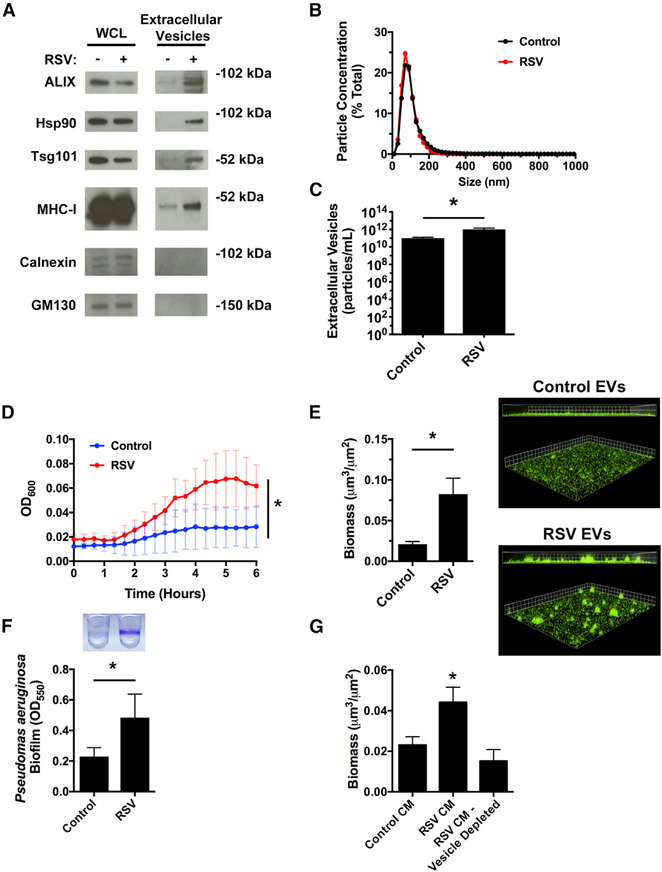
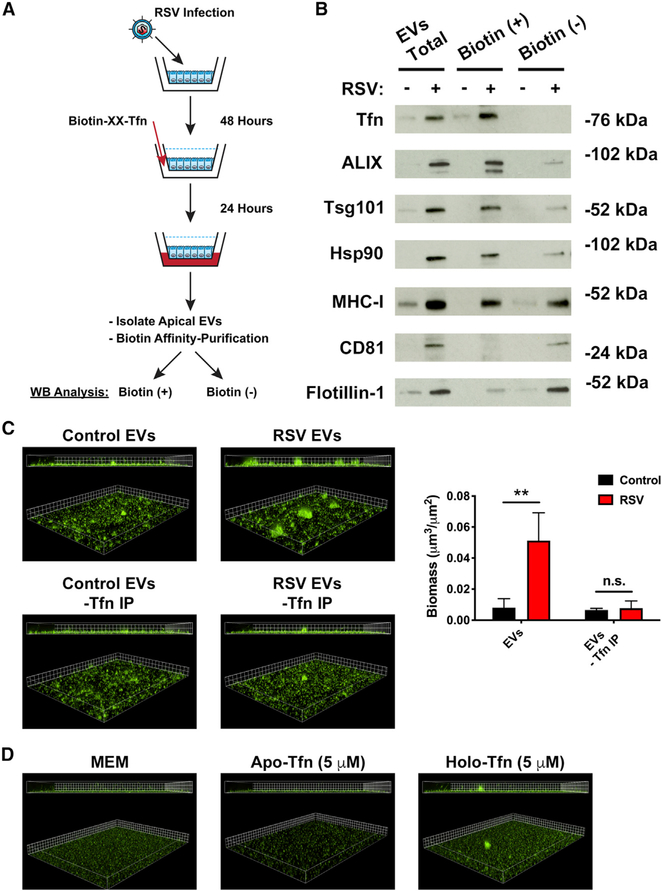
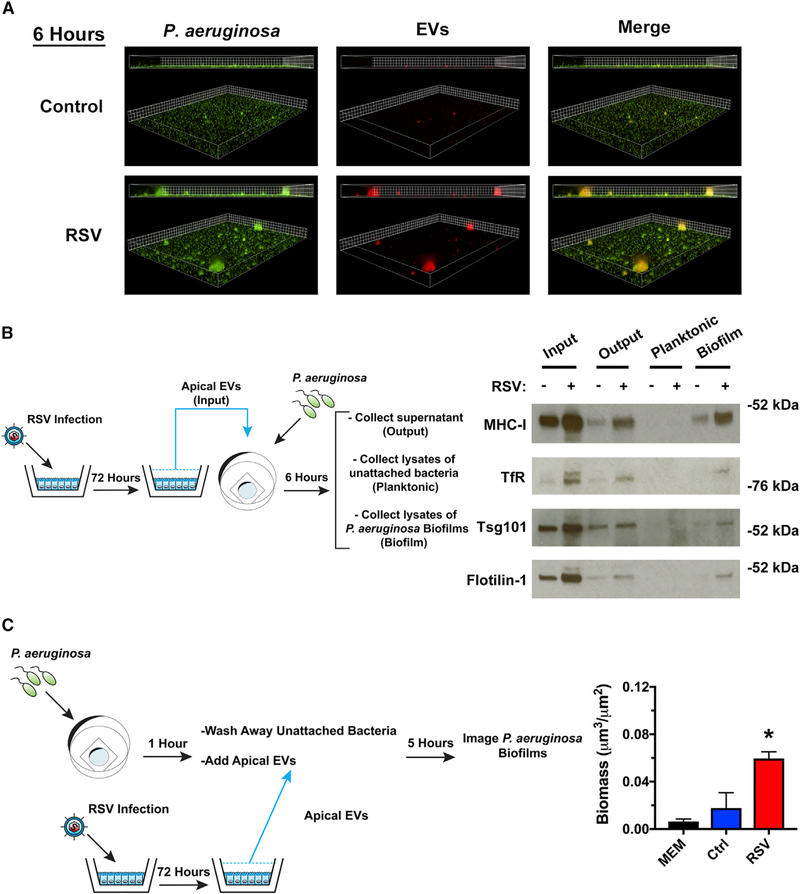
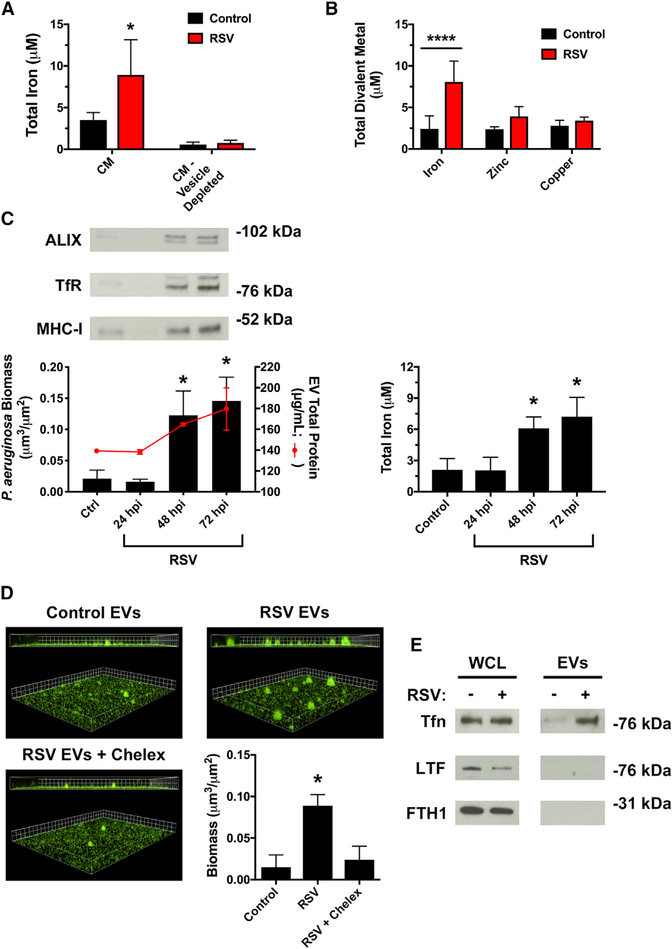
Extracellular vesicles (EVs) are increasingly appreciated as a mechanism of communication among cells that contribute to many physiological processes. Although EVs can promote either antiviral or proviral effects during viral infections, the role of EVs in virus-associated polymicrobial infections remains poorly defined. We report that EVs secreted from airway epithelial cells during respiratory viral infection promote secondary bacterial growth, including biofilm biogenesis, by Pseudomonas aeruginosa. Respiratory syncytial virus (RSV) increases the release of the host iron-binding protein transferrin on the extravesicular face of EVs, which interact with P. aeruginosa biofilms to transfer the nutrient iron and promote bacterial biofilm growth. Vesicular delivery of iron by transferrin more efficiently promotes P. aeruginosa biofilm growth than soluble holo-transferrin delivered alone. Our findings indicate that EVs are a nutrient source for secondary bacterial infections in the airways during viral infection and offer evidence of transkingdom communication in the setting of polymicrobial infections.
细胞外囊泡 (EVs) 越来越被认为是细胞间通讯的一种机制,有助于许多生理过程。尽管 EVs 在病毒感染过程中可以促进抗病毒或促病毒作用,但 EVs 在与病毒相关的多微生物感染中的作用仍未得到明确界定。我们报告称,呼吸道病毒感染期间气道上皮细胞分泌的 EVs 促进了铜绿假单胞菌的继发性细菌生长,包括生物膜的形成。呼吸道合胞病毒 (RSV) 增加了 EV 外囊泡表面上宿主铁结合蛋白转铁蛋白的释放,该蛋白与铜绿假单胞菌生物膜相互作用,转移营养铁并促进细菌生物膜生长。转铁蛋白通过囊泡传递铁比单独传递可溶性全铁转铁蛋白更有效地促进铜绿假单胞菌生物膜生长。我们的研究结果表明,EVs 是病毒感染期间气道中继发性细菌感染的营养来源,并为多微生物感染中跨物种通讯提供了证据。