Division of Stem Cells and Cancer, German Cancer Research Center (DKFZ) and DKFZ-ZMBH Alliance, 69120, Heidelberg, Germany.
Heidelberg Institute for Stem Cell Technology and Experimental Medicine (HI-STEM gGmbH), 69120, Heidelberg, Germany.
Nat Commun. 2021 Jan 27;12(1):608. doi: 10.1038/s41467-020-20801-0.
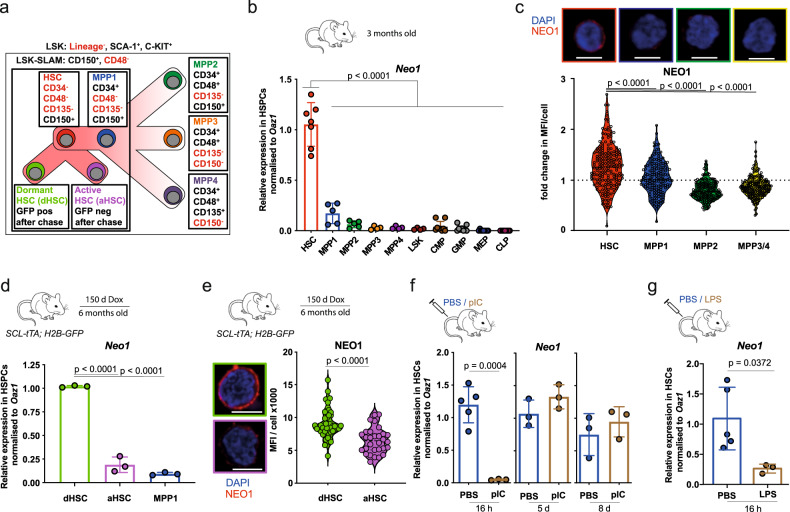
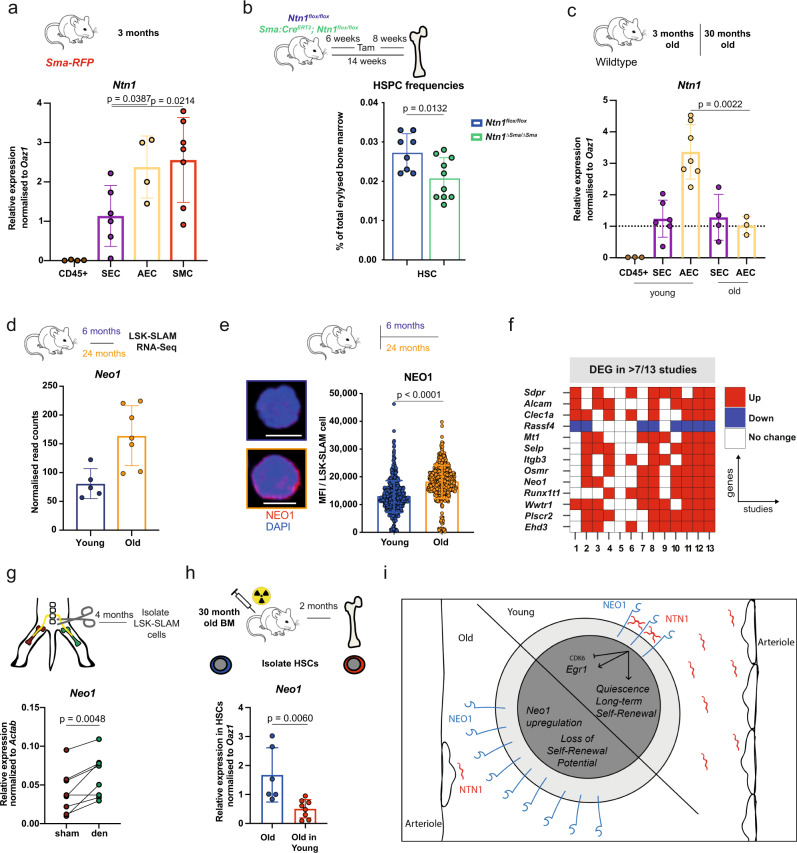
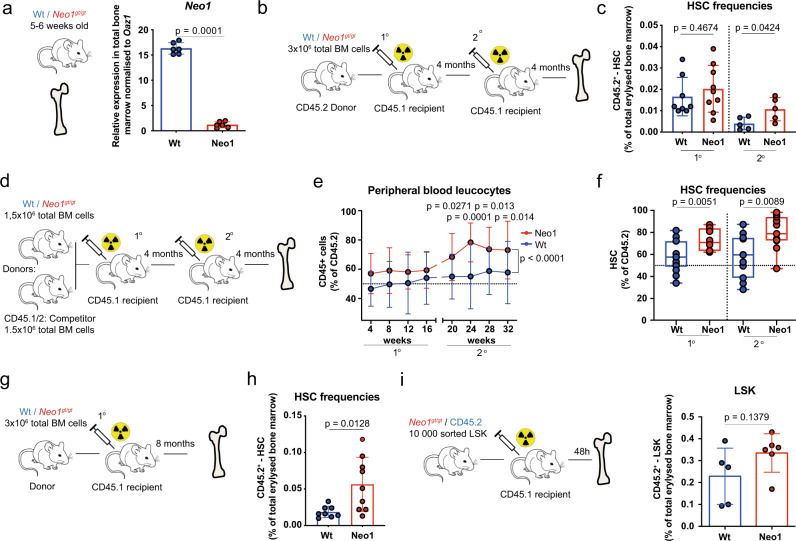
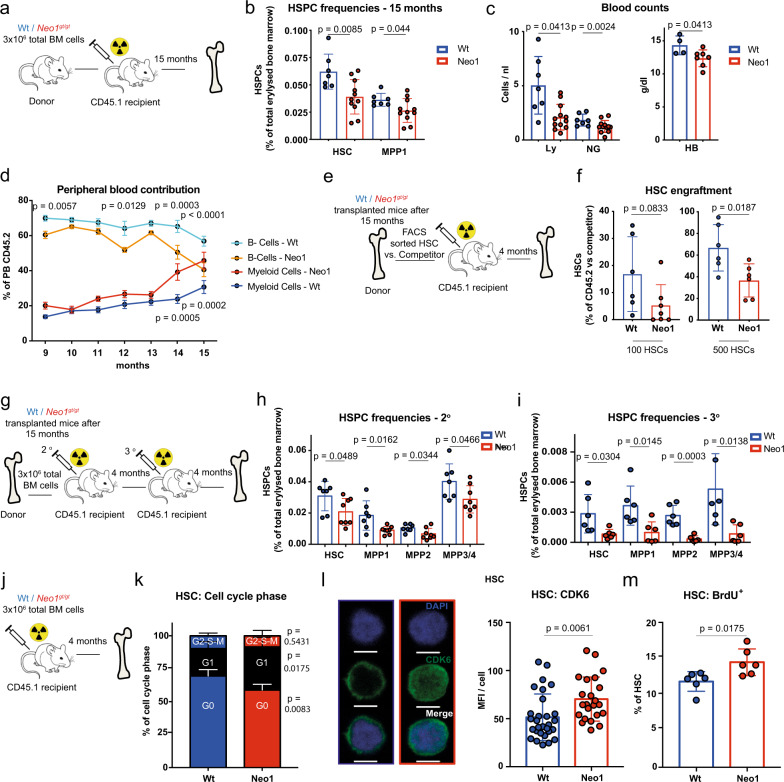
Haematopoietic stem cells (HSCs) are characterized by their self-renewal potential associated to dormancy. Here we identify the cell surface receptor neogenin-1 as specifically expressed in dormant HSCs. Loss of neogenin-1 initially leads to increased HSC expansion but subsequently to loss of self-renewal and premature exhaustion in vivo. Its ligand netrin-1 induces Egr1 expression and maintains quiescence and function of cultured HSCs in a Neo1 dependent manner. Produced by arteriolar endothelial and periarteriolar stromal cells, conditional netrin-1 deletion in the bone marrow niche reduces HSC numbers, quiescence and self-renewal, while overexpression increases quiescence in vivo. Ageing associated bone marrow remodelling leads to the decline of netrin-1 expression in niches and a compensatory but reversible upregulation of neogenin-1 on HSCs. Our study suggests that niche produced netrin-1 preserves HSC quiescence and self-renewal via neogenin-1 function. Decline of netrin-1 production during ageing leads to the gradual decrease of Neo1 mediated HSC self-renewal.
造血干细胞(HSCs)的特征在于其与休眠相关的自我更新潜力。在这里,我们确定细胞表面受体 neogenin-1 特异性表达于休眠的 HSCs 中。neogenin-1 的缺失最初导致 HSC 扩增增加,但随后导致体内自我更新和过早耗竭。其配体 netrin-1 诱导 Egr1 表达,并以依赖 Neo1 的方式维持培养的 HSCs 的静止和功能。由小动脉内皮细胞和小动脉周围基质细胞产生,条件性 netrin-1 在骨髓龛中的缺失减少了 HSC 的数量、静止和自我更新,而过表达则增加了体内的静止状态。与年龄相关的骨髓重塑导致龛中 netrin-1 的表达下降,以及 HSCs 上 neogenin-1 的代偿性但可逆转的上调。我们的研究表明,龛产生的 netrin-1 通过 neogenin-1 功能维持 HSC 的静止和自我更新。在衰老过程中 netrin-1 产生的下降导致 Neo1 介导的 HSC 自我更新逐渐减少。