Pavelek Zbyšek, Sobíšek Lukáš, Šarláková Jana, Potužník Pavel, Peterka Marek, Štětkárová Ivana, Štourač Pavel, Mareš Jan, Hradílek Pavel, Ampapa Radek, Grünermelová Markéta, Vachová Marta, Recmanová Eva, Angelucci Francesco, Halúsková Simona, Vališ Martin
Department of Neurology, Faculty of Medicine and University Hospital Hradec Králové, Charles University in Prague, Hradec Králové, Czechia.
Department of Neurology, Faculty of Medicine and University Hospital Plzen, Charles University in Prague, Plzeň, Czechia.
Front Neurol. 2021 Jan 12;11:593527. doi: 10.3389/fneur.2020.593527. eCollection 2020.
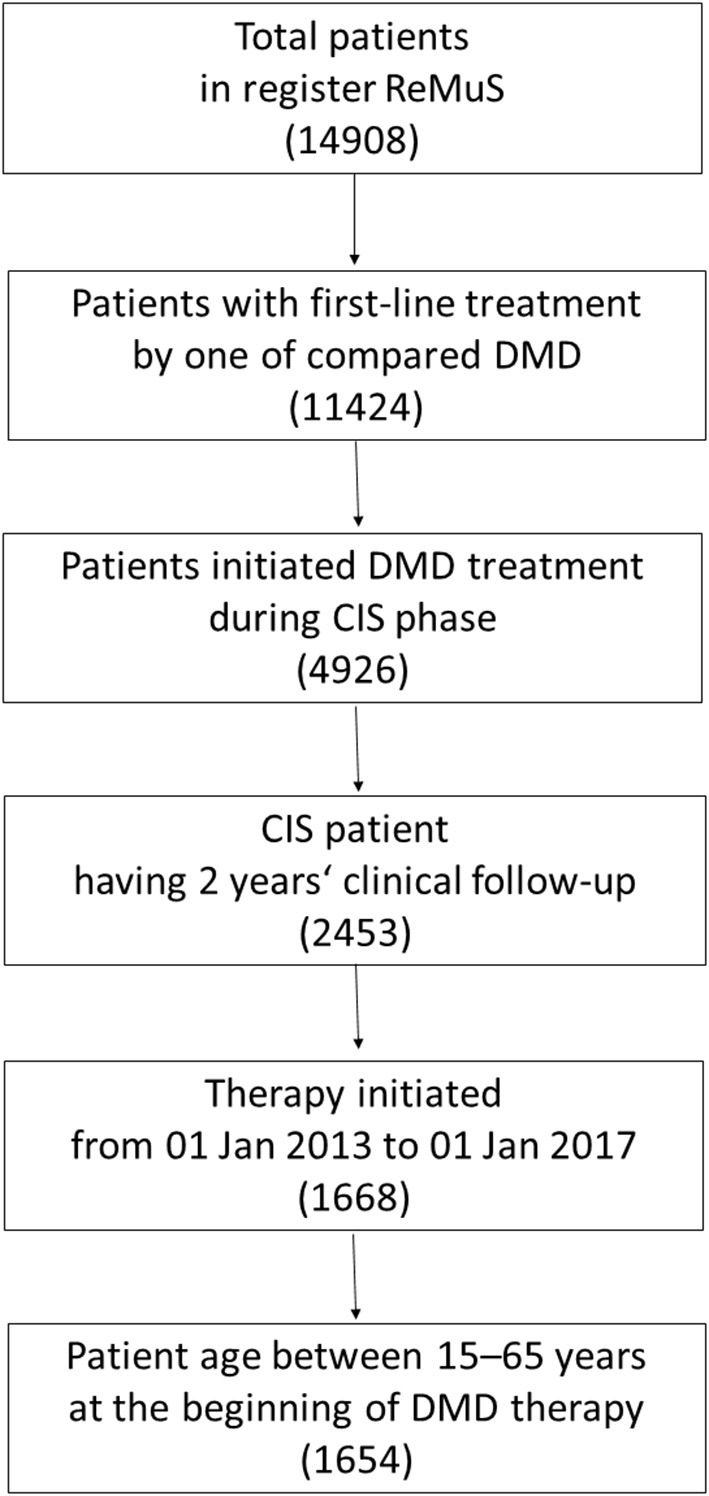
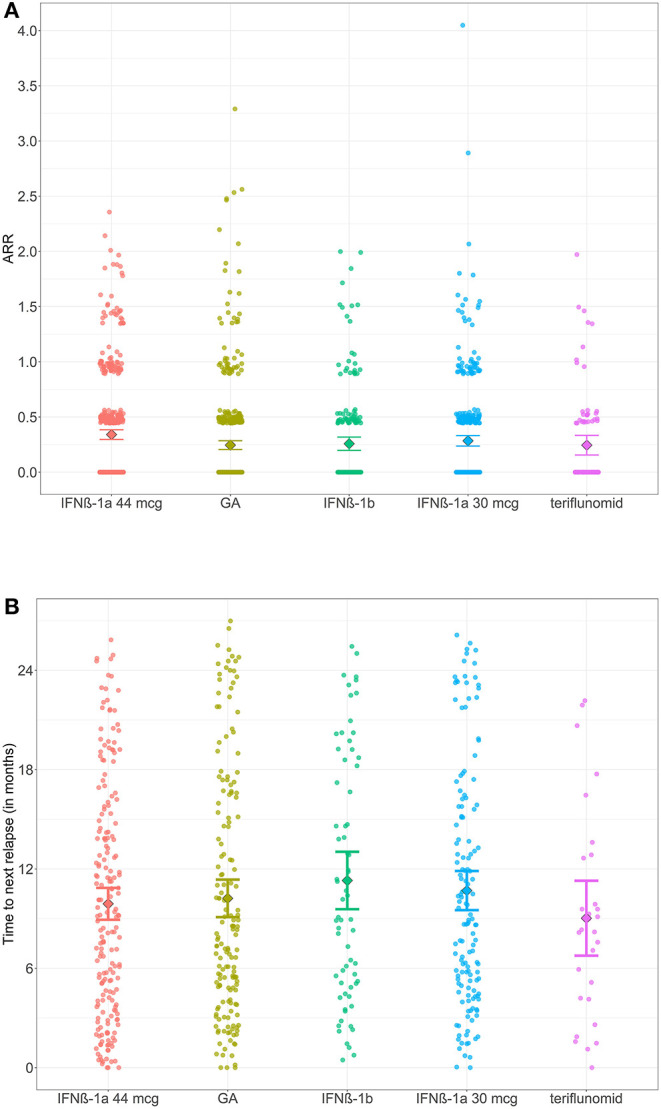
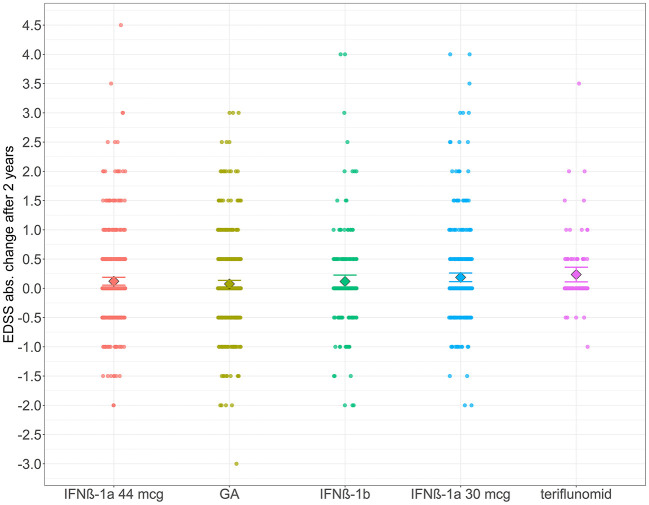
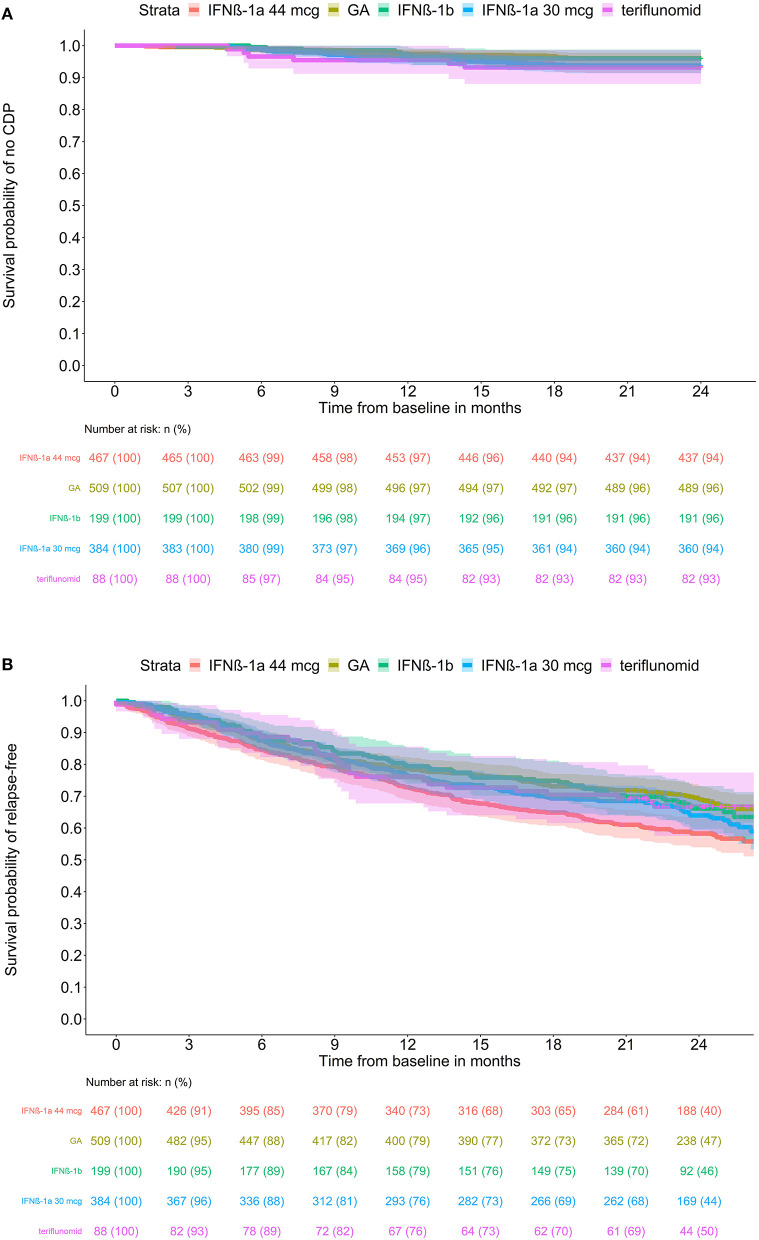
Multiple sclerosis (MS) is a chronic inflammatory and neurodegenerative disease of the central nervous system. Well-established drugs used for MS patients after the first demyelinating event in the Czech Republic include glatiramer acetate (GA), interferon beta-1a (IFNβ-1a), IFN beta-1b (IFNβ-1b), peginterferon beta-1a (peg-IFNβ-1a), and teriflunomide. The objective of this observational study was to compare the effectiveness of the abovementioned drugs in patients with MS who initiated their therapy after the first demyelinating event. Patients were followed for up to 2 years in real clinical practice in the Czech Republic. A total of 1,654 MS patients treated after the first demyelinating event and followed up for 2 years were enrolled. Evaluation parameters (endpoints) included the annualized relapse rate (ARR), time to next relapse, change in the Expanded Disability Status Scale (EDSS) score, and time of confirmed disease progression (CDP). When patients ended the therapy before the observational period, the reason for ending the therapy among different treatments was compared. No significant difference was found among the groups of patients treated with IFNβ-1a/1b, GA, or teriflunomide for the following parameters: time to the first relapse, change in the EDSS score, and the proportion of patients with CDP. Compared to IFNβ-1a (44 mcg), a significant increase in the percentage of relapse-free patients was found for GA, but this treatment effect was not confirmed by the validation analysis. Compared to the other drugs, there was a significant difference in the reasons for terminating GA therapy. Small differences were found among GA, IFNβ and teriflunomide therapies, with no significant impact on the final outcome after 2 years. Therefore, in clinical practice, we recommend choosing the drug based on individual potential risk from long-term therapy and on patient preferences and clinical characteristics.
多发性硬化症(MS)是一种中枢神经系统的慢性炎症性和神经退行性疾病。在捷克共和国,首次脱髓鞘事件后用于MS患者的成熟药物包括醋酸格拉替雷(GA)、干扰素β-1a(IFNβ-1a)、干扰素β-1b(IFNβ-1b)、聚乙二醇干扰素β-1a(peg-IFNβ-1a)和特立氟胺。这项观察性研究的目的是比较上述药物在首次脱髓鞘事件后开始治疗的MS患者中的有效性。在捷克共和国的实际临床实践中,对患者进行了长达2年的随访。共有1654例首次脱髓鞘事件后接受治疗并随访2年的MS患者入组。评估参数(终点)包括年化复发率(ARR)、下次复发时间、扩展残疾状态量表(EDSS)评分变化以及确诊疾病进展(CDP)时间。当患者在观察期前结束治疗时,比较了不同治疗方法中结束治疗的原因。在接受IFNβ-1a/1b、GA或特立氟胺治疗的患者组中,以下参数未发现显著差异:首次复发时间、EDSS评分变化以及CDP患者比例。与IFNβ-1a(44 mcg)相比,GA治疗的无复发患者百分比显著增加,但该治疗效果未得到验证分析的证实。与其他药物相比,终止GA治疗的原因存在显著差异。GA、IFNβ和特立氟胺治疗之间存在微小差异,对2年后的最终结果无显著影响。因此,在临床实践中,我们建议根据长期治疗的个体潜在风险、患者偏好和临床特征来选择药物。