Department of Paediatric Surgery and Urology, AP-HP, Necker-Enfants Malades Hospital, Université de Paris, Paris, France.
Urology, Predictive Onco-Urology, GRC 5, APHP, Pitié-Salpêtrière, Sorbonne University, 75013, Paris, France.
J Robot Surg. 2021 Dec;15(6):937-944. doi: 10.1007/s11701-021-01201-y. Epub 2021 Jan 28.
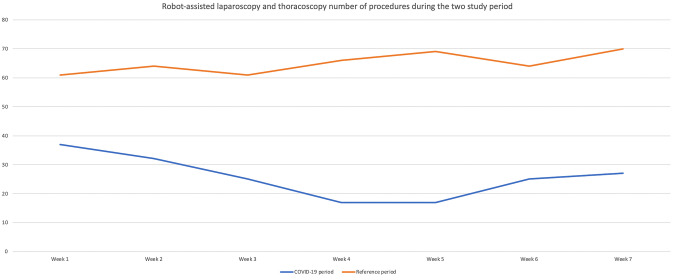
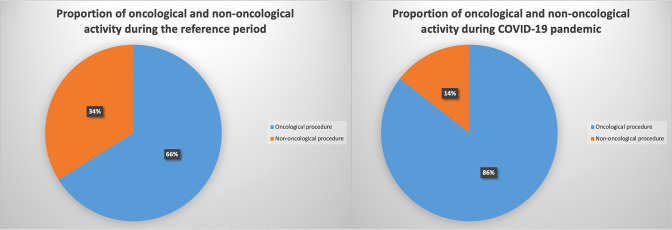
The COVID-19 pandemic led to a decrease in surgical activity to avoid nosocomial contamination. Robotic-assisted surgery safety is uncertain, since viral dissemination could be facilitated by gas environment. We assessed the impact and safety of the COVID-19 pandemic on robotic-assisted surgery. Data were collected prospectively during lockdown (March 16th-April 30th 2020) in 10 academic centres with robotic surgical activity and was compared to a reference period of similar length. After surgery, patients with suspected COVID-19 were tested by RT-PCR. During the COVID-19 lockdown we evidenced a 60% decrease in activity and a 49% decrease in oncological procedures. However, the overall proportion of oncological surgeries was significantly higher during the pandemic (p < 0.001). Thirteen (7.2%) patients had suspected COVID-19 contamination, but only three (1.6%) were confirmed by RT-PCR. The COVID-19 pandemic resulted in a significant decrease in robotic-assisted surgery. Robotic approach was safe with a low rate of postoperative COVID-19 contamination.
新冠疫情大流行导致手术活动减少,以避免医院内污染。由于气体环境可能促进病毒传播,因此机器人辅助手术的安全性尚不确定。我们评估了新冠疫情大流行对机器人辅助手术的影响和安全性。在封锁期间(2020 年 3 月 16 日至 4 月 30 日),我们在 10 个有机器人手术活动的学术中心前瞻性地收集数据,并与相似长度的参考期进行比较。手术后,对疑似新冠患者进行 RT-PCR 检测。在新冠疫情封锁期间,我们发现活动量减少了 60%,肿瘤手术减少了 49%。然而,大流行期间肿瘤手术的总体比例明显更高(p<0.001)。有 13 名(7.2%)患者疑似新冠污染,但只有 3 名(1.6%)经 RT-PCR 确诊。新冠疫情大流行导致机器人辅助手术显著减少。机器人方法是安全的,术后新冠污染率较低。