Bundeswehr Institute of Microbiology, Munich, Germany.
GNA Biosolutions GmbH, Martinsried, Germany.
PLoS Negl Trop Dis. 2021 Jan 29;15(1):e0009114. doi: 10.1371/journal.pntd.0009114. eCollection 2021 Jan.
Molecular diagnostics has become essential in the identification of many infectious and neglected diseases, and the detection of nucleic acids often serves as the gold standard technique for most infectious agents. However, established techniques like polymerase chain reaction (PCR) are time-consuming laboratory-bound techniques while rapid tests such as Lateral Flow Immunochromatographic tests often lack the required sensitivity and/or specificity.
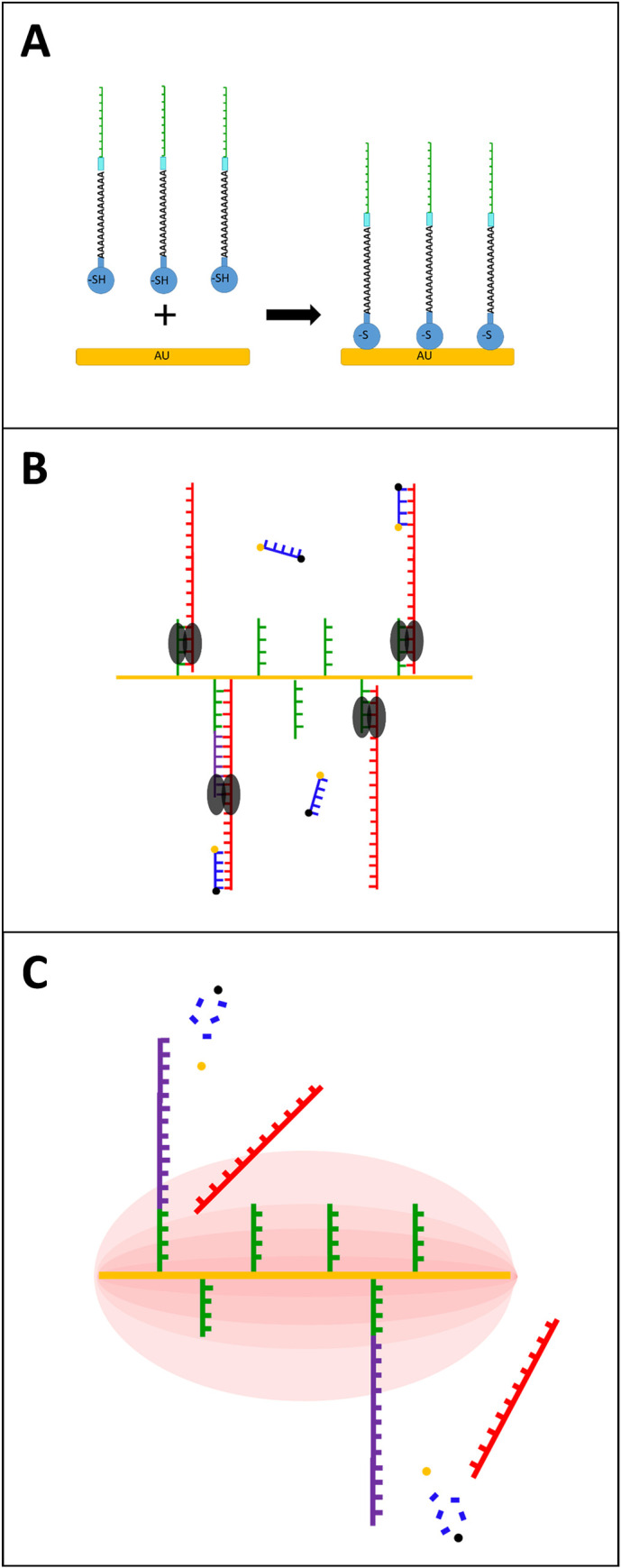
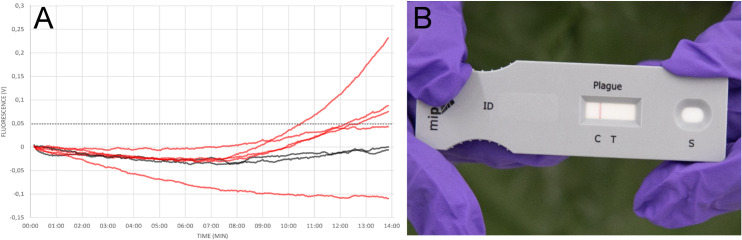
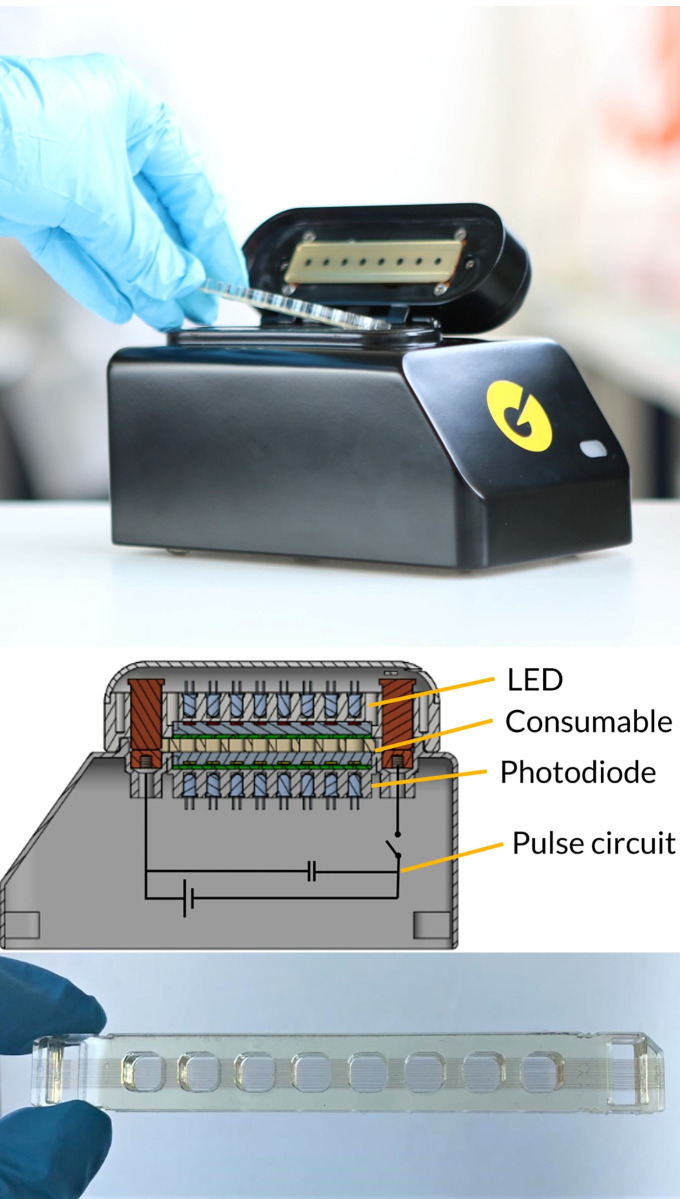
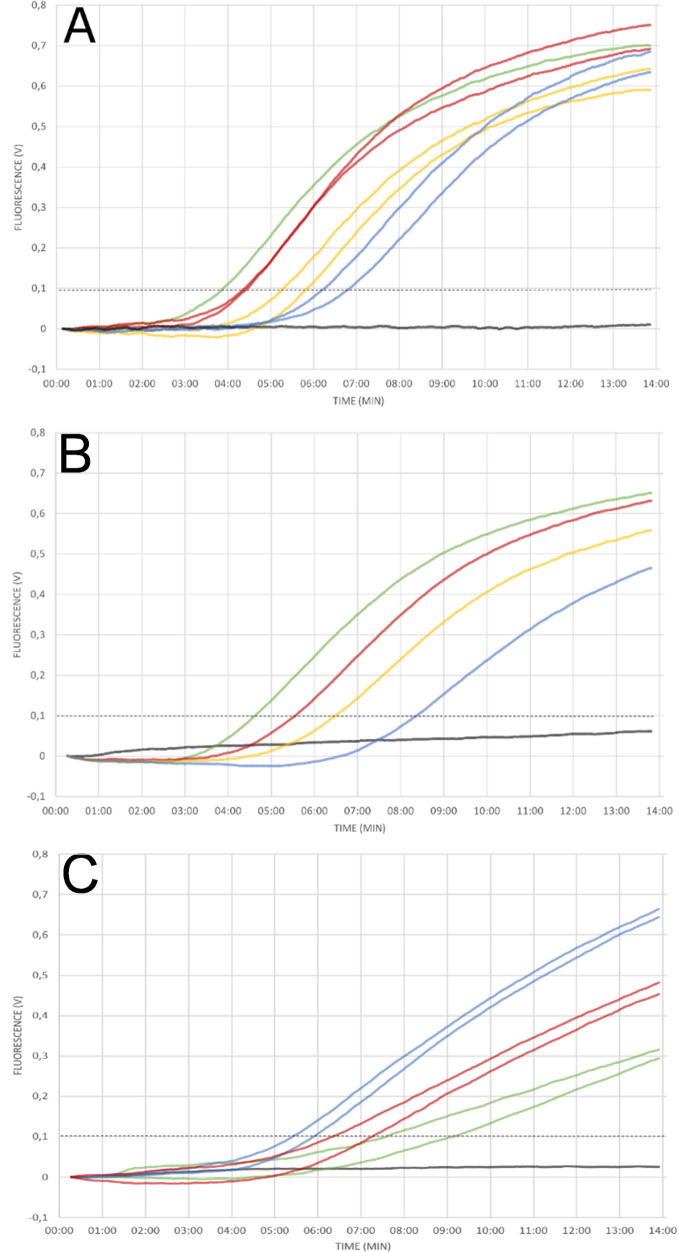
METHODS/PRINCIPLE FINDINGS: Here we present an affordable, highly mobile alternative method for the rapid identification of infectious agents using pulse-controlled amplification (PCA). PCA is a next generation nucleic acid amplification technology that uses rapid energy pulses to heat microcyclers (micro-scale metal heating elements embedded directly in the amplification reaction) for a few microseconds, thus only heating a small fraction of the reaction volume. The heated microcyclers cool off nearly instantaneously, resulting in ultra-fast heating and cooling cycles during which classic amplification of a target sequence takes place. This reduces the overall amplification time by a factor of up to 10, enabling a sample-to-result workflow in just 15 minutes, while running on a small and portable prototype device. In this proof of principle study, we designed a PCA-assay for the detection of Yersinia pestis to demonstrate the efficacy of this technology. The observed detection limits were 434 copies per reaction (purified DNA) and 35 cells per reaction (crude sample) respectively of Yersinia pestis.
CONCLUSIONS/SIGNIFICANCE: PCA offers fast and decentralized molecular diagnostics and is applicable whenever rapid, on-site detection of infectious agents is needed, even under resource limited conditions. It combines the sensitivity and specificity of PCR with the rapidness and simplicity of hitherto existing rapid tests.
分子诊断在许多传染病和被忽视疾病的诊断中已变得至关重要,核酸检测通常是大多数传染病病原体的金标准技术。然而,聚合酶链反应(PCR)等已建立的技术是耗时的实验室技术,而侧向流动免疫层析等快速检测方法通常缺乏所需的灵敏度和/或特异性。
方法/原理发现:在这里,我们提出了一种经济实惠、高度移动的替代方法,用于使用脉冲控制扩增(PCA)快速识别传染病病原体。PCA 是一种下一代核酸扩增技术,它使用快速能量脉冲在几微秒内加热微环(直接嵌入扩增反应中的微型金属加热元件),从而仅加热反应体积的一小部分。加热的微环几乎瞬间冷却,从而在超快速加热和冷却循环期间发生目标序列的经典扩增,其中经典扩增发生在超快速加热和冷却循环期间。这将总扩增时间减少了多达 10 倍,使样品到结果的工作流程仅需 15 分钟,同时在小型便携式原型设备上运行。在这项原理验证研究中,我们设计了用于检测鼠疫耶尔森氏菌的 PCA 测定法,以证明该技术的功效。观察到的检测极限分别为每反应 434 个拷贝(纯化 DNA)和每反应 35 个细胞(粗样品)的鼠疫耶尔森氏菌。
结论/意义:PCA 提供了快速和分散的分子诊断,并且在需要快速、现场检测传染病病原体的情况下,甚至在资源有限的情况下都适用。它将 PCR 的灵敏度和特异性与迄今为止存在的快速检测方法的快速性和简单性相结合。