Epilepsy Center of Excellence, VA Puget Sound Health Care System, Seattle, WA 98108.
Department of Neurology, University of Washington, Seattle, WA 98195.
eNeuro. 2021 May 5;8(3). doi: 10.1523/ENEURO.0055-20.2021. Print 2021 May-Jun.
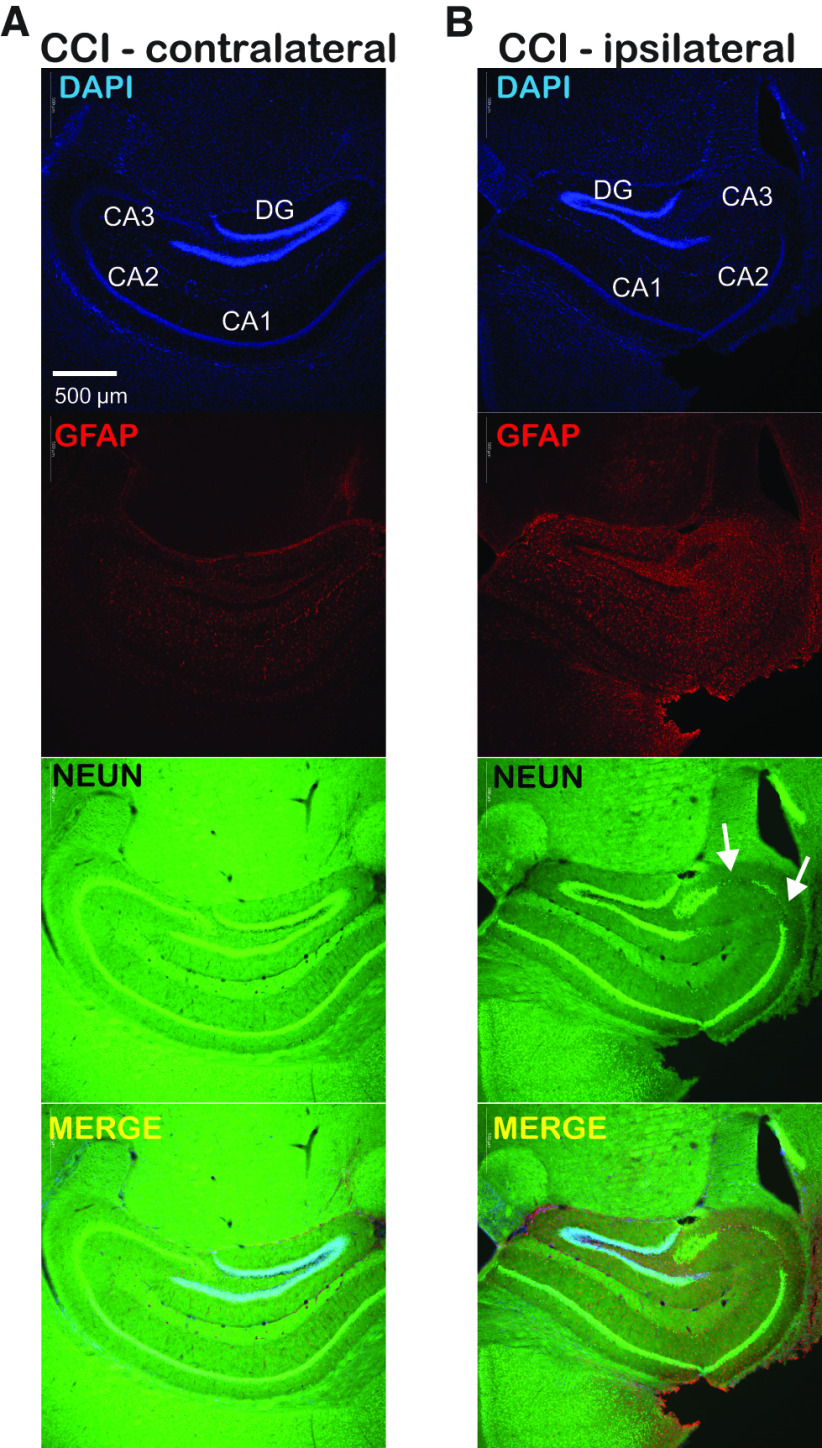
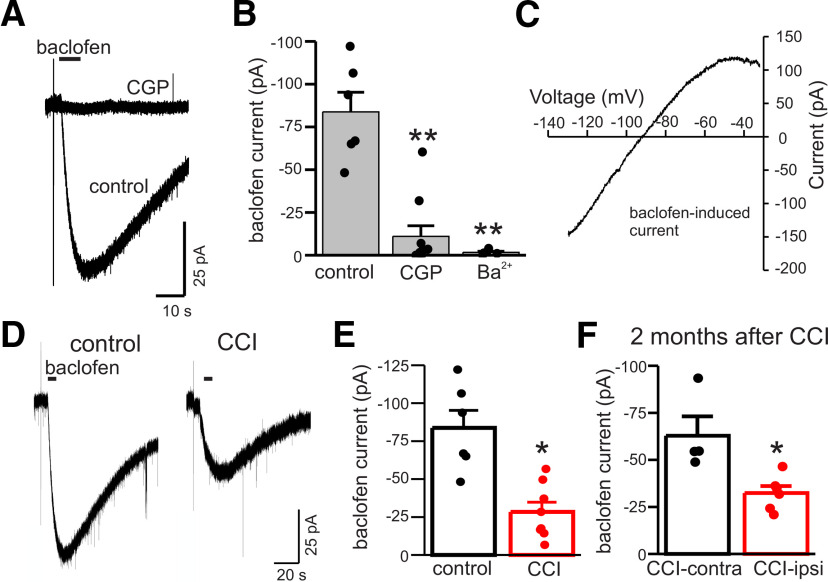
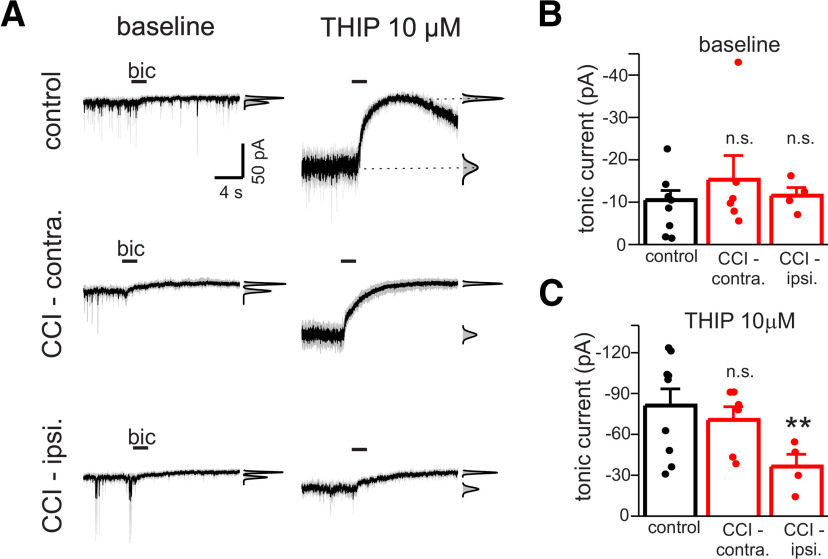
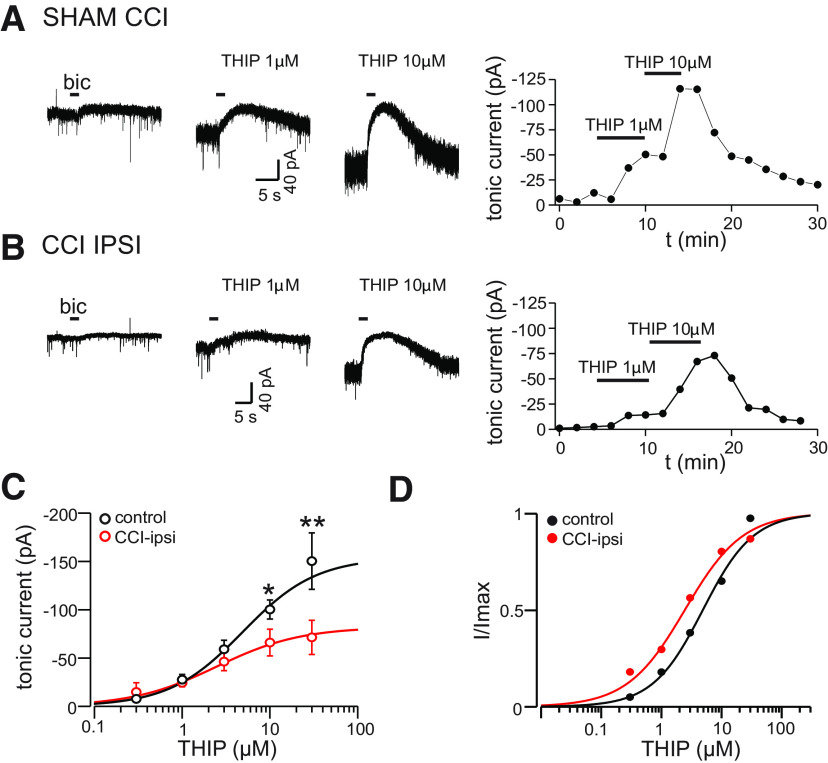
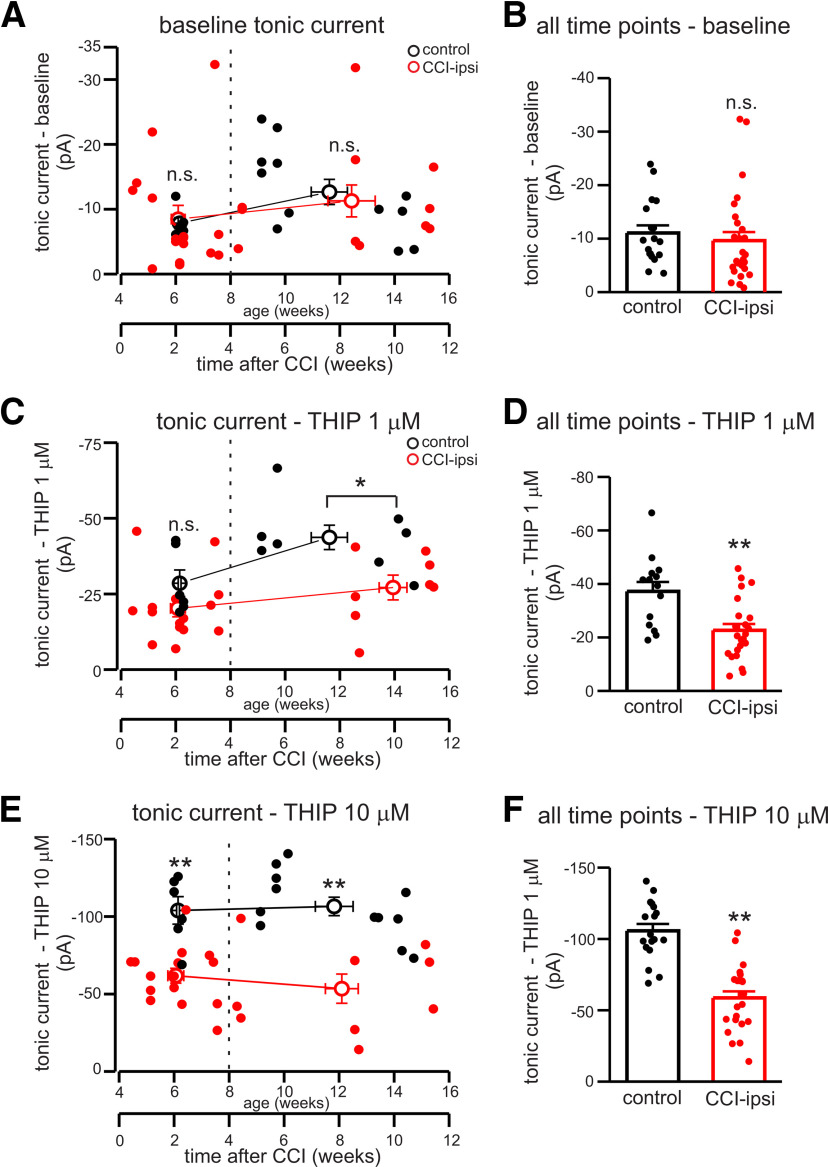
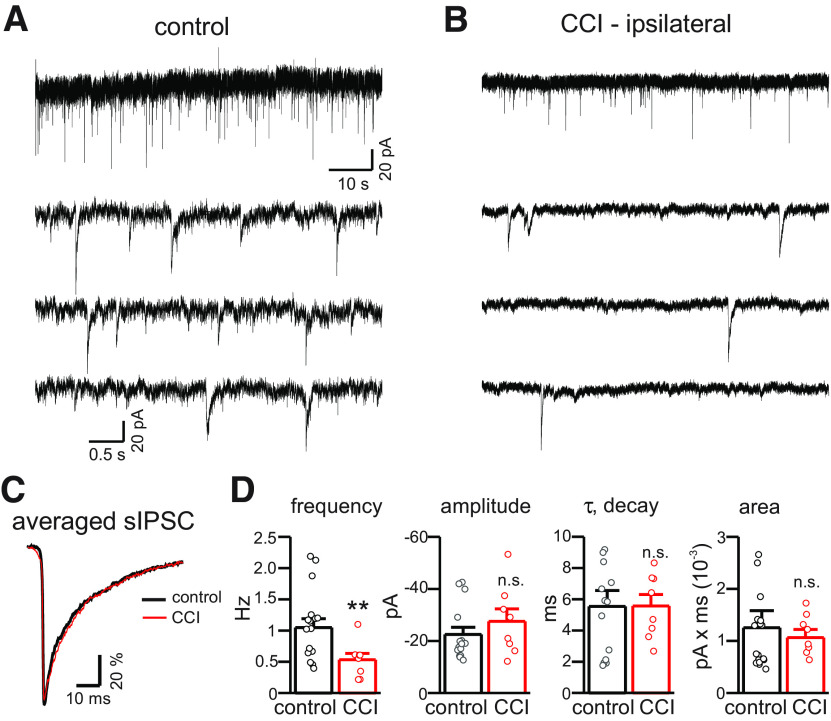
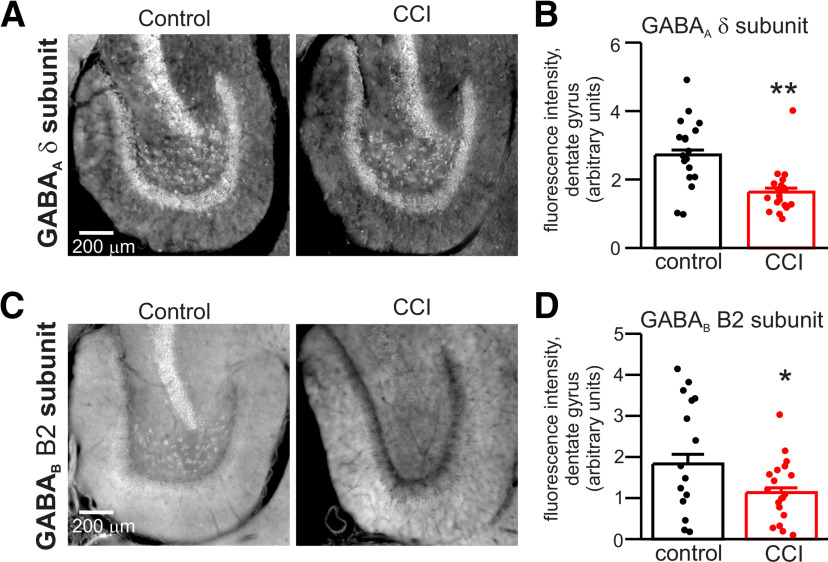
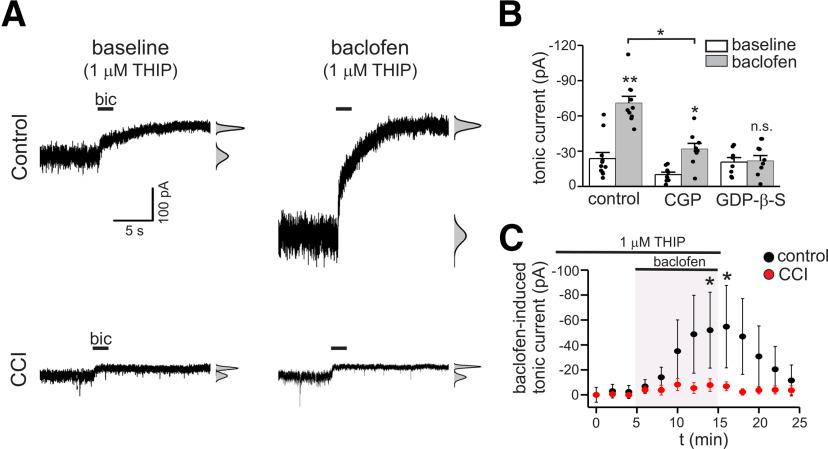
Traumatic brain injury (TBI) causes cellular and molecular alterations that contribute to neuropsychiatric disease and epilepsy. GABAergic dysfunction figures prominently in the pathophysiology of TBI, yet the effects of TBI on tonic inhibition in hippocampus remain uncertain. We used a mouse model of severe TBI [controlled cortical impact (CCI)] to investigate GABAergic signaling in dentate gyrus granule cells (DGGCs). Basal tonic GABA currents were not affected by CCI. However, tonic currents induced by the δ subunit-selective GABA receptor agonist 4,5,6,7-tetrahydroisoxazolo[5,4-c]pyridin-3-ol (THIP; 10 μm) were reduced by 44% in DGGCs ipsilateral to CCI (CCI-ipsi), but not in contralateral DGGCs. Reduced THIP currents were apparent one week after injury and persisted up to 15 weeks. The frequency of spontaneous IPSCs (sIPSCs) was reduced in CCI-ipsi cells, but the amplitude and kinetics of sIPSCs were unaffected. Immunohistochemical analysis showed reduced expression of GABA receptor δ subunits and GABA receptor B2 subunits after CCI, by 43% and 40%, respectively. Activation of postsynaptic GABA receptors caused a twofold increase in tonic currents, and this effect was markedly attenuated in CCI-ipsi cells (92% reduction). GABA receptor-activated K currents in DGGCs were also significantly reduced in CCI-ipsi cells, confirming a functional deficit of GABA receptors after CCI. Results indicate broad disruption of GABAergic signaling in DGGCs after CCI, with deficits in both phasic and tonic inhibition and GABA receptor function. These changes are predicted to disrupt operation of hippocampal networks and contribute to sequelae of severe TBI, including epilepsy.
创伤性脑损伤(TBI)导致细胞和分子改变,导致神经精神疾病和癫痫。GABA 能功能障碍在 TBI 的病理生理学中起着重要作用,但 TBI 对海马体紧张性抑制的影响仍不确定。我们使用严重 TBI 的小鼠模型[皮质控制冲击(CCI)]来研究齿状回颗粒细胞(DGGC)中的 GABA 能信号。CCI 并未影响基础紧张性 GABA 电流。然而,CCI 同侧 DGGC 中的 δ 亚基选择性 GABA 受体激动剂 4,5,6,7-四氢异恶唑并[5,4-c]吡啶-3-醇(THIP;10 μm)诱导的紧张性电流减少了 44%,但对对侧 DGGC 没有影响。损伤后一周即可观察到 THIP 电流减少,并持续至 15 周。CCI 同侧细胞的自发 IPSC(sIPSC)频率降低,但 sIPSC 的幅度和动力学不受影响。免疫组织化学分析显示 CCI 后 GABA 受体 δ 亚基和 GABA 受体 B2 亚基的表达分别减少了 43%和 40%。激活突触后 GABA 受体可使紧张性电流增加两倍,而 CCI-ipsi 细胞的这种作用明显减弱(减少 92%)。CCI-ipsi 细胞中 DGGC 的 GABA 受体激活 K 电流也显著降低,证实 CCI 后 GABA 受体功能出现功能缺陷。结果表明,CCI 后 DGGC 中的 GABA 能信号广泛中断,包括相位和紧张性抑制以及 GABA 受体功能均出现缺陷。这些变化预计会破坏海马体网络的运作,并导致严重 TBI 的后遗症,包括癫痫。