Marine Biology Research Group, Ghent University, Ghent, Belgium.
HGF MPG Joint Research Group for Deep-Sea Ecology and Technology, Alfred-Wegener-Institut, Helmholtz Zentrum für Polar-und Meeresforschung, Bremerhaven, Germany.
Commun Biol. 2021 Jan 29;4(1):148. doi: 10.1038/s42003-021-01673-6.
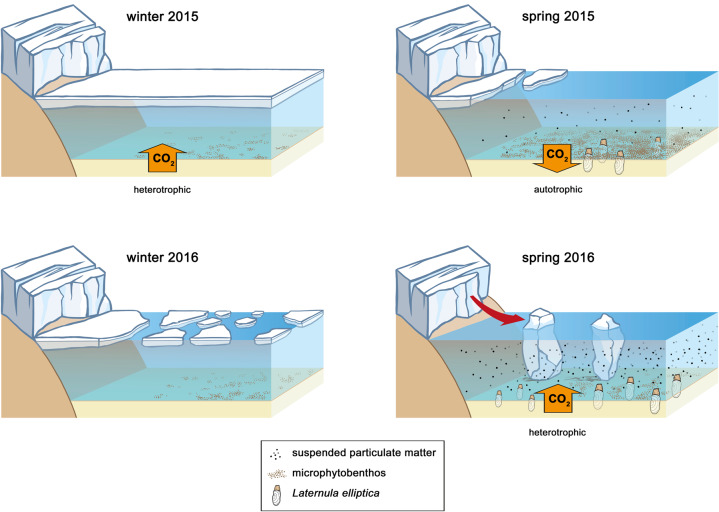
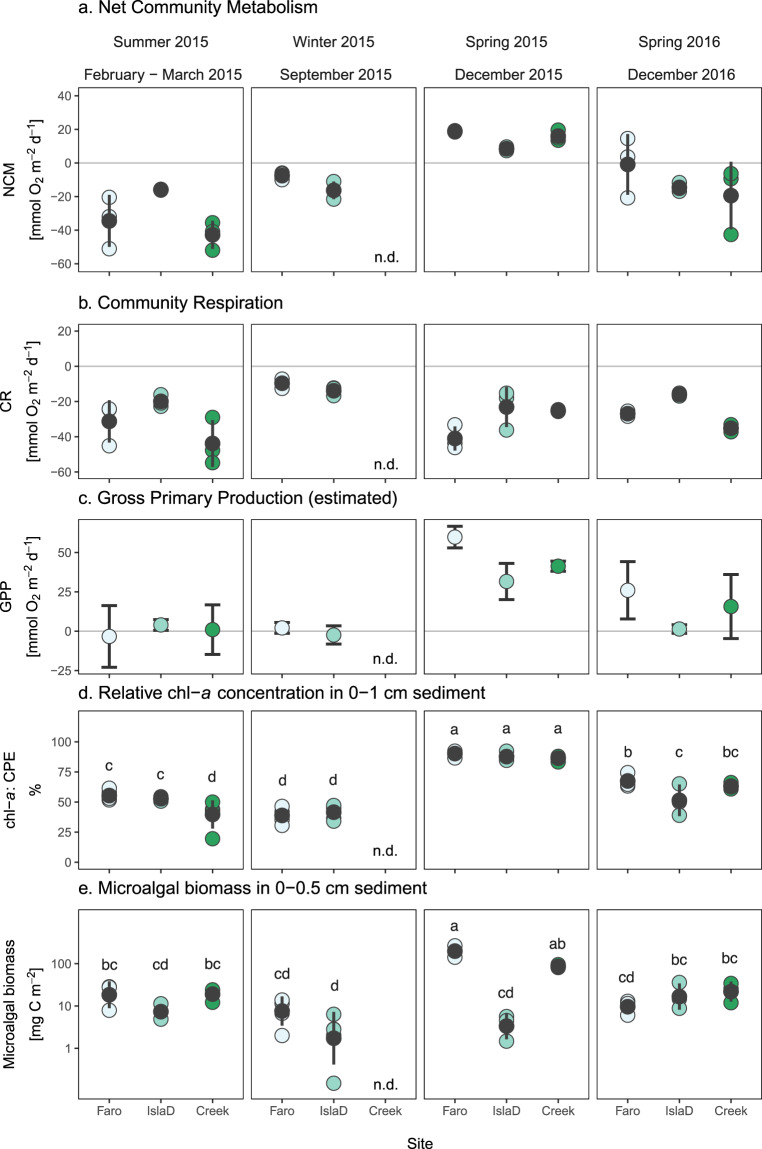
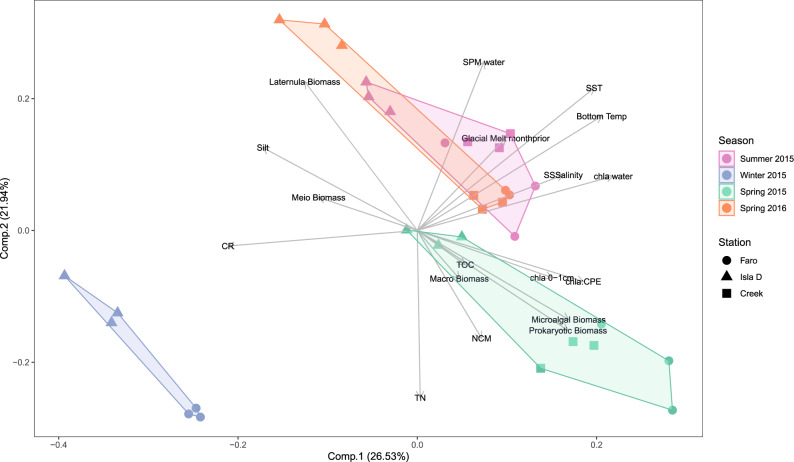
Climate change-induced glacial melt affects benthic ecosystems along the West Antarctic Peninsula, but current understanding of the effects on benthic primary production and respiration is limited. Here we demonstrate with a series of in situ community metabolism measurements that climate-related glacial melt disturbance shifts benthic communities from net autotrophy to heterotrophy. With little glacial melt disturbance (during cold El Niño spring 2015), clear waters enabled high benthic microalgal production, resulting in net autotrophic benthic communities. In contrast, water column turbidity caused by increased glacial melt run-off (summer 2015 and warm La Niña spring 2016) limited benthic microalgal production and turned the benthic communities net heterotrophic. Ongoing accelerations in glacial melt and run-off may steer shallow Antarctic seafloor ecosystems towards net heterotrophy, altering the metabolic balance of benthic communities and potentially impacting the carbon balance and food webs at the Antarctic seafloor.
气候变化引起的冰川融化影响着西南极半岛的底栖生态系统,但目前对底栖初级生产和呼吸作用的影响了解有限。在这里,我们通过一系列现场群落新陈代谢测量表明,与气候相关的冰川融化干扰将底栖群落从净自养转变为异养。在冰川融化干扰较小的情况下(在 2015 年寒冷的厄尔尼诺春季),清澈的水使底栖微藻产生大量的净初级生产力,从而形成净自养的底栖群落。相比之下,由于冰川融化径流增加导致的水柱浊度(2015 年夏季和 2016 年温暖的拉尼娜春季)限制了底栖微藻的产生,并使底栖群落成为净异养的。冰川融化和径流的持续加速可能会使浅海南极海底生态系统向净异养方向发展,改变底栖群落的代谢平衡,并可能影响南极海底的碳平衡和食物网。