Department of Internal Medicine, Istanbul Faculty of Medicine, Istanbul University, Istanbul, Turkey.
Department of Internal Medicine, Division of Geriatrics, Istanbul Faculty of Medicine, Istanbul University, Istanbul, Turkey.
Infect Genet Evol. 2021 Apr;89:104717. doi: 10.1016/j.meegid.2021.104717. Epub 2021 Jan 27.
BACKGROUND/OBJECTIVES: COVID-19 followed a mortal course in some young patients without any underlying factors, however, it followed a very benign course in some very older individuals with multiple comorbidities. These observations question if some genetic factors may be related to the vulnerability and poor prognosis of the disease. In this study, we aimed to investigate whether MBL2 gene B variant at codon 54 (rs1800450) were related to the variabilities in clinical course of this infection.
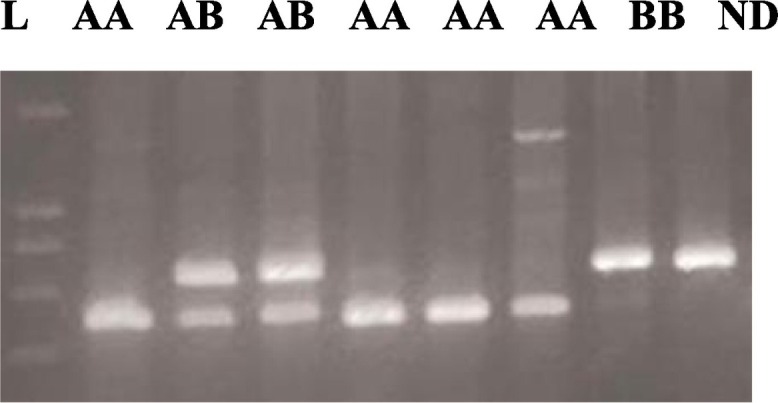
284 PCR-confirmed COVID-19 patients and 100 healthy controls were included in the study. COVID-19 patients were subdivided according to the clinical features and clinical characteristics were analyzed. DNAs of all patients and controls were examined for the codon 54 A/B (gly54asp: rs1800450) variation in exon 1 of the MBL2 gene.
In univariate analysis, BB genotype of MBL2 gene was more common among COVID-19 cases compared with controls (10.9% vs 1.0%, respectively; OR = 12.1, 95%CI = 1.6-90.1, p = 0.001). Multivariate analyses, adjusted for age, sex and MBL genetic variants, revealed that when compared with the COVID-19 patients that had AA genotype (reference), the patients that had BB or AB genotypes suffered from a higher risk for severe disease (for BB genotype, odds ratio (OR) = 5.3, p < 0.001; for AB genotype, OR = 2.9, p = 0.001) and for ICU need (for BB genotype, OR = 19.6, p < 0.001; for AB genotype, OR = 6.9, p = 0.001). On the other hand, there was not any significant difference between the genotype variants in terms of mortality at 28 days or development of secondary bacterial infection.
The B variants of MBL2 gene at codon 54, which were associated with lower MBL2 levels, were related to a higher risk for a more severe clinical course of COVID-19 infection in some respects. Our findings may have potential future implications, e.g. for use of MBL protein as potential therapeutics or prioritize the individuals with B variants during vaccination strategies.
背景/目的:在一些没有任何潜在因素的年轻患者中,COVID-19 呈现出致命的病程,但在一些患有多种合并症的非常年长的个体中,其病程却非常良性。这些观察结果质疑某些遗传因素是否与疾病的脆弱性和不良预后有关。在这项研究中,我们旨在研究甘露聚糖结合凝集素 2 基因(MBL2)第 54 位密码子 B 变体(rs1800450)是否与这种感染的临床病程变化有关。
本研究纳入了 284 例经 PCR 确诊的 COVID-19 患者和 100 名健康对照者。根据临床特征对 COVID-19 患者进行了细分,并分析了临床特征。对所有患者和对照者的 DNA 进行了 MBL2 基因外显子 1 第 54 位密码子 A/B(gly54asp:rs1800450)变异的检测。
在单因素分析中,与对照组相比,COVID-19 患者中 MBL2 基因的 BB 基因型更为常见(分别为 10.9%和 1.0%;OR=12.1,95%CI=1.6-90.1,p=0.001)。多因素分析,调整了年龄、性别和 MBL 遗传变异,结果显示,与 AA 基因型(参考)的 COVID-19 患者相比,BB 或 AB 基因型的患者患严重疾病的风险更高(BB 基因型,OR=5.3,p<0.001;AB 基因型,OR=2.9,p=0.001),需要入住 ICU 的风险也更高(BB 基因型,OR=19.6,p<0.001;AB 基因型,OR=6.9,p=0.001)。另一方面,在 28 天死亡率或继发细菌性感染的发生率方面,基因型变异之间没有任何显著差异。
MBL2 基因第 54 位密码子的 B 变体与较低的 MBL2 水平相关,在某些方面与 COVID-19 感染更严重的临床病程有关。我们的发现可能具有潜在的未来意义,例如将 MBL 蛋白作为潜在的治疗药物使用,或在接种策略中优先考虑 B 变体个体。