College of Animal Sciences, Zhejiang University, Hangzhou 310058, China; Institute of Animal Husbandry and Veterinary Science, Zhejiang Academy of Agricultural Sciences, Hangzhou 310021, China.
College of Animal Sciences, Zhejiang University, Hangzhou 310058, China.
Poult Sci. 2021 Feb;100(2):1154-1166. doi: 10.1016/j.psj.2020.10.049. Epub 2020 Nov 3.
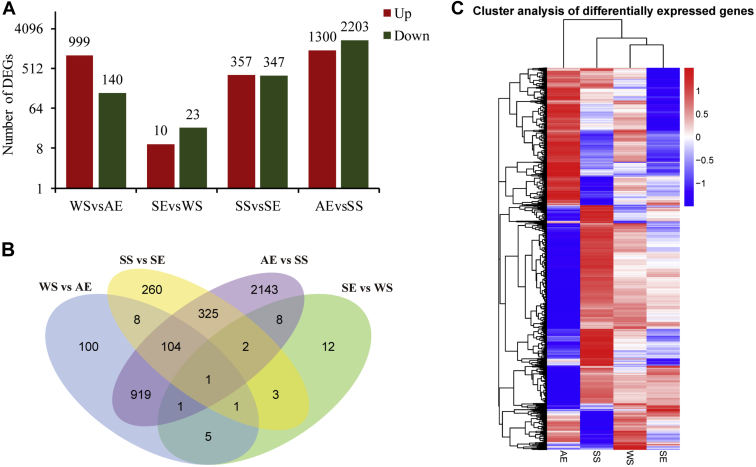
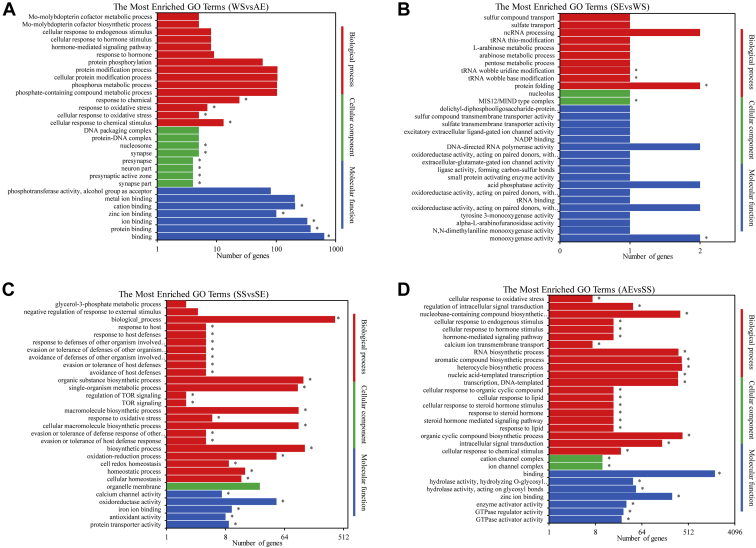
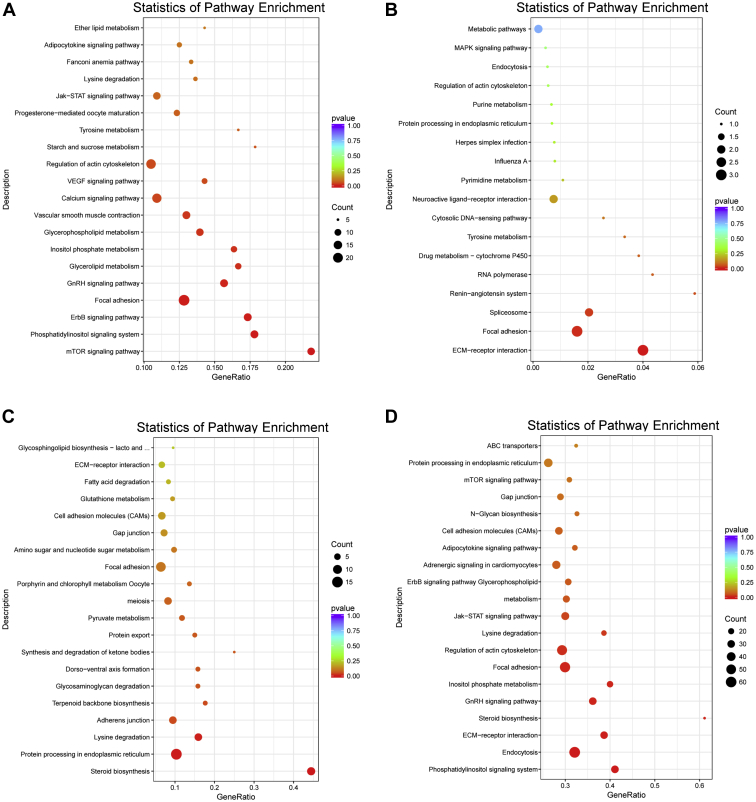
In animals, the adaptation to breed at the time of greatest survival of the young is known as seasonal reproduction. This is mainly controlled by the photoperiod, which stimulates the hypothalamic-pituitary-gonadal axis and starts the breeding season. Herein, we have determined the seasonal changes in gene expression patterns of Zhedong white geese pituitary glands under a natural photoperiodism, conducted at autumn equinox (AE), winter solstice (WS), spring equinox (SE), and summer solstice (SS). Pairwise comparisons of WS vs. AE, SE vs. WS, SS vs. SE, and AE vs. SS resulted in 1,139, 33, 704, and 3,503 differently expressed genes, respectively. When compared with SS, AE showed downregulation of genes, such as vasoactive intestinal peptide receptor, prolactin receptor, and thyroid hormone receptor beta, whereas gonadotropin-releasing hormone II receptor was upregulated, indicating that these genes may be responsible for the transition from cessation to egg laying. In addition, the expression levels of 5 transcription factors (POU1F1, Pitx2, NR5A1, NR4A2, and SREBF2) and 6 circadian clock-associated genes (Clock, Per2, ARNTL2, Eya3, Dio2, and NPAS2) also changed seasonally. Gene Ontology term and Kyoto Encyclopedia of Genes and Genomes enrichment analysis revealed that "response to oxidative stress" and steroid biosynthesis pathway also participate in regulating the reproduction seasonality of geese. Overall, these results contribute to the identification of genes involved in seasonal reproduction, enabling a better understanding of the molecular mechanism underlying seasonal reproduction of geese.
在动物中,为了使幼崽在生存机会最大的时候繁殖,这种适应被称为季节性繁殖。这主要受光周期的控制,光周期刺激下丘脑-垂体-性腺轴并启动繁殖季节。在此,我们在自然光照条件下确定了哲东白鹅垂体在秋分(AE)、冬至(WS)、春分(SE)和夏至(SS)时的季节性基因表达模式变化。WS 与 AE、SE 与 WS、SS 与 SE、AE 与 SS 之间的成对比较分别导致 1139、33、704 和 3503 个差异表达基因。与 SS 相比,AE 下调了血管活性肠肽受体、催乳素受体和甲状腺激素受体β等基因,而促性腺激素释放激素 II 受体上调,表明这些基因可能负责从停止产卵到产卵的过渡。此外,5 种转录因子(POU1F1、Pitx2、NR5A1、NR4A2 和 SREBF2)和 6 种生物钟相关基因(Clock、Per2、ARNTL2、Eya3、Dio2 和 NPAS2)的表达水平也呈季节性变化。基因本体论术语和京都基因与基因组百科全书富集分析表明,“对氧化应激的反应”和类固醇生物合成途径也参与调节鹅的繁殖季节性。总的来说,这些结果有助于确定参与季节性繁殖的基因,从而更好地理解鹅季节性繁殖的分子机制。