Maeda Mizuki, Kitauchi Sayaka, Hirano Tetsushi, Ikenaka Yoshinori, Nishi Misaki, Shoda Asuka, Murata Midori, Mantani Youhei, Tabuchi Yoshiaki, Yokoyama Toshifumi, Hoshi Nobuhiko
Laboratory of Animal Molecular Morphology, Department of Animal Science, Graduate School of Agricultural Science, Kobe University, 1-1 Rokkodai, Nada, Kobe, Hyogo 657-8501, Japan.
Life Science Research Center, University of Toyama, 2630 Sugitani, Toyama 930-0194, Japan.
J Vet Med Sci. 2021 Apr 3;83(3):542-548. doi: 10.1292/jvms.20-0721. Epub 2021 Feb 1.
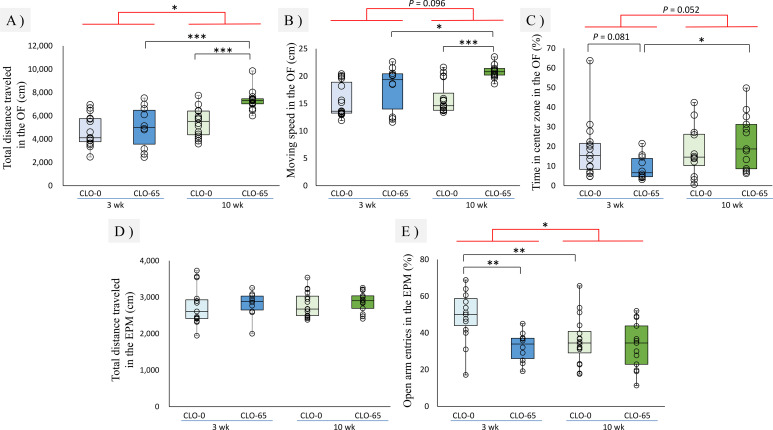
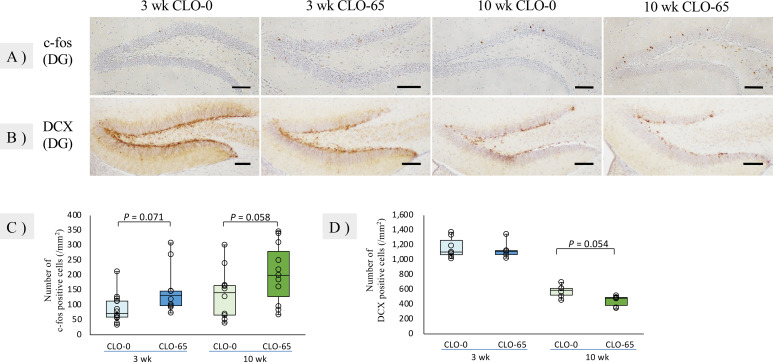
Recently, it has been reported that neonicotinoid pesticides (NNs) are transferred from mother to child and are assumed to affect the next generation, but the behavioral effects of NN exposure at different developmental stages have not been investigated. We exposed mice to no-observed-adverse-effect level (NOAEL) doses of clothianidin (CLO) during the fetal and lactational period, and then evaluated the neurobehavioral effects in juvenile and adult mice. Significant increases in anxiety-like behavior and locomotor activity were observed in juveniles and adults, respectively, and neuronal activity and neurogenesis in the hippocampal dentate gyrus were affected in both stages. These results suggest that fetal and lactational exposure to CLO may inhibit neurogenesis and cause different behavioral abnormalities at different developmental stages.
最近,有报道称新烟碱类杀虫剂(NNs)会从母体转移至子代,并被认为会影响下一代,但不同发育阶段暴露于NNs的行为影响尚未得到研究。我们在胎儿期和哺乳期让小鼠暴露于无可见不良反应水平(NOAEL)剂量的噻虫胺(CLO),然后评估幼年和成年小鼠的神经行为影响。分别在幼年和成年小鼠中观察到焦虑样行为和运动活动显著增加,并且在两个阶段海马齿状回的神经元活动和神经发生均受到影响。这些结果表明,胎儿期和哺乳期暴露于CLO可能会抑制神经发生,并在不同发育阶段导致不同的行为异常。