Gandawijaya Josan, Bamford Rosemary A, Burbach J Peter H, Oguro-Ando Asami
University of Exeter Medical School, University of Exeter, Exeter, United Kingdom.
Department of Translational Neuroscience, Brain Center Rudolf Magnus, University Medical Center Utrecht and Utrecht University, Utrecht, Netherlands.
Front Cell Neurosci. 2021 Jan 13;14:611379. doi: 10.3389/fncel.2020.611379. eCollection 2020.
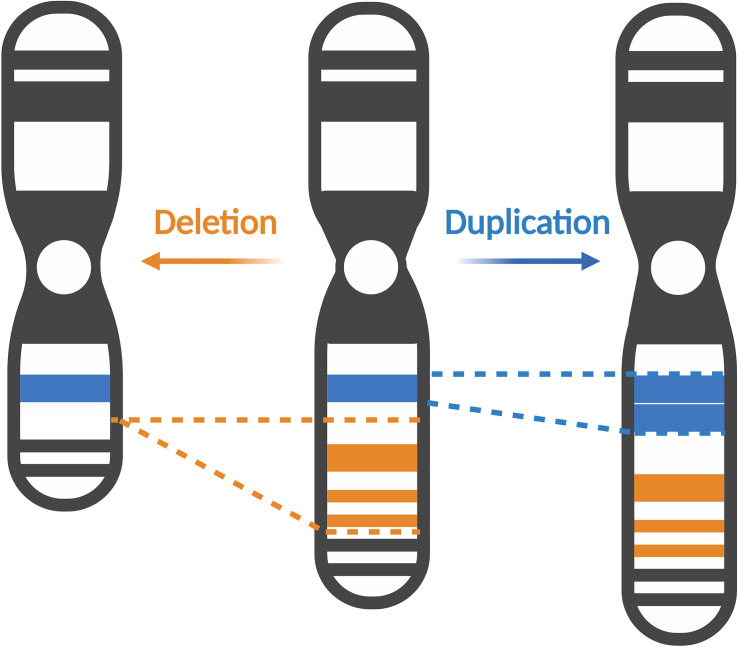
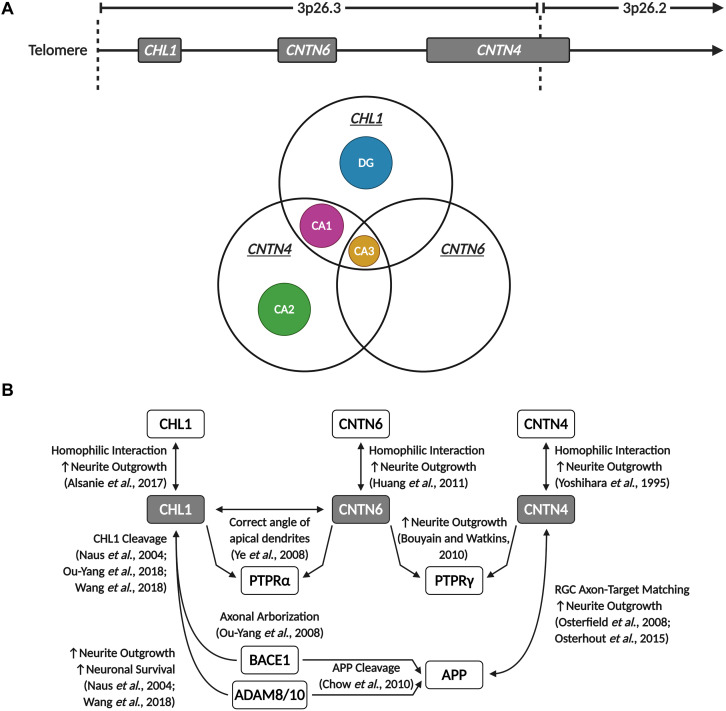
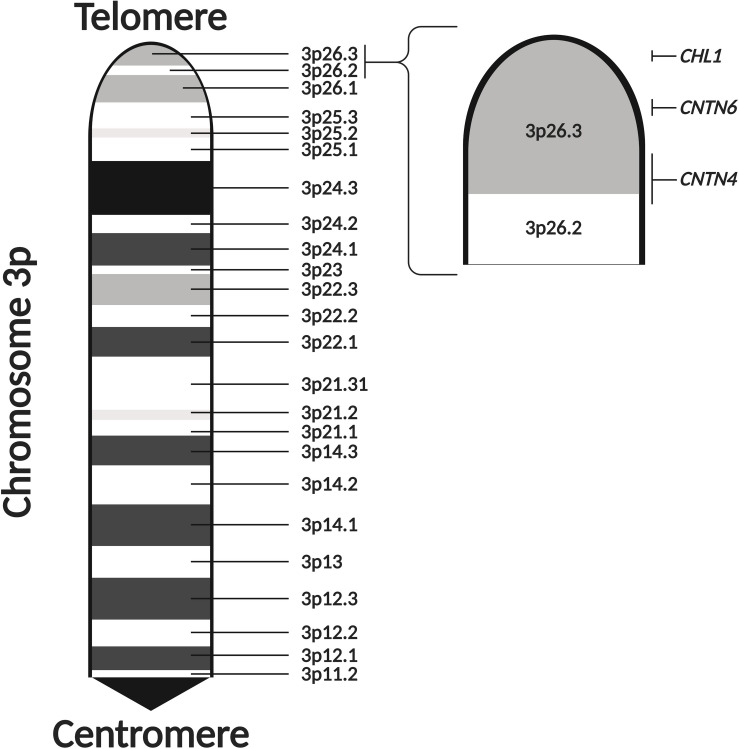
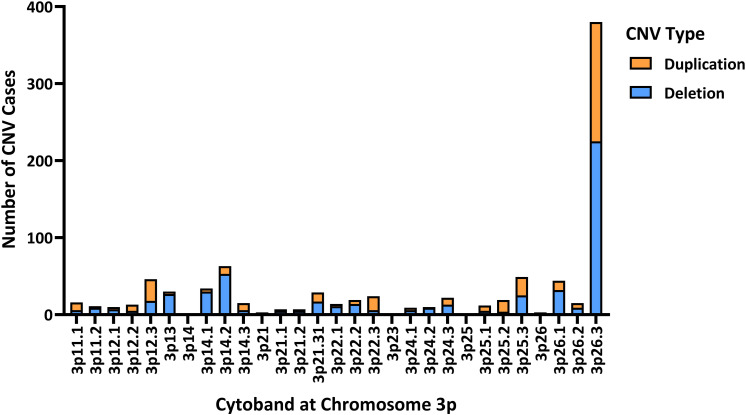
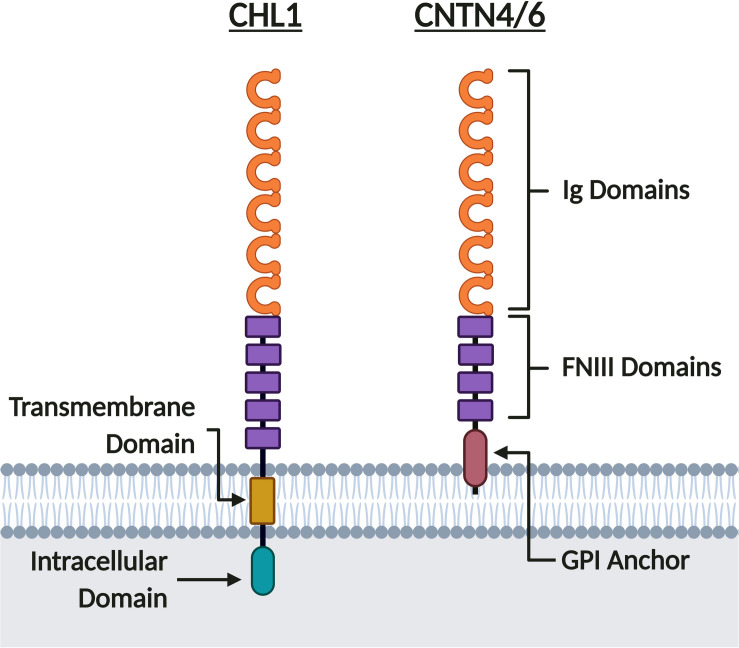
Autism spectrum disorder (ASD) is characterized by impaired social interaction, language delay and repetitive or restrictive behaviors. With increasing prevalence, ASD is currently estimated to affect 0.5-2.0% of the global population. However, its etiology remains unclear due to high genetic and phenotypic heterogeneity. Copy number variations (CNVs) are implicated in several forms of syndromic ASD and have been demonstrated to contribute toward ASD development by altering gene dosage and expression. Increasing evidence points toward the p-arm of chromosome 3 (chromosome 3p) as an ASD risk locus. Deletions occurring at chromosome 3p result in 3p-deletion syndrome (Del3p), a rare genetic disorder characterized by developmental delay, intellectual disability, facial dysmorphisms and often, ASD or ASD-associated behaviors. Therefore, we hypothesize that overlapping molecular mechanisms underlie the pathogenesis of Del3p and ASD. To investigate which genes encoded in chromosome 3p could contribute toward Del3p and ASD, we performed a comprehensive literature review and collated reports investigating the phenotypes of individuals with chromosome 3p CNVs. We observe that high frequencies of CNVs occur in the 3p26.3 region, the terminal cytoband of chromosome 3p. This suggests that CNVs disrupting genes encoded within the 3p26.3 region are likely to contribute toward the neurodevelopmental phenotypes observed in individuals affected by Del3p. The 3p26.3 region contains three consecutive genes encoding closely related neuronal immunoglobulin cell adhesion molecules (IgCAMs): (), (), and (). CNVs disrupting these neuronal IgCAMs may contribute toward ASD phenotypes as they have been associated with key roles in neurodevelopment. CHL1, CNTN6, and CNTN4 have been observed to promote neurogenesis and neuronal survival, and regulate neuritogenesis and synaptic function. Furthermore, there is evidence that these neuronal IgCAMs possess overlapping interactomes and participate in common signaling pathways regulating axon guidance. Notably, mouse models deficient for these neuronal IgCAMs do not display strong deficits in axonal migration or behavioral phenotypes, which is in contrast to the pronounced defects in neuritogenesis and axon guidance observed . This suggests that when CHL1, CNTN6, or CNTN4 function is disrupted by CNVs, other neuronal IgCAMs may suppress behavioral phenotypes by compensating for the loss of function.
自闭症谱系障碍(ASD)的特征是社交互动受损、语言发育迟缓以及重复或受限行为。随着患病率的增加,目前估计ASD影响全球0.5 - 2.0%的人口。然而,由于高度的遗传和表型异质性,其病因仍不清楚。拷贝数变异(CNV)与多种形式的综合征性ASD有关,并且已被证明通过改变基因剂量和表达对ASD的发展起作用。越来越多的证据表明3号染色体的短臂(3p)是一个ASD风险位点。3p染色体上的缺失会导致3p缺失综合征(Del3p),这是一种罕见的遗传疾病,其特征为发育迟缓、智力残疾、面部畸形,且常伴有ASD或与ASD相关的行为。因此,我们假设Del3p和ASD的发病机制存在重叠的分子机制。为了研究3p染色体上编码的哪些基因可能导致Del3p和ASD,我们进行了全面的文献综述,并整理了研究3p染色体CNV个体表型的报告。我们观察到CNV在3p26.3区域(3号染色体短臂的末端细胞带)出现的频率很高。这表明破坏3p26.3区域内编码基因的CNV可能导致受Del3p影响个体中观察到的神经发育表型。3p26.3区域包含三个连续的基因,它们编码密切相关的神经元免疫球蛋白细胞粘附分子(IgCAM):()、()和()。破坏这些神经元IgCAM的CNV可能导致ASD表型,因为它们与神经发育中的关键作用有关。已观察到CHL1、CNTN6和CNTN4可促进神经发生和神经元存活,并调节神经突生长和突触功能。此外,有证据表明这些神经元IgCAM具有重叠的相互作用组,并参与调节轴突导向的共同信号通路。值得注意的是,缺乏这些神经元IgCAM的小鼠模型在轴突迁移或行为表型上没有表现出强烈的缺陷,这与观察到的神经突生长和轴突导向的明显缺陷形成对比。这表明当CHL1、CNTN6或CNTN4的功能因CNV而受到破坏时,其他神经元IgCAM可能通过补偿功能丧失来抑制行为表型。