Sheng Julietta A, Bales Natalie J, Myers Sage A, Bautista Anna I, Roueinfar Mina, Hale Taben M, Handa Robert J
Department of Biomedical Sciences, Colorado State University, Fort Collins, CO, United States.
Department of Basic Medical Sciences, University of Arizona College of Medicine, Phoenix, AZ, United States.
Front Behav Neurosci. 2021 Jan 13;14:601939. doi: 10.3389/fnbeh.2020.601939. eCollection 2020.
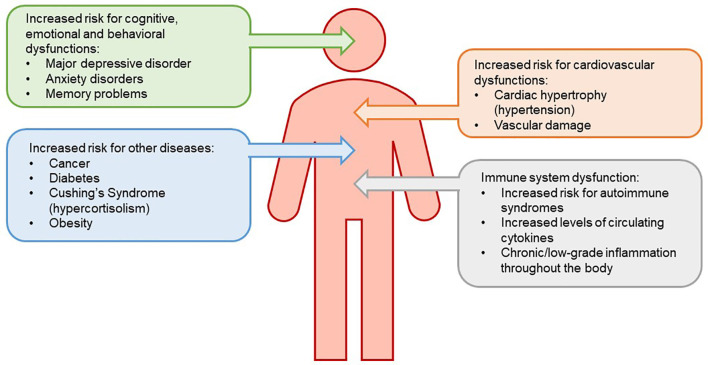
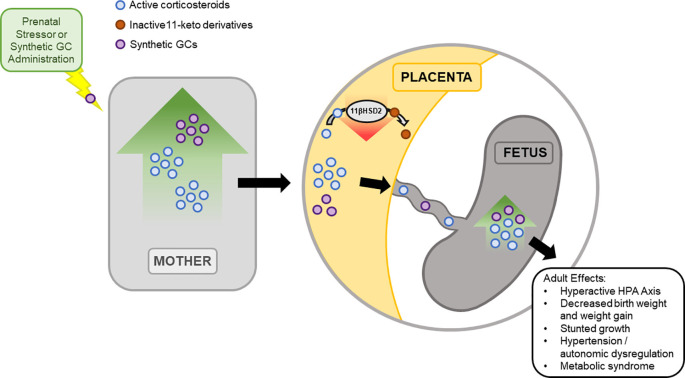
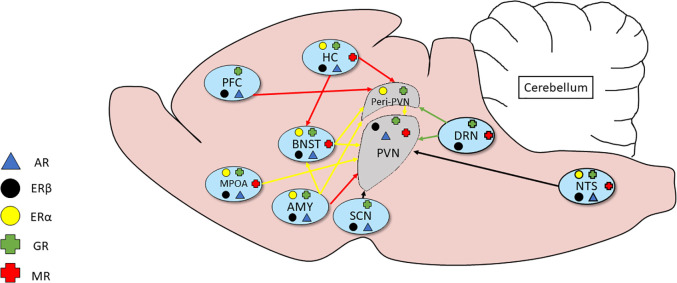
The hypothalamic-pituitary-adrenal axis is a complex system of neuroendocrine pathways and feedback loops that function to maintain physiological homeostasis. Abnormal development of the hypothalamic-pituitary-adrenal (HPA) axis can further result in long-term alterations in neuropeptide and neurotransmitter synthesis in the central nervous system, as well as glucocorticoid hormone synthesis in the periphery. Together, these changes can potentially lead to a disruption in neuroendocrine, behavioral, autonomic, and metabolic functions in adulthood. In this review, we will discuss the regulation of the HPA axis and its development. We will also examine the maternal-fetal hypothalamic-pituitary-adrenal axis and disruption of the normal fetal environment which becomes a major risk factor for many neurodevelopmental pathologies in adulthood, such as major depressive disorder, anxiety, schizophrenia, and others.
下丘脑-垂体-肾上腺轴是一个由神经内分泌途径和反馈回路组成的复杂系统,其功能是维持生理稳态。下丘脑-垂体-肾上腺(HPA)轴的异常发育可进一步导致中枢神经系统中神经肽和神经递质合成以及外周糖皮质激素合成的长期改变。这些变化共同作用,可能导致成年期神经内分泌、行为、自主神经和代谢功能的紊乱。在这篇综述中,我们将讨论HPA轴的调节及其发育。我们还将研究母胎下丘脑-垂体-肾上腺轴以及正常胎儿环境的破坏,这成为成年期许多神经发育疾病(如重度抑郁症、焦虑症、精神分裂症等)的主要危险因素。