Department of Dermatology, UC San Francisco, San Francisco, California, USA.
Department of Dermatology, VA Medical Center, San Francisco, California, USA.
Aging Cell. 2021 Feb;20(2):e13310. doi: 10.1111/acel.13310. Epub 2021 Feb 1.
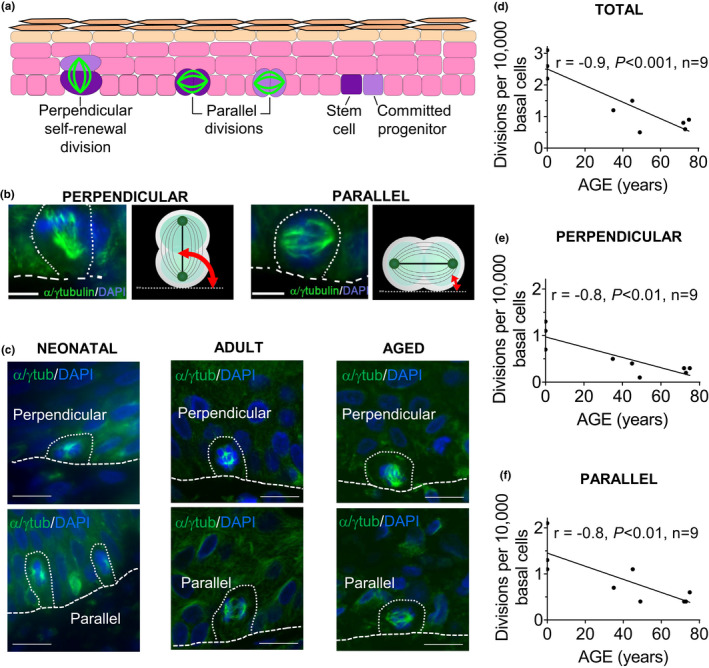
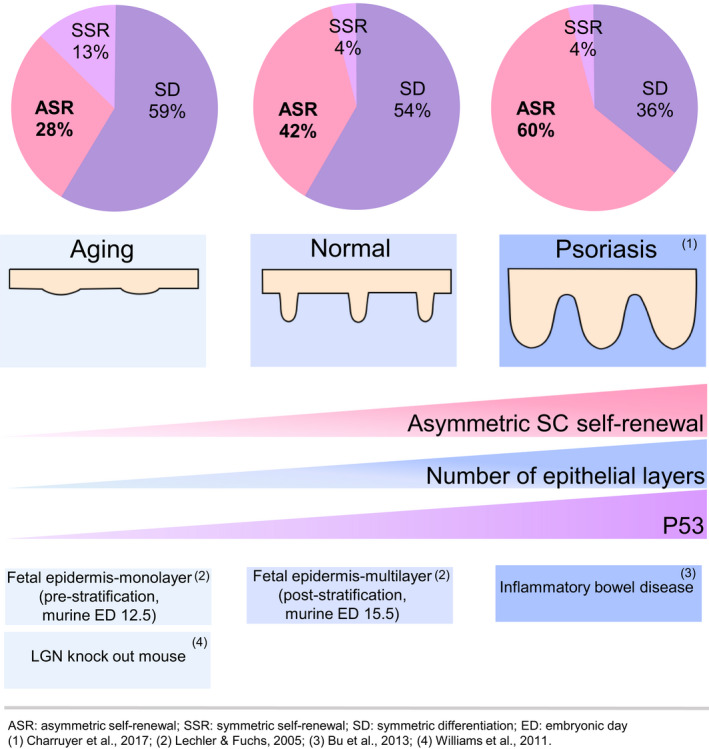
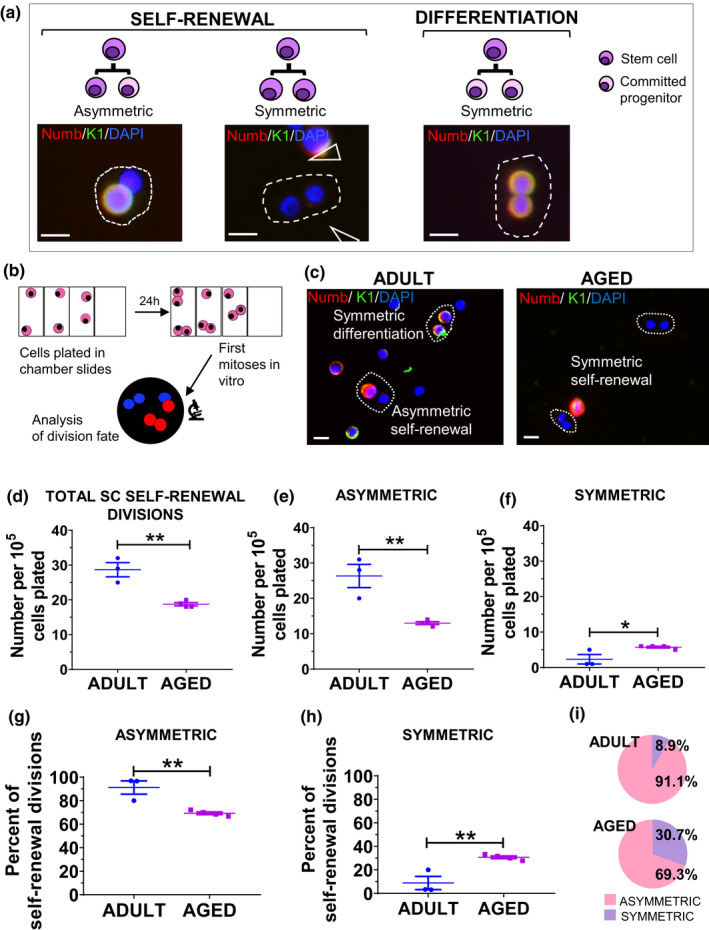
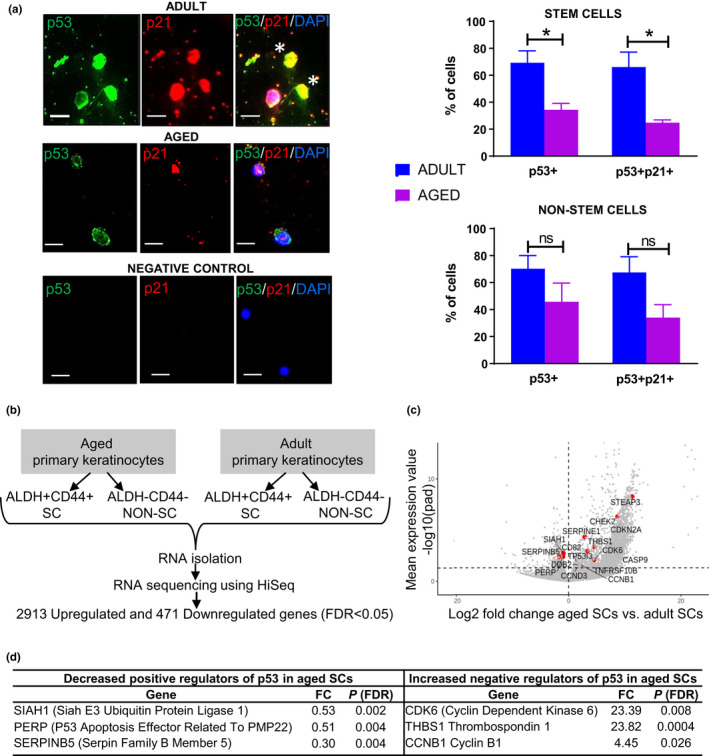
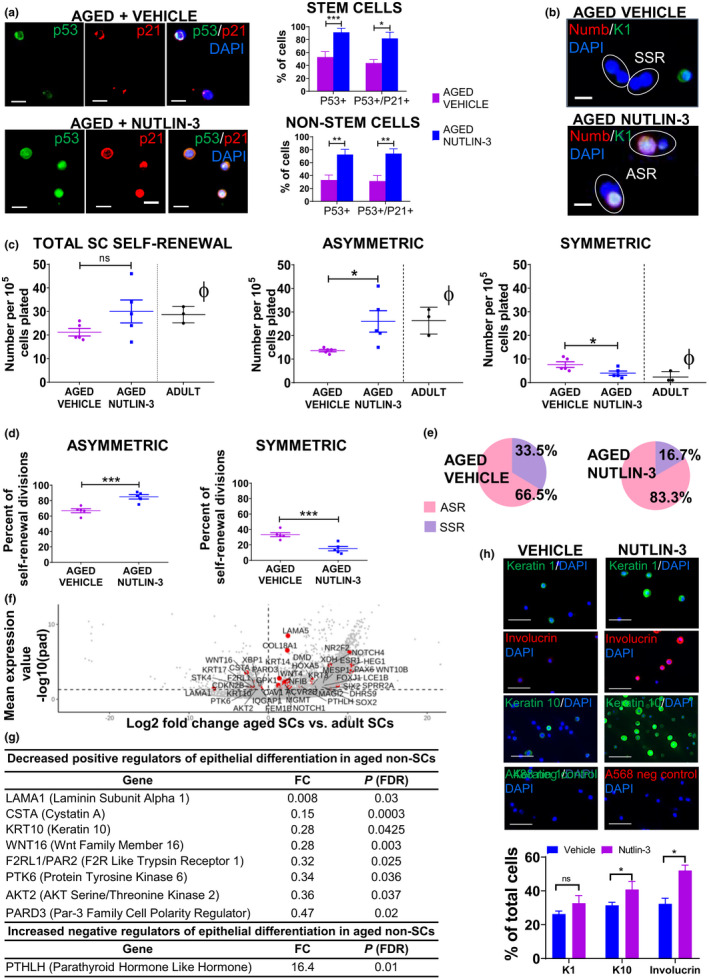
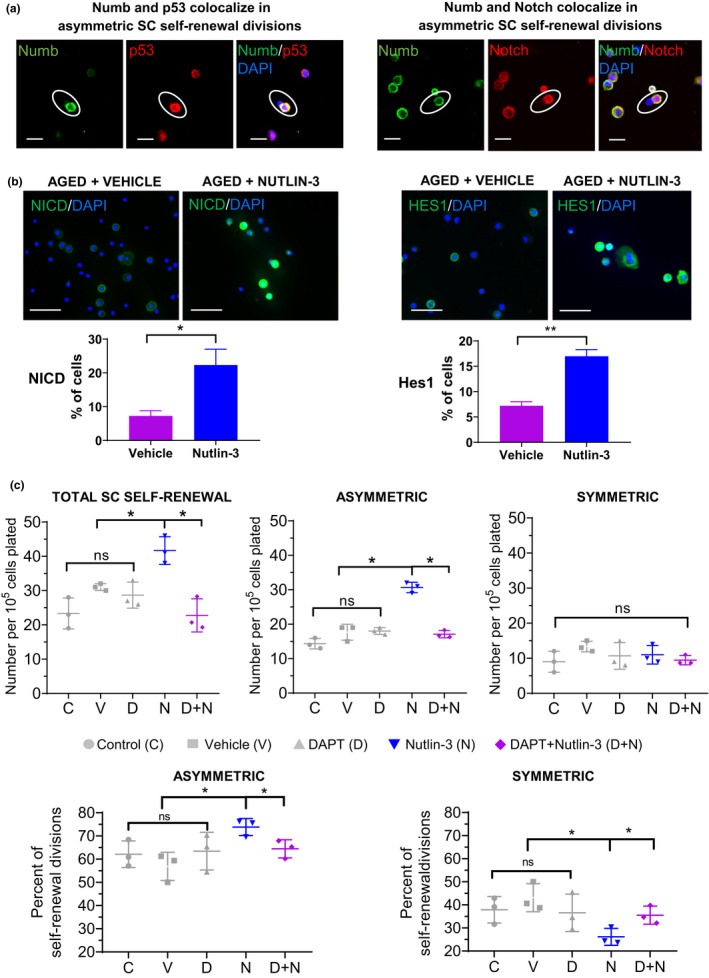
With age, the epidermis becomes hypoplastic and hypoproliferative. Hypoproliferation due to aging has been associated with decreased stem cell (SC) self-renewal in multiple murine tissues. The fate of SC self-renewal divisions can be asymmetric (one SC, one committed progenitor) or symmetric (two SCs). Increased asymmetric SC self-renewal has been observed in inflammatory-mediated hyperproliferation, while increased symmetric SC self-renewal has been observed in cancers. We analyzed SC self-renewal divisions in aging human epidermis to better understand the role of SCs in the hypoproliferation of aging. In human subjects, neonatal to 78 years, there was an age-dependent decrease in epidermal basal layer divisions. The balance of SC self-renewal shifted toward symmetric SC self-renewal, with a decline in asymmetric SC self-renewal. Asymmetric SC divisions maintain epidermal stratification, and this decrease may contribute to the hypoplasia of aging skin. P53 decreases in multiple tissues with age, and p53 has been shown to promote asymmetric SC self-renewal. Fewer aged than adult ALDH+CD44+ keratinocyte SCs exhibited p53 expression and activity and Nutlin-3 (a p53 activator) returned p53 activity as well as asymmetric SC self-renewal divisions to adult levels. Nutlin-3 increased Notch signaling (NICD, Hes1) and DAPT inhibition of Notch activation prevented Nutlin-3 (p53)-induced asymmetric SC self-renewal divisions in aged keratinocytes. These studies indicate a role for p53 in the decreased asymmetric SC divisions with age and suggest that in aged keratinocytes, Notch is required for p53-induced asymmetric SC divisions.
随着年龄的增长,表皮变得发育不全和增殖不足。由于衰老导致的增殖不足与多种小鼠组织中的干细胞 (SC) 自我更新减少有关。SC 自我更新分裂的命运可以是不对称的(一个 SC,一个定向祖细胞)或对称的(两个 SC)。在炎症介导的过度增殖中观察到不对称的 SC 自我更新增加,而在癌症中观察到对称的 SC 自我更新增加。我们分析了衰老人类表皮中的 SC 自我更新分裂,以更好地了解 SC 在衰老时的增殖不足中的作用。在人类受试者中,从新生儿到 78 岁,表皮基底层分裂随年龄增长呈依赖性下降。SC 自我更新的平衡向对称的 SC 自我更新倾斜,不对称的 SC 自我更新减少。不对称的 SC 分裂维持表皮分层,这种减少可能导致衰老皮肤的发育不全。随着年龄的增长,p53 在多种组织中减少,并且已经表明 p53 促进不对称的 SC 自我更新。与成年 ALDH+CD44+角质形成细胞 SC 相比,衰老的角质形成细胞中 p53 表达和活性减少,而 Nutlin-3(p53 激活剂)将 p53 活性以及不对称的 SC 自我更新分裂恢复到成年水平。Nutlin-3 增加了 Notch 信号(NICD,Hes1),并且 Notch 激活的 DAPT 抑制阻止了 Nutlin-3(p53)诱导的衰老角质形成细胞中的不对称 SC 自我更新分裂。这些研究表明 p53 在衰老时不对称 SC 分裂减少中起作用,并表明在衰老的角质形成细胞中,Notch 是 p53 诱导的不对称 SC 分裂所必需的。