Wang Danyang, Song Zichen, Zhang Chunlu, Chen Peng
Department of Anesthesiology, China-Japan Union Hospital of Jilin University, Changchun, China.
Medicine (Baltimore). 2021 Jan 29;100(4):e23930. doi: 10.1097/MD.0000000000023930.
To investigate whether closed-loop systems under bispectral index anesthesia depth monitoring can reduce the intraoperative propofol dosage.
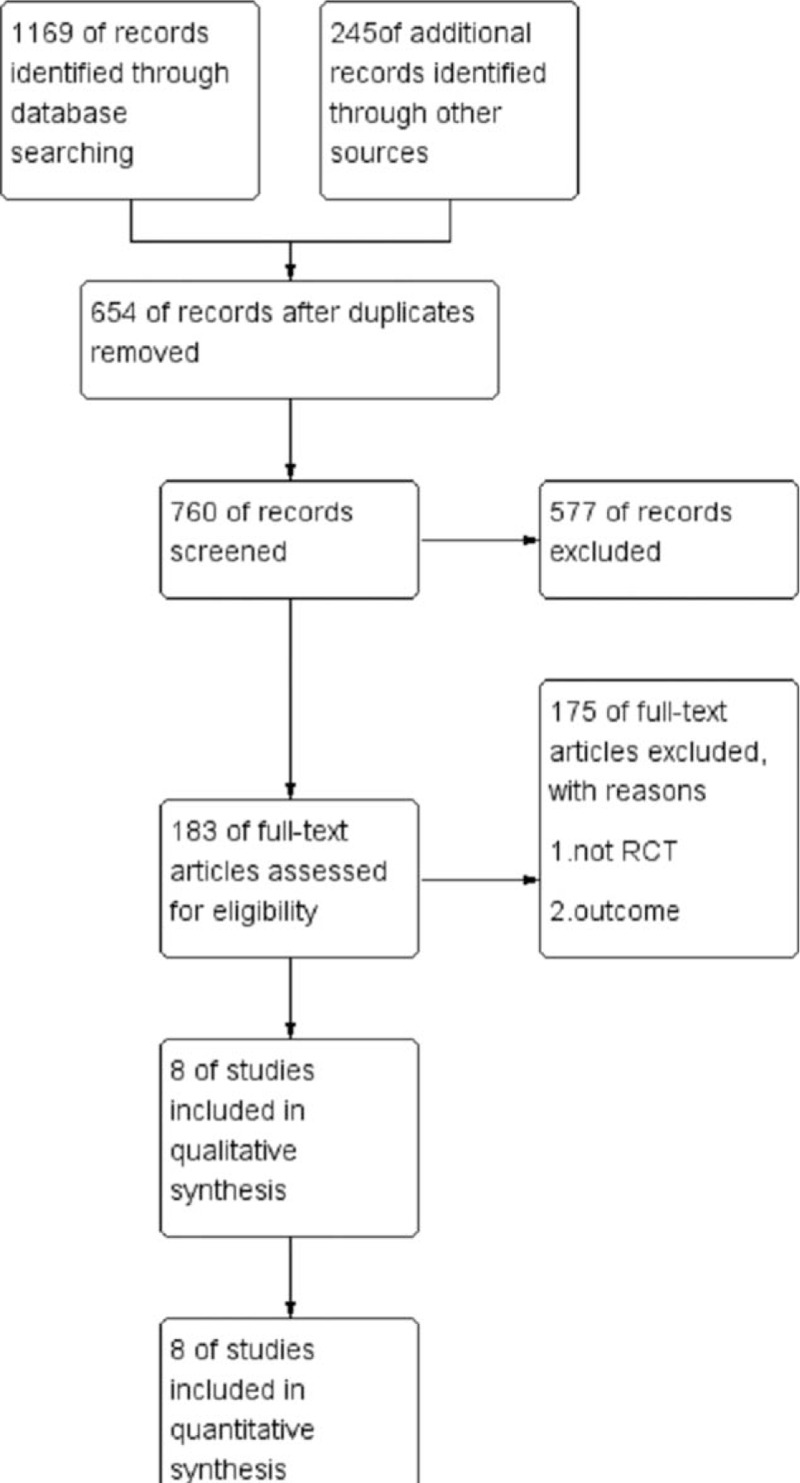
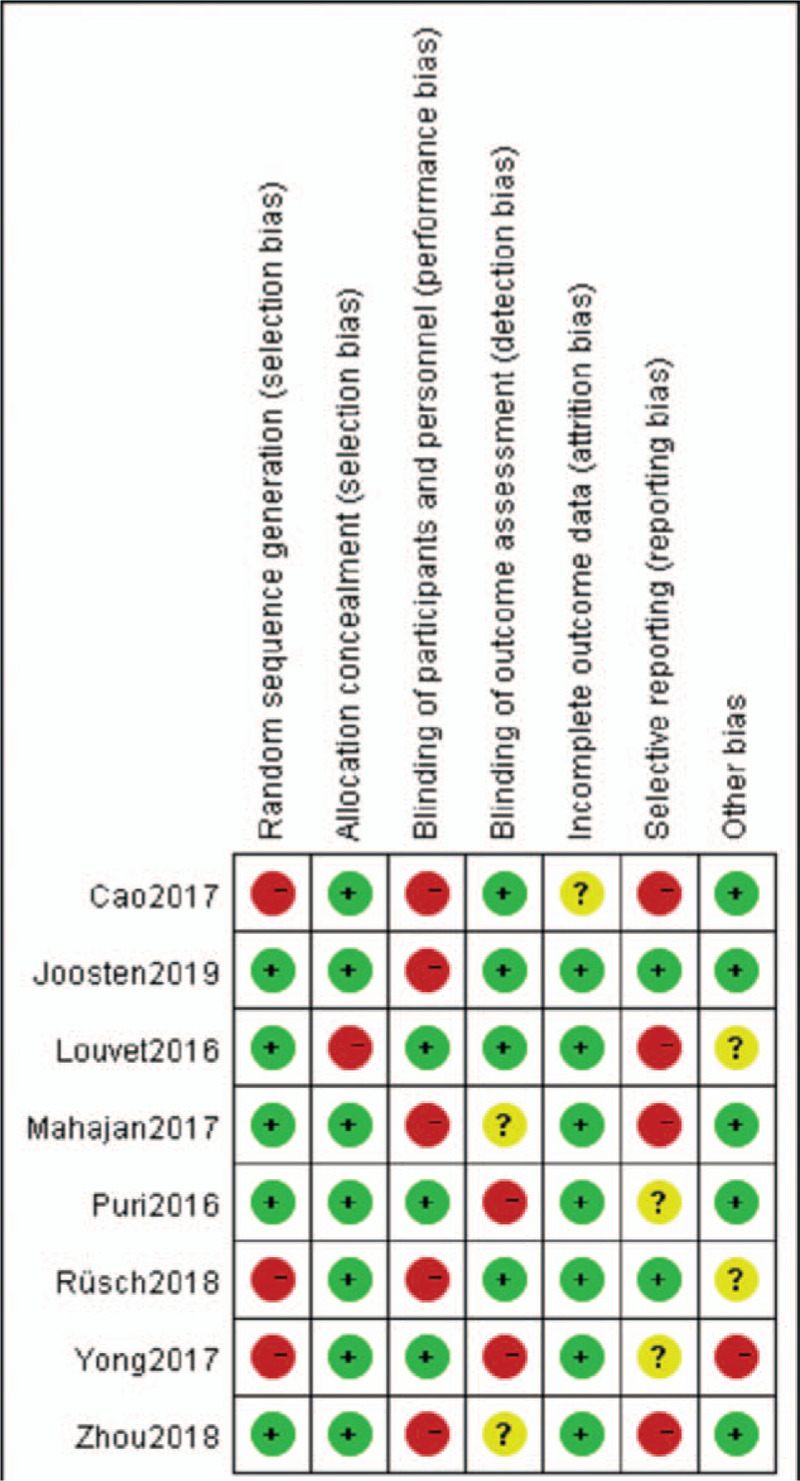
All randomized controlled trials (RCTs) on reducing propofol dosage under closed-loop systems were collected, and the literature was screened out, the abstracts and full texts were carefully read, and the references were tracked, data extraction and quality evaluation were conducted on the included research, and the RevMan5.3 software was used for meta-analysis. The main results were propofol and the incidence of adverse reactions such as hypertensive hypotension and postoperative cognitive dysfunction. A total of 879 cases were included in 8 articles, including 450 occurrences in the closed-loop system group and 429 cases in the open-loop system group.
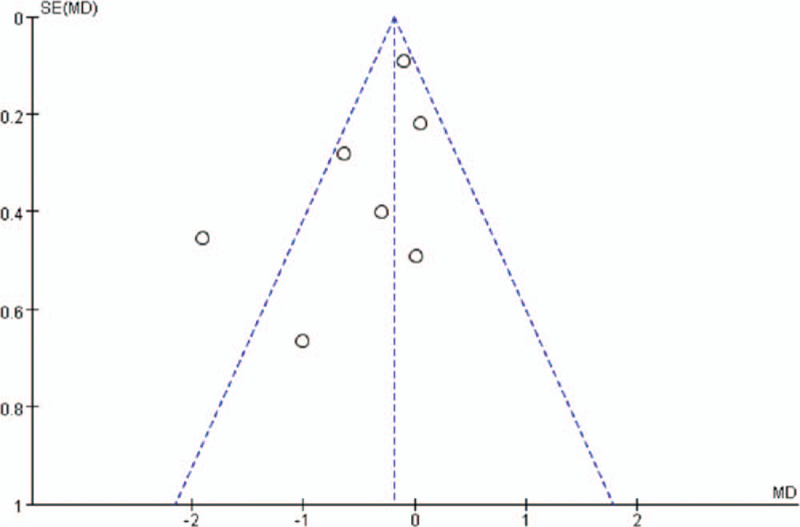
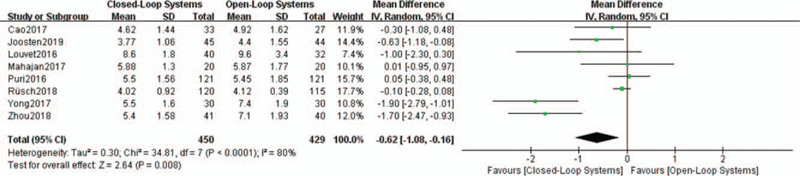
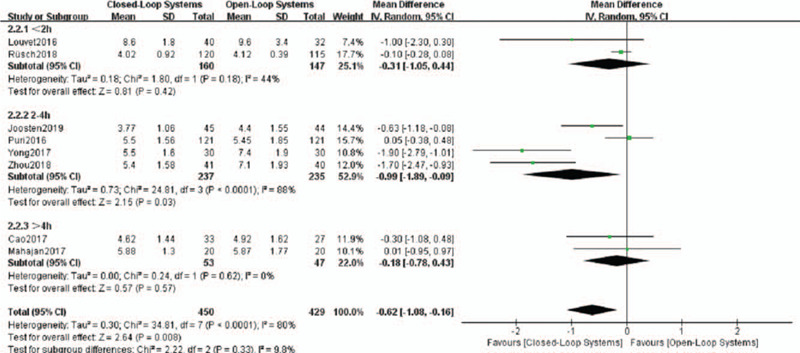
Compared with manual control, closed-loop systems under bispectral index anesthesia depth monitoring reduced the dose of propofol (MD: -0.62, 95% CI: -1.08--0.16, P = .008), with heterogeneity (I2 = 80%). Closed-loop systems significantly reduced the incidence of abnormal blood pressure (MD: -0.02, 95%CI: -0.05-0.01, P = .15, I2 = 74%) and postoperative cognitive dysfunction (MD: -0.08, 95% CI: -0.14 -0.01, P = .02, I2 = 94%).
Bispectral index monitoring of propofol closed-loop target-controlled infusion system can reduce the amount of propofol, reduce the incidence of adverse reactions such as hypertensive or hypotension and postoperative cognitive dysfunction.
探讨双谱指数麻醉深度监测下的闭环系统是否能减少术中丙泊酚用量。
收集所有关于闭环系统下减少丙泊酚用量的随机对照试验(RCT),进行文献筛选,仔细阅读摘要和全文,并追踪参考文献,对纳入研究进行数据提取和质量评估,使用RevMan5.3软件进行荟萃分析。主要结果为丙泊酚以及高血压、低血压和术后认知功能障碍等不良反应的发生率。8篇文章共纳入879例,其中闭环系统组450例,开环系统组429例。
与手动控制相比,双谱指数麻醉深度监测下的闭环系统减少了丙泊酚用量(MD:-0.62,95%CI:-1.08--0.16,P = 0.008),存在异质性(I2 = 80%)。闭环系统显著降低了血压异常发生率(MD:-0.02,95%CI:-0.05-0.01,P = 0.15,I2 = 74%)和术后认知功能障碍发生率(MD:-0.08,95%CI:-0.14 -0.01,P = 0.02,I2 = 94%)。
丙泊酚闭环靶控输注系统的双谱指数监测可减少丙泊酚用量,降低高血压或低血压及术后认知功能障碍等不良反应的发生率。