Department of Biology, Nordcee, University of Southern Denmark, Odense, Denmark
Department of Biology, Nordcee, University of Southern Denmark, Odense, Denmark.
mSphere. 2021 Feb 3;6(1):e00991-20. doi: 10.1128/mSphere.00991-20.
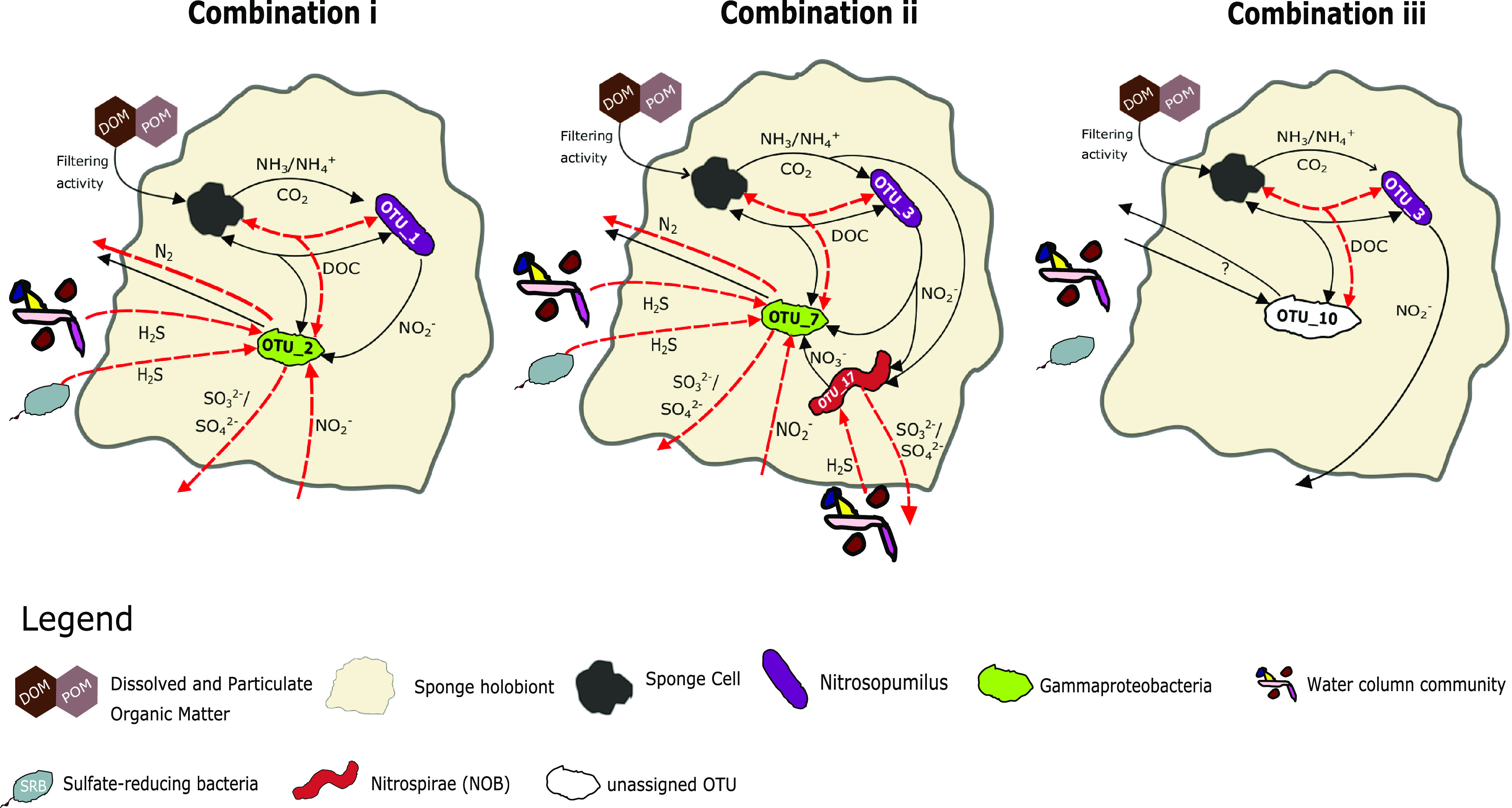
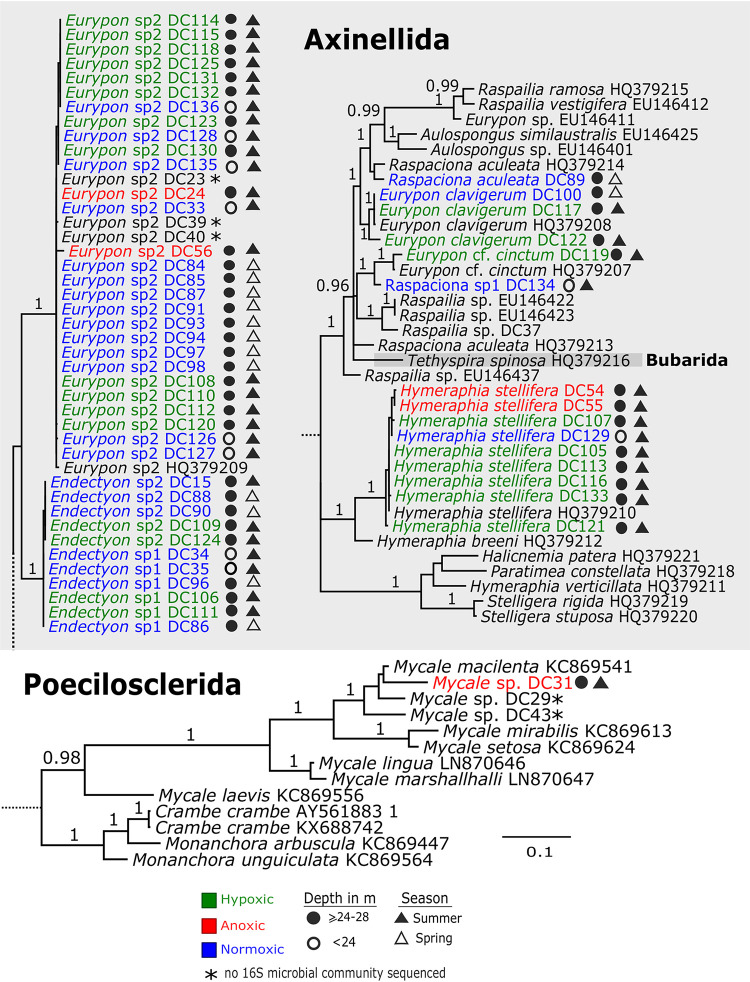
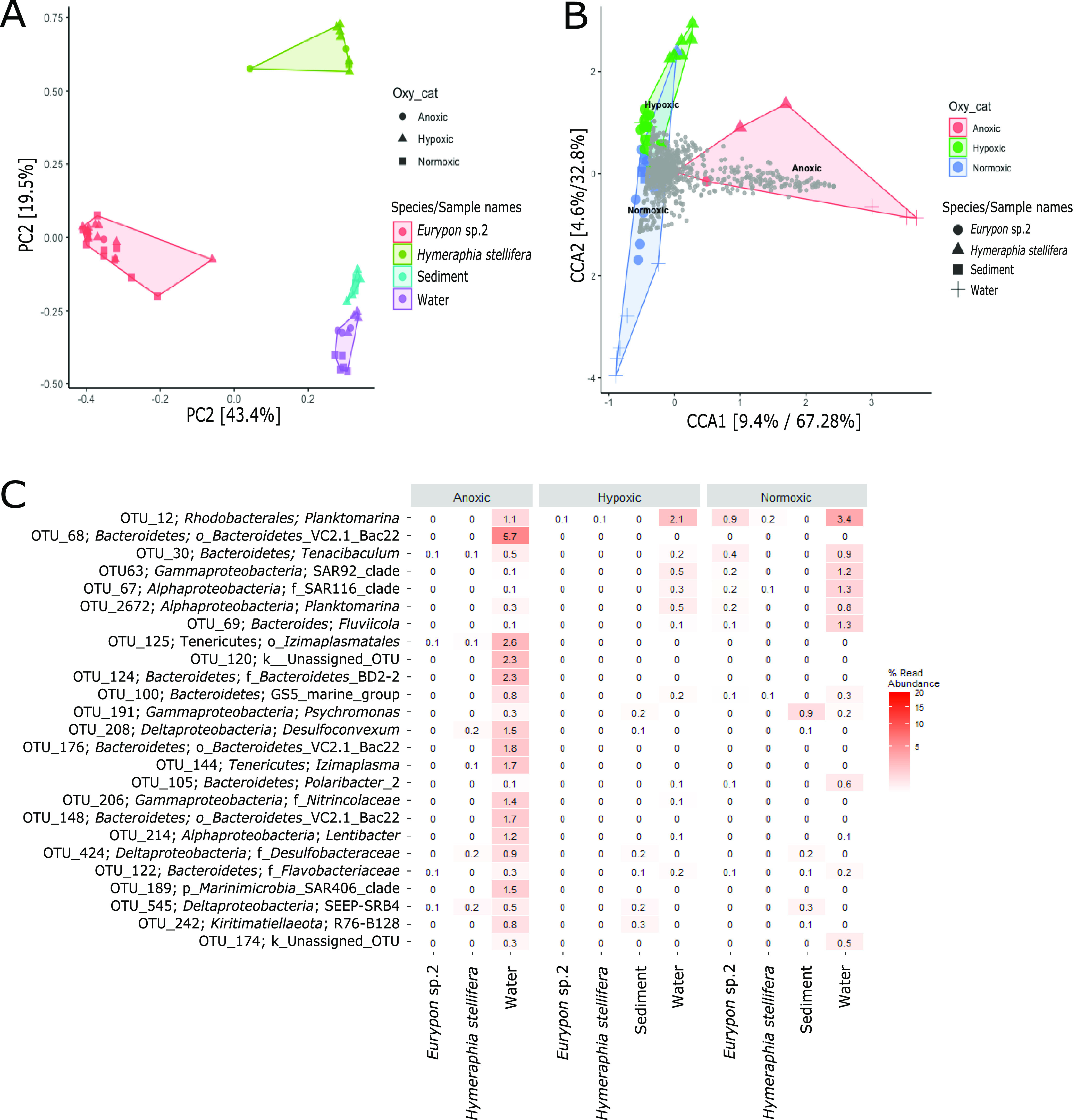
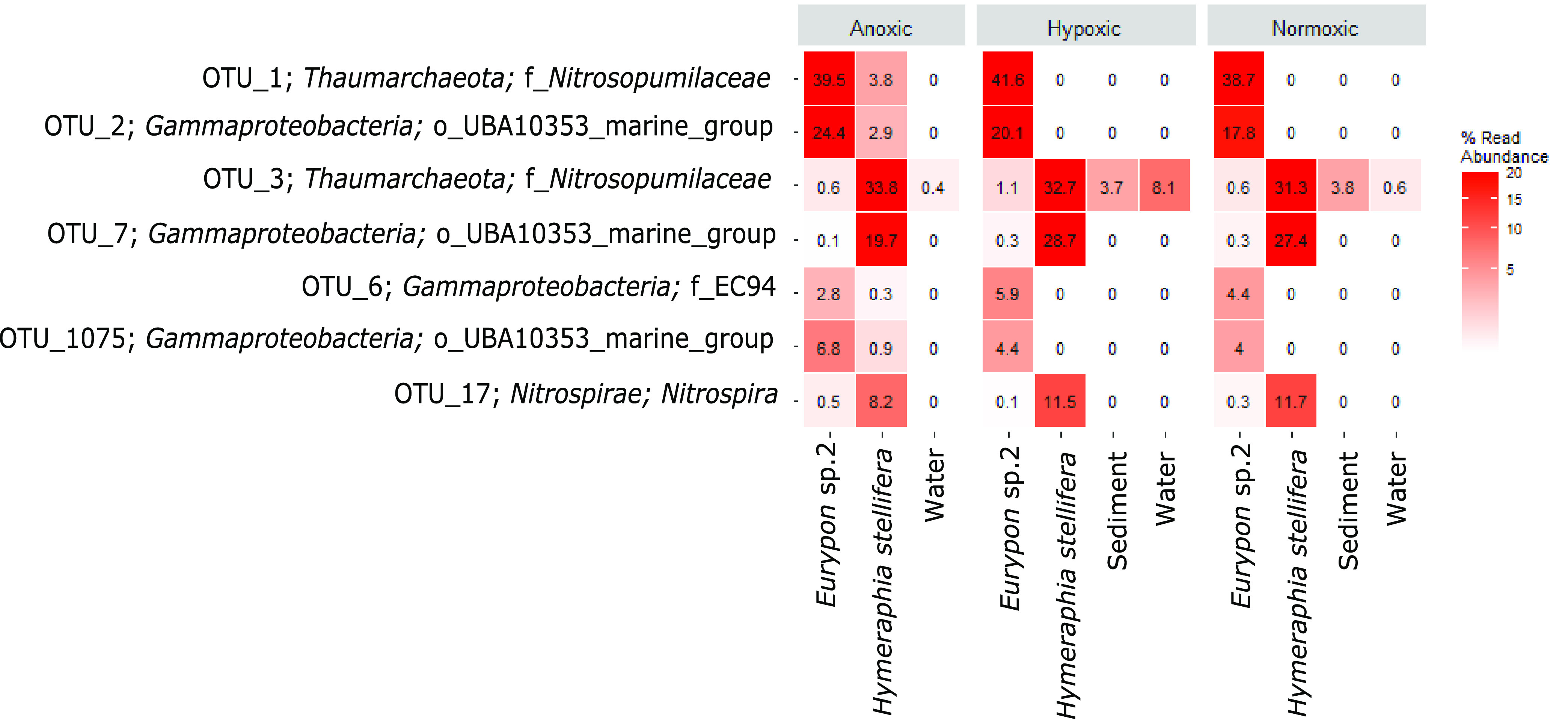
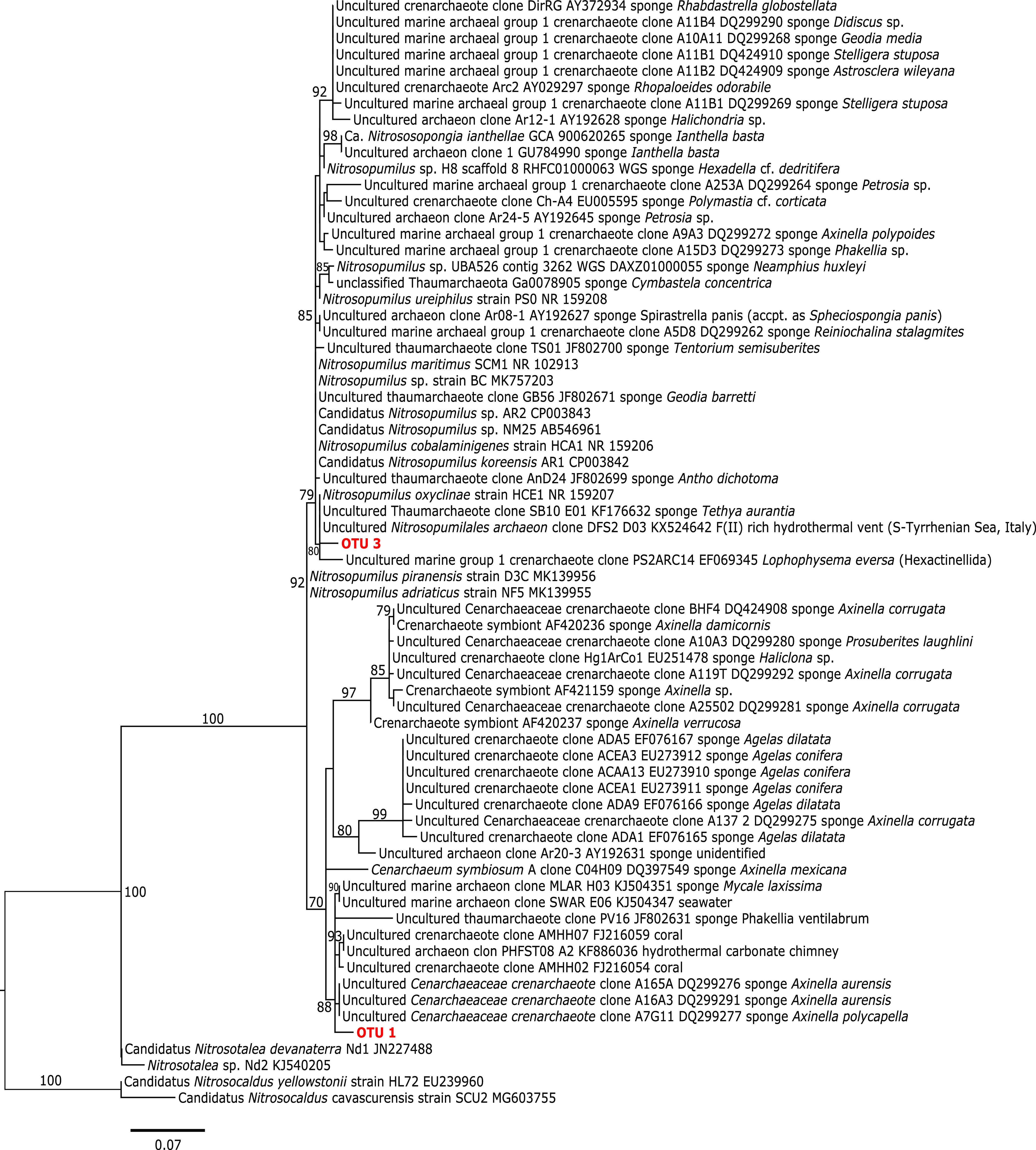
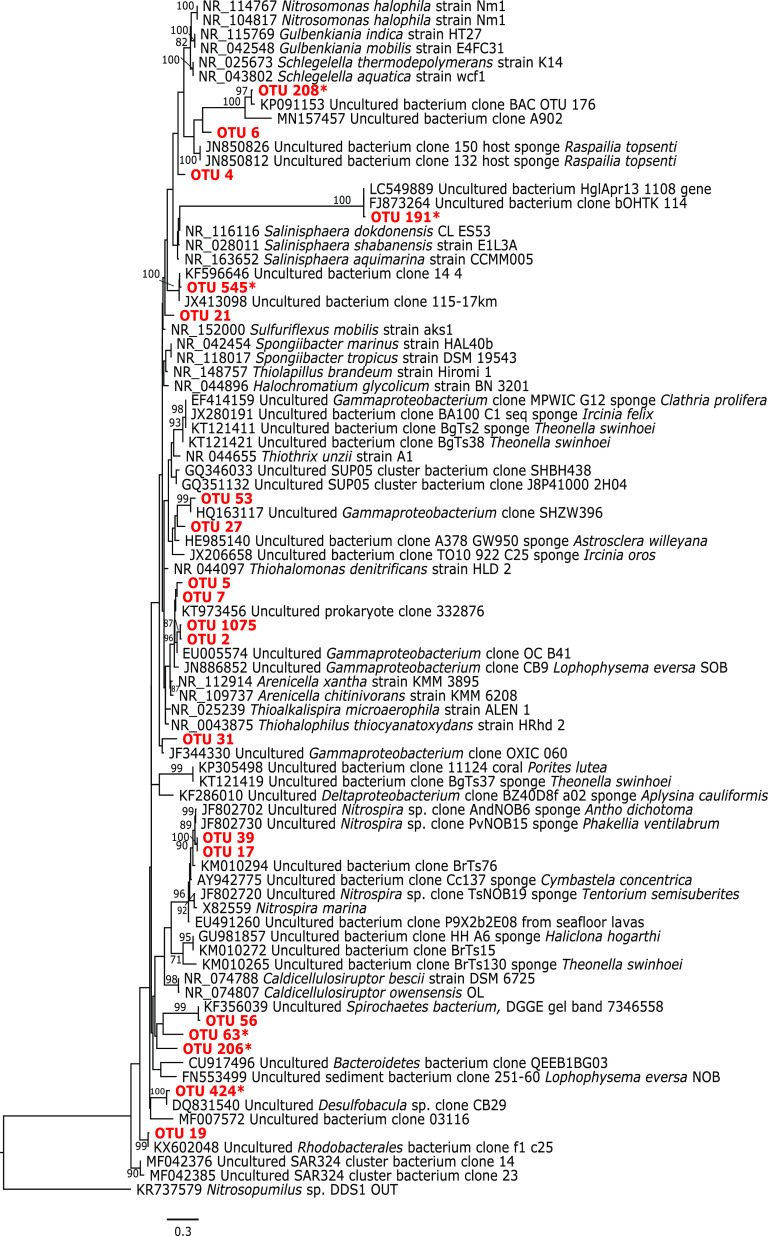
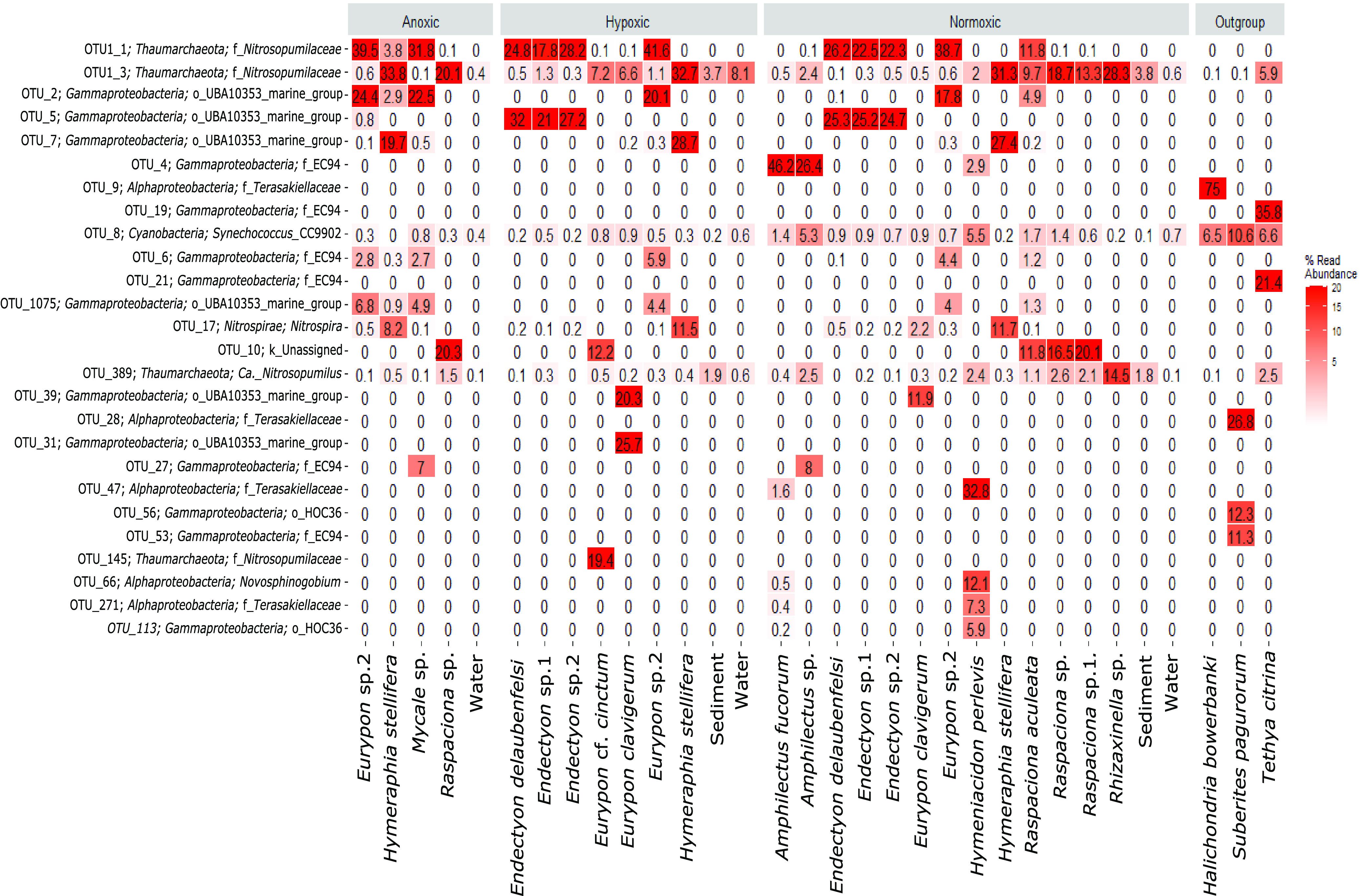
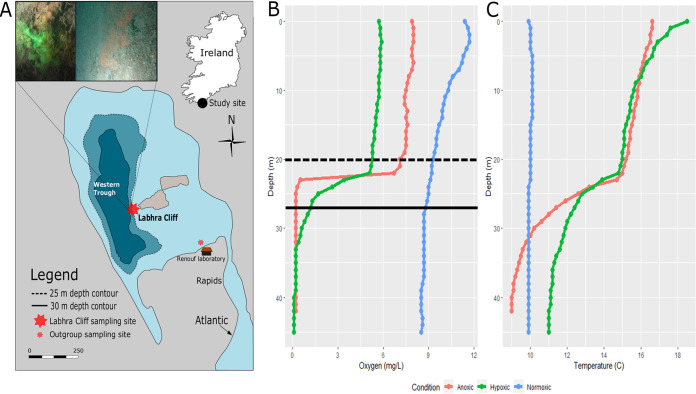
Climate change is expanding marine oxygen minimum zones (OMZs), while anthropogenic nutrient input depletes oxygen concentrations locally. The effects of deoxygenation on animals are generally detrimental; however, some sponges (Porifera) exhibit hypoxic and anoxic tolerance through currently unknown mechanisms. Sponges harbor highly specific microbiomes, which can include microbes with anaerobic capabilities. Sponge-microbe symbioses must also have persisted through multiple anoxic/hypoxic periods throughout Earth's history. Since sponges lack key components of the hypoxia-inducible factor (HIF) pathway responsible for hypoxic responses in other animals, it was hypothesized that sponge tolerance to deoxygenation may be facilitated by its microbiome. To test this hypothesis, we determined the microbial composition of sponge species tolerating seasonal anoxia and hypoxia in a semienclosed marine lake, using 16S rRNA amplicon sequencing. We discovered a high degree of cryptic diversity among sponge species tolerating seasonal deoxygenation, including at least nine encrusting species of the orders Axinellida and Poecilosclerida. Despite significant changes in microbial community structure in the water, sponge microbiomes were species specific and remarkably stable under varied oxygen conditions, which was further explored for spp. 2 and However, some symbiont sharing occurred under anoxia. At least three symbiont combinations, all including large populations of , corresponded with deoxygenation tolerance, and some combinations were shared between some distantly related hosts. We propose hypothetical host-symbiont interactions following deoxygenation that could confer deoxygenation tolerance. The oceans have an uncertain future due to anthropogenic stressors and an uncertain past that is becoming clearer with advances in biogeochemistry. Both past and future oceans were, or will be, deoxygenated in comparison to present conditions. Studying how sponges and their associated microbes tolerate deoxygenation provides insights into future marine ecosystems. Moreover, sponges form the earliest branch of the animal evolutionary tree, and they likely resemble some of the first animals. We determined the effects of variable environmental oxygen concentrations on the microbial communities of several demosponge species during seasonal anoxia in the field. Our results indicate that anoxic tolerance in some sponges may depend on their symbionts, but anoxic tolerance was not universal in sponges. Therefore, some sponge species could likely outcompete benthic organisms like corals in future, reduced-oxygen ecosystems. Our results support the molecular evidence that sponges and other animals have a Neoproterozoic origin and that animal evolution was not limited by low-oxygen conditions.
气候变化正在扩大海洋缺氧区 (OMZs),而人为的营养输入则使局部地区的氧气浓度降低。脱氧对动物的影响通常是有害的;然而,一些海绵 (多孔动物门) 通过目前未知的机制表现出对低氧和缺氧的耐受性。海绵拥有高度特异的微生物组,其中可能包括具有厌氧能力的微生物。海绵-微生物共生体也必须在地球历史上的多个缺氧/低氧时期中持续存在。由于海绵缺乏负责其他动物低氧反应的缺氧诱导因子 (HIF) 途径的关键成分,因此有人假设海绵对脱氧的耐受性可能与其微生物组有关。为了验证这一假设,我们使用 16S rRNA 扩增子测序,确定了在半封闭海洋湖中耐受季节性缺氧和低氧的海绵物种的微生物组成。我们发现,在耐受季节性脱氧的海绵物种中存在高度的隐种多样性,包括至少九种属于轴孔珊瑚目和孔珊瑚目的固着物种。尽管水的微生物群落结构发生了显著变化,但海绵微生物组在不同的氧气条件下仍然是物种特异性的,并且非常稳定,这在 spp. 2 和 方面得到了进一步的研究。然而,在缺氧条件下确实发生了一些共生体共享。至少有三种共生体组合,都包括 的大种群,与耐缺氧性相对应,并且一些组合在一些亲缘关系较远的宿主之间共享。我们提出了缺氧后可能赋予耐缺氧性的假设性宿主-共生体相互作用。由于人为压力和过去变得更加清晰的不确定过去,海洋的未来是不确定的。与目前的情况相比,过去和未来的海洋都或将会脱氧。研究海绵及其相关微生物如何耐受脱氧,可以深入了解未来的海洋生态系统。此外,海绵是动物进化树的最早分支,它们可能类似于一些最早的动物。我们在现场季节性缺氧期间确定了几种寻常海绵物种的微生物群落对可变环境氧气浓度的影响。我们的结果表明,一些海绵的耐缺氧性可能依赖于它们的共生体,但海绵的耐缺氧性并不是普遍的。因此,在未来氧气减少的生态系统中,一些海绵物种可能比珊瑚等底栖生物更有竞争力。我们的结果支持了分子证据,即海绵和其他动物起源于新元古代,动物进化不受低氧条件的限制。