Department of Cell and Molecular Biology, School of Medicine of Ribeirao Preto, University of Sao Paulo, São Paulo 14049-900, Brazil.
Department of Microbiology and Immunology, University of Michigan Medical School, Ann Arbor, MI 48109, USA.
Viruses. 2021 Feb 2;13(2):231. doi: 10.3390/v13020231.
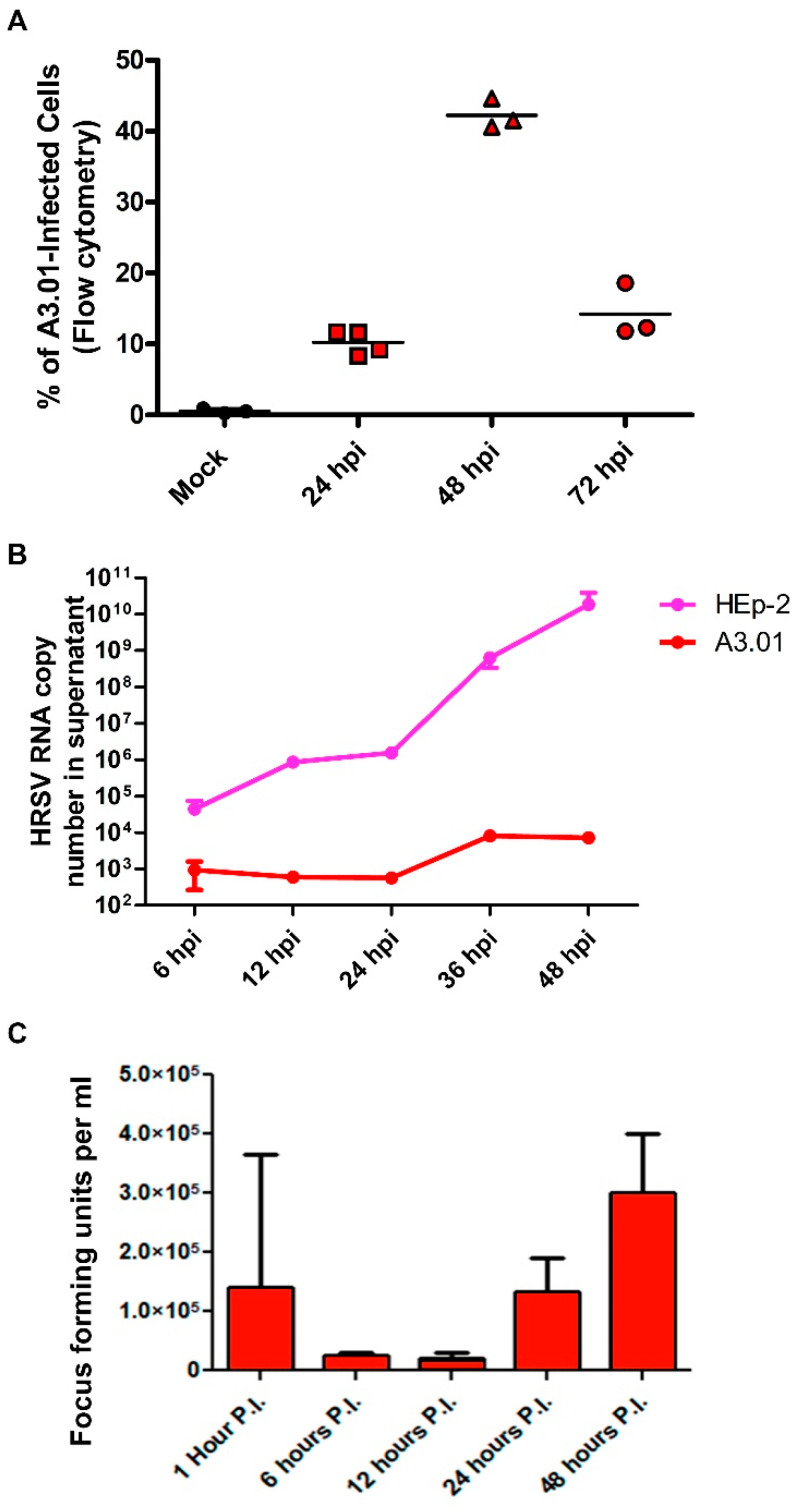
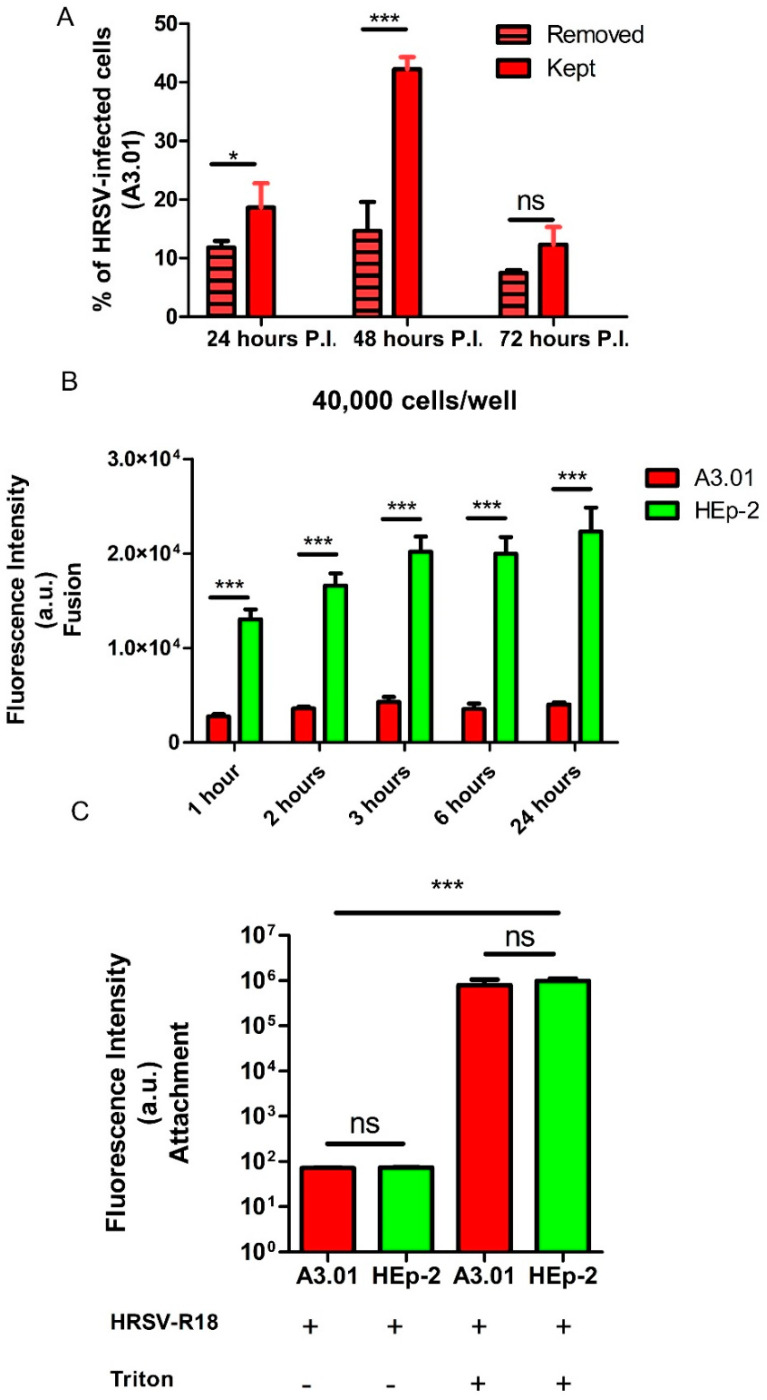
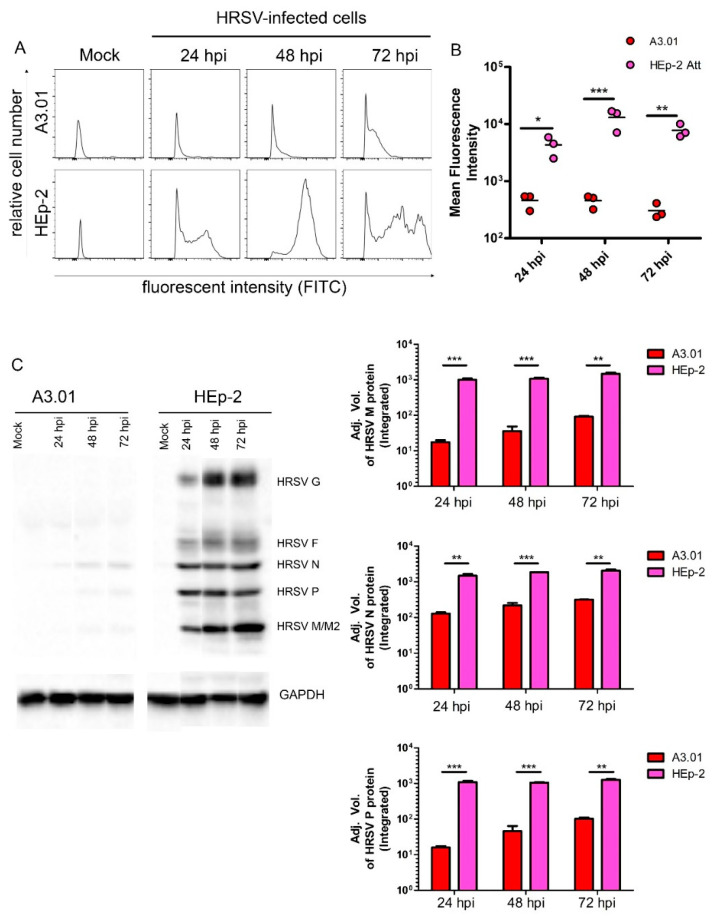
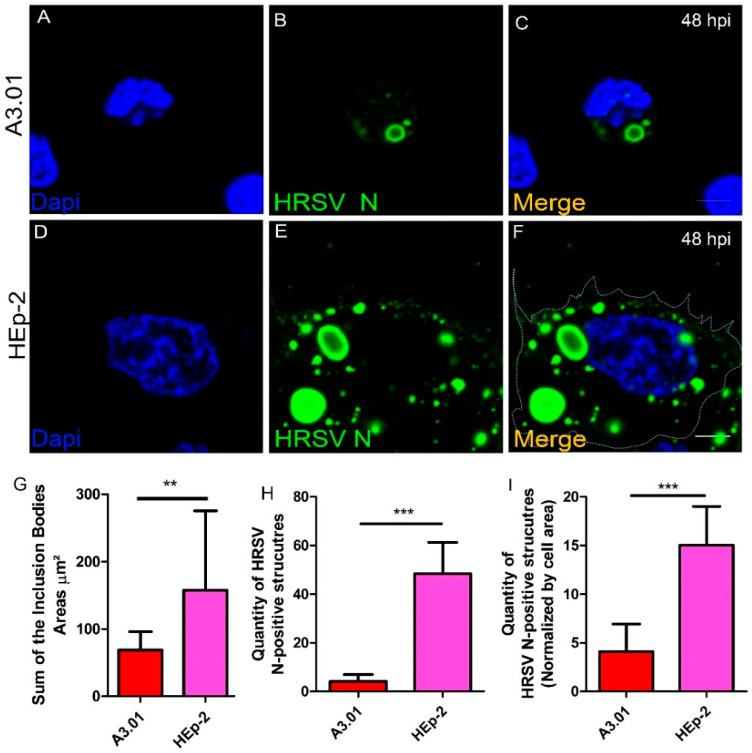
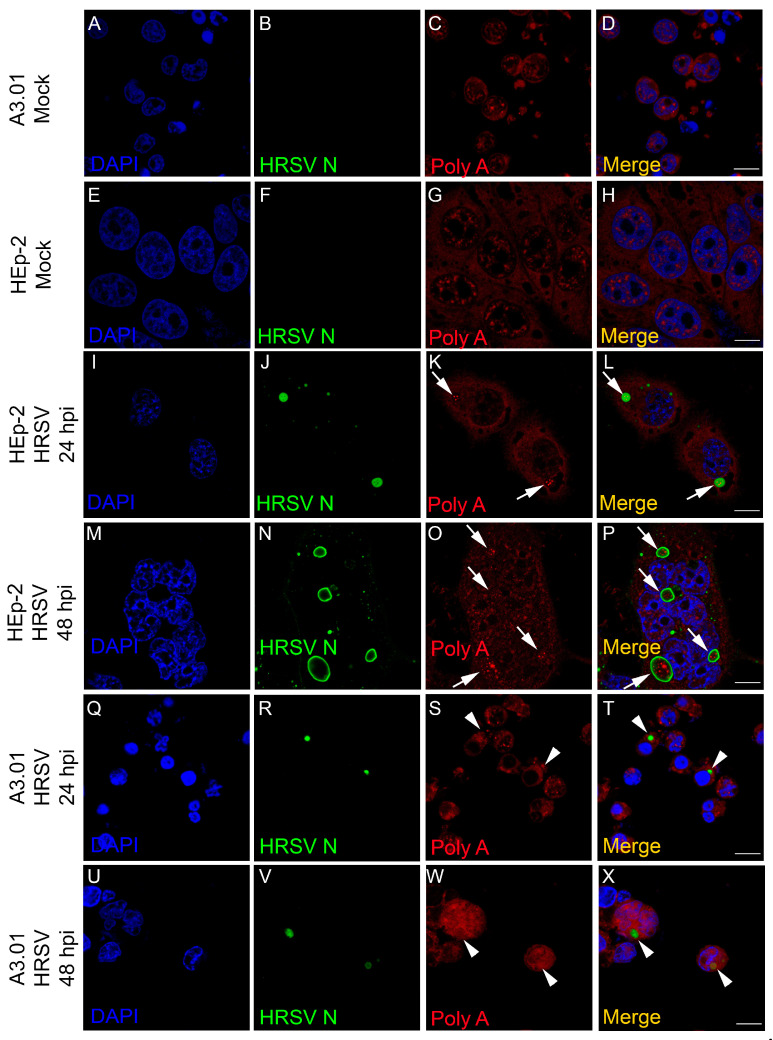
Human respiratory syncytial virus (HRSV) is the most frequent cause of severe respiratory disease in children. The main targets of HRSV infection are epithelial cells of the respiratory tract, and the great majority of the studies regarding HRSV infection are done in respiratory cells. Recently, the interest on respiratory virus infection of lymphoid cells has been growing, but details of the interaction of HRSV with lymphoid cells remain unknown. Therefore, this study was done to assess the relationship of HRSV with A3.01 cells, a human CD4 T cell line. Using flow cytometry and fluorescent focus assay, we found that A3.01 cells are susceptible but virtually not permissive to HRSV infection. Dequenching experiments revealed that the fusion process of HRSV in A3.01 cells was nearly abolished in comparison to HEp-2 cells, an epithelial cell lineage. Quantification of viral RNA by RT-qPCR showed that the replication of HRSV in A3.01 cells was considerably reduced. Western blot and quantitative flow cytometry analyses demonstrated that the production of HRSV proteins in A3.01 was significantly lower than in HEp-2 cells. Additionally, using fluorescence in situ hybridization, we found that the inclusion body-associated granules (IBAGs) were almost absent in HRSV inclusion bodies in A3.01 cells. We also assessed the intracellular trafficking of HRSV proteins and found that HRSV proteins colocalized partially with the secretory pathway in A3.01 cells, but these HRSV proteins and viral filaments were present only scarcely at the plasma membrane. HRSV infection of A3.01 CD4 T cells is virtually unproductive as compared to HEp-2 cells, as a result of defects at several steps of the viral cycle: Fusion, genome replication, formation of inclusion bodies, recruitment of cellular proteins, virus assembly, and budding.
人类呼吸道合胞病毒(HRSV)是导致儿童严重呼吸道疾病的最常见原因。HRSV 感染的主要靶标是呼吸道的上皮细胞,绝大多数关于 HRSV 感染的研究都是在呼吸道细胞中进行的。最近,人们对淋巴细胞中呼吸道病毒感染的兴趣不断增加,但 HRSV 与淋巴细胞相互作用的细节仍不清楚。因此,本研究旨在评估 HRSV 与 A3.01 细胞(一种人 CD4 T 细胞系)的关系。通过流式细胞术和荧光焦点测定,我们发现 A3.01 细胞易感染但实际上不允许 HRSV 感染。解淬实验表明,与上皮细胞系 HEp-2 细胞相比,HRSV 在 A3.01 细胞中的融合过程几乎被完全抑制。通过 RT-qPCR 定量病毒 RNA 显示,HRSV 在 A3.01 细胞中的复制明显减少。Western blot 和定量流式细胞术分析表明,HRSV 蛋白在 A3.01 中的产生明显低于 HEp-2 细胞。此外,通过荧光原位杂交,我们发现 HRSV 包涵体中的包涵体相关颗粒(IBAGs)在 A3.01 细胞中的包涵体中几乎不存在。我们还评估了 HRSV 蛋白的细胞内运输,发现 HRSV 蛋白在 A3.01 细胞中与分泌途径部分共定位,但这些 HRSV 蛋白和病毒丝状体仅在质膜上很少存在。与 HEp-2 细胞相比,HRSV 对 A3.01 CD4 T 细胞的感染几乎没有产生,这是由于病毒周期的几个步骤存在缺陷:融合、基因组复制、包涵体形成、细胞蛋白募集、病毒组装和出芽。