Cid Ashley, Daskalakis George, Grindrod Kelly, Beazely Michael A
School of Pharmacy, University of Waterloo, 10 Victoria St S A, Kitchener, ON N2G 1C5, Canada.
Pharmacy (Basel). 2021 Feb 2;9(1):30. doi: 10.3390/pharmacy9010030.
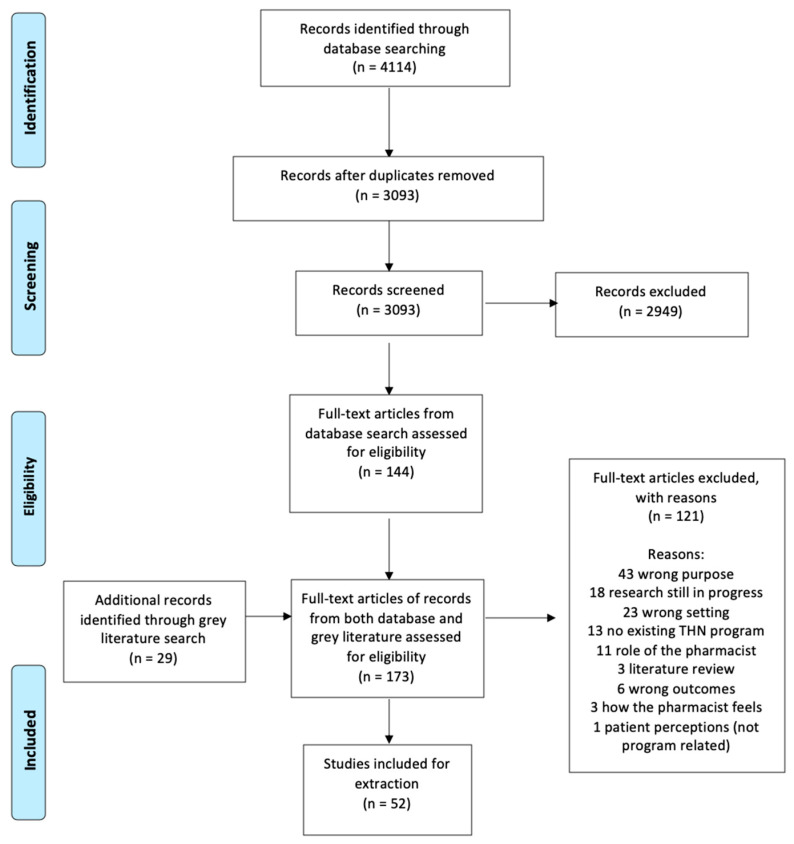
A variety of new sources describing community pharmacy-based take-home naloxone (THN) programs have emerged recently in the literature. There is a need to define the types of take-home naloxone programs being offered to support future research designs in implementing and evaluating standardized programs that fill pharmacist and patient knowledge gaps and lift current barriers for optimal community pharmacy naloxone provision. The objective of this paper is to summarize the literature on community pharmacy-based THN programs, including specific program interventions used to increase naloxone dispensing, naloxone availability and dispensing patterns, facilitators and barriers for the THN programs, and knowledge gaps. Online databases such as PubMed, EMBASE, Scopus, and International Pharmaceutical Abstracts (IPA) and a search of the grey literature were used to identify eligible sources. Sources were screened by two reviewers for eligibility in COVIDENCE software. Both reviewers compared screening results and resolved conflicts through discussion. A data extraction form for all identified full texts was completed by both reviewers and results were compiled through reviewer discussion. Fifty-two sources met the eligibility criteria. The top three barriers identified were: cost/coverage of naloxone, stigma, and education/training for pharmacists. THN program interventions included screening tools, checklists, pocket cards, patient brochures, and utilizing the pharmacy management system to flag eligible patients. Patient knowledge gaps included naloxone misinformation and lack of awareness, while pharmacists demonstrated administrative, clinical, and counselling knowledge gaps. Naloxone availability was found to be highly variable, where independent and rural pharmacies were less likely to stock or dispense naloxone. Further, pharmacies located in districts with higher rates of opioid overdose deaths and lower household income were also less likely to have naloxone available. This review identified multiple new programs, showcasing that the implementation and evaluation of THN programs are an expanding area of research. Future research should focus on implementing and evaluating a THN program through a randomized controlled trial design that incorporates solutions for the barriers and knowledge gaps identified in this study.
近期文献中出现了各种描述基于社区药房的带回家纳洛酮(THN)项目的新资料。有必要明确所提供的带回家纳洛酮项目的类型,以支持未来实施和评估标准化项目的研究设计,这些项目能够填补药剂师和患者的知识空白,并消除当前优化社区药房纳洛酮供应的障碍。本文的目的是总结关于基于社区药房的THN项目的文献,包括用于增加纳洛酮配药、纳洛酮可及性和配药模式的具体项目干预措施、THN项目的促进因素和障碍,以及知识空白。使用在线数据库如PubMed、EMBASE、Scopus和国际药学文摘(IPA)以及对灰色文献进行检索,以识别符合条件的资料来源。两名评审员在COVIDENCE软件中对资料来源进行资格筛选。两名评审员比较筛选结果,并通过讨论解决冲突。两名评审员完成了所有已识别全文的数据提取表,并通过评审员讨论汇总结果。52个资料来源符合资格标准。确定的三大障碍是:纳洛酮的成本/覆盖范围、污名化以及药剂师的教育/培训。THN项目干预措施包括筛查工具、清单、袖珍卡片、患者手册,以及利用药房管理系统标记符合条件的患者。患者的知识空白包括纳洛酮错误信息和认识不足,而药剂师则表现出管理、临床和咨询方面的知识空白。发现纳洛酮的可及性差异很大,独立药房和农村药房不太可能储备或配药纳洛酮。此外,位于阿片类药物过量死亡发生率较高且家庭收入较低地区的药房也不太可能有纳洛酮供应。本综述确定了多个新项目,表明THN项目的实施和评估是一个不断扩展的研究领域。未来的研究应侧重于通过随机对照试验设计实施和评估THN项目,该设计应纳入针对本研究中确定的障碍和知识空白的解决方案。