Program in Ecology, Evolution and Conservation Biology, University of Illinois at Urbana-Champaign, Urbana-Champaign, IL, USA.
Ecology and Evolutionary Biology and Center for Computational and Molecular Biology, Brown University, Providence, RI, USA.
Sci Rep. 2021 Feb 4;11(1):3113. doi: 10.1038/s41598-021-82362-6.
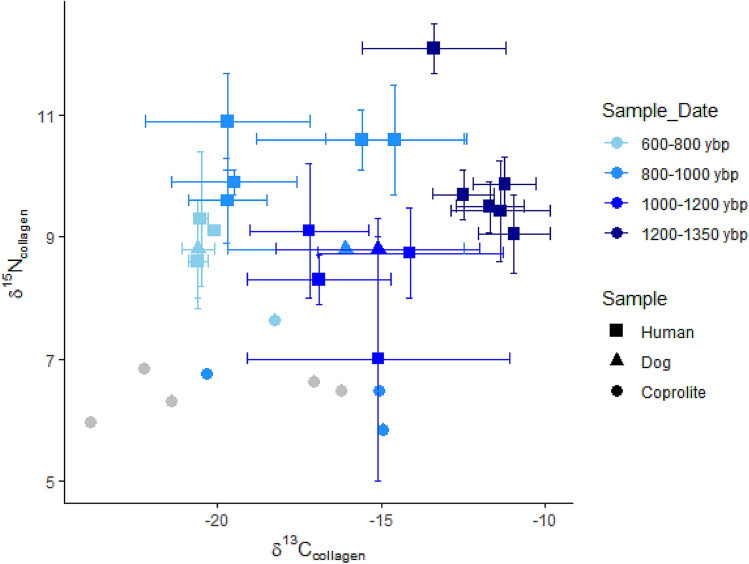
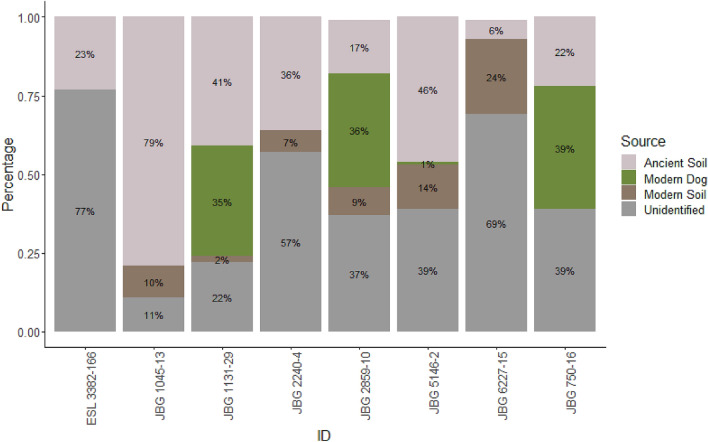
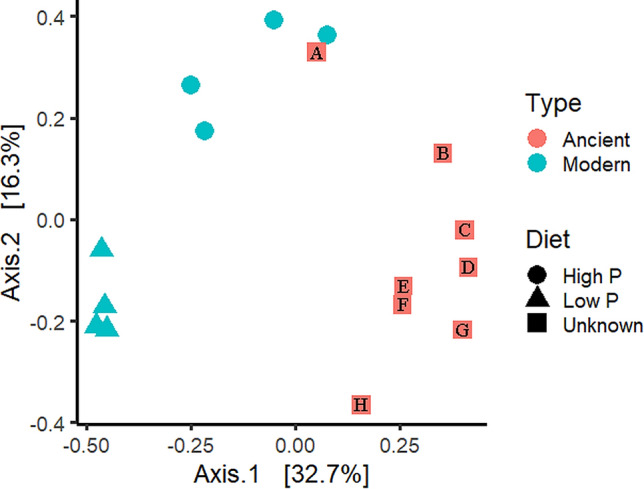
Paleofeces or coprolites are often used to reconstruct diet at archaeological sites, usually using macroscopic analyses or targeted DNA amplification and sequencing. Here we present an integrative analysis of dog coprolites, combining macroscopic analyses, stable isotope measurements, and DNA shotgun sequencing to examine diet and health status. Dog coprolites used in this study were recovered from the Janey B. Goode and East Saint Louis archaeological sites, both of which are located in the American Bottom, an extensive Mississippi River floodplain in Southwestern Illinois. Based on the context of recovery, coprolites are assigned to the Late Woodland and Terminal Late Woodland periods (ca. 600-1050 AD). Given the scarcity of human remains from this time period, these dog coprolites can be useful as a proxy for understanding human diet during the Late Woodland period. We find that the Late Woodland dogs consumed a variety of fish as well as bird and plant taxa, possibly including maize, and also harbored intestinal parasites and pathogenic bacteria. By sequencing the fecal microbiome of the coprolites, we find some similarities to modern dog microbiomes, as well as specific taxa that can be used to discriminate between modern and ancient microbiomes, excluding soil contaminants. As dogs are often used as a surrogate to assess human diet, humans living with these dogs likely had a similar diet and were affected by similar parasites. These analyses, when integrated, show a more comprehensive view of ancient dog and human diet and health in the region during the initial expansion of maize agriculture than any individual method could alone.
古粪便或粪化石常用于重建考古遗址的饮食情况,通常使用宏观分析或靶向 DNA 扩增和测序。在这里,我们结合宏观分析、稳定同位素测量和 DNA 鸟枪法测序,对狗粪化石进行综合分析,以研究饮食和健康状况。本研究中使用的狗粪化石是从古遗址 Janey B. Goode 和 East Saint Louis 中回收的,这两个遗址都位于美国底部,这是伊利诺伊州西南部密西西比河泛滥平原的一个广阔地区。根据回收的背景,粪化石被分配到晚期林地和晚期林地末期(约公元 600-1050 年)。鉴于这一时期人类遗骸的稀缺性,这些狗粪化石可以作为了解晚期林地时期人类饮食的替代物。我们发现,晚期林地的狗吃了各种各样的鱼,还有鸟类和植物类群,可能包括玉米,同时还携带肠道寄生虫和病原菌。通过对粪化石的粪便微生物组进行测序,我们发现与现代狗微生物组有一些相似之处,以及一些可以用来区分现代和古代微生物组的特定类群,排除了土壤污染物。由于狗常被用作评估人类饮食的替代物,因此与这些狗一起生活的人类可能有类似的饮食,并受到类似寄生虫的影响。这些分析综合起来,展示了在玉米农业最初扩张时期,该地区古代狗和人类饮食和健康的更全面的情况,而任何单一方法都无法做到这一点。