Parasitology Laboratory, Institute of Natural Resources and Agrobiology (IRNASA, CSIC), Cordel de Merinas, Salamanca, Spain.
Biotechvana, Scientific Park, University of Valencia, Valencia, Spain.
PLoS Negl Trop Dis. 2021 Feb 5;15(2):e0009105. doi: 10.1371/journal.pntd.0009105. eCollection 2021 Feb.
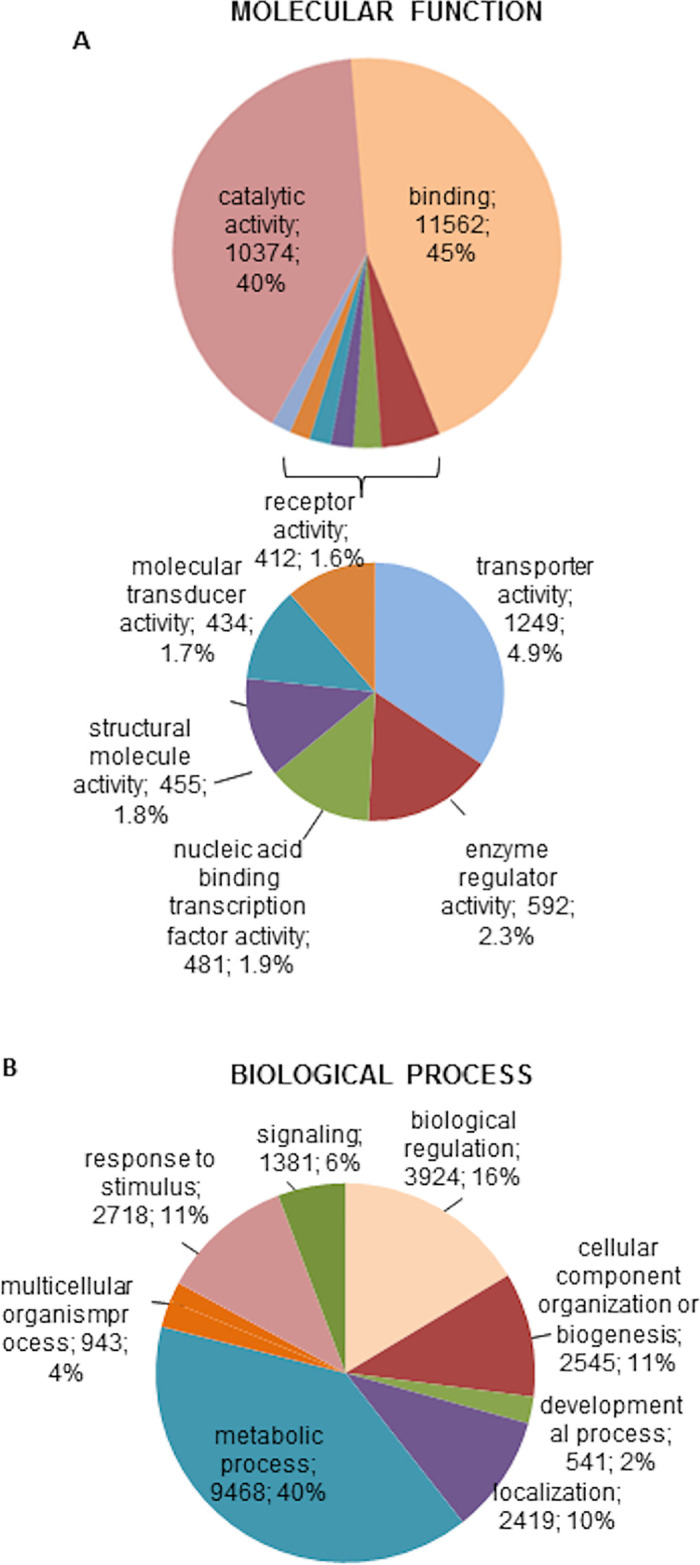
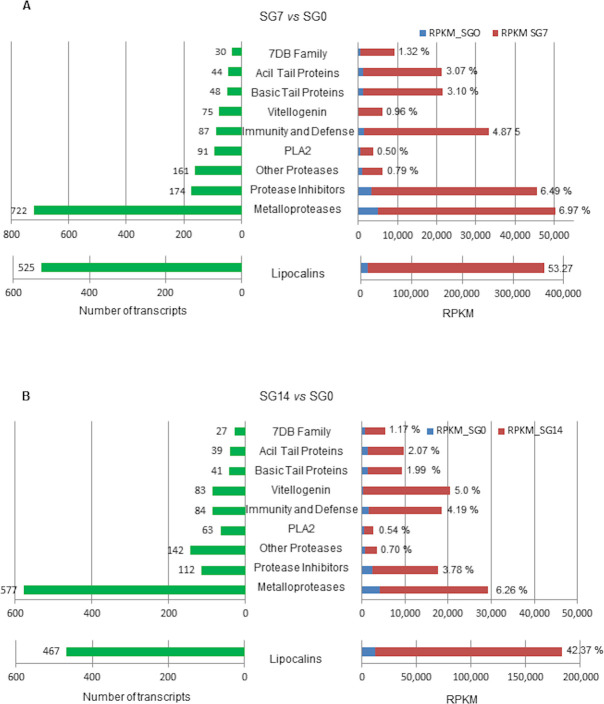
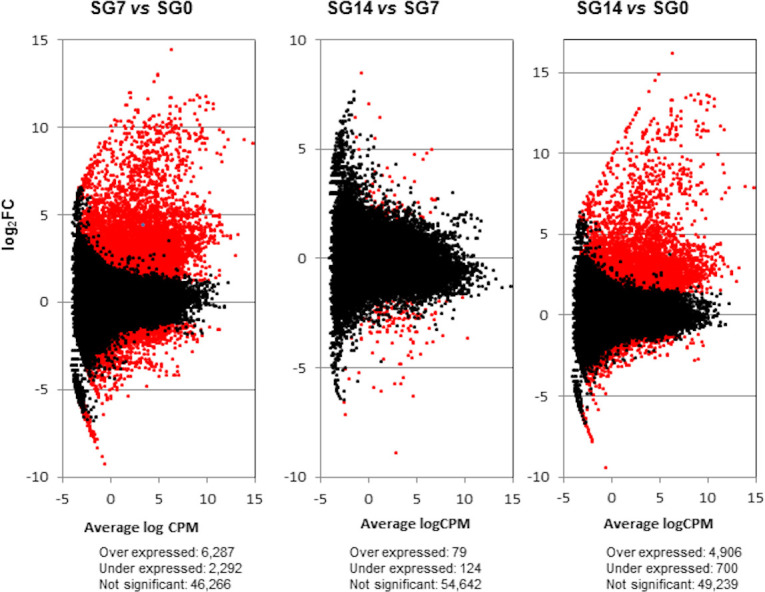
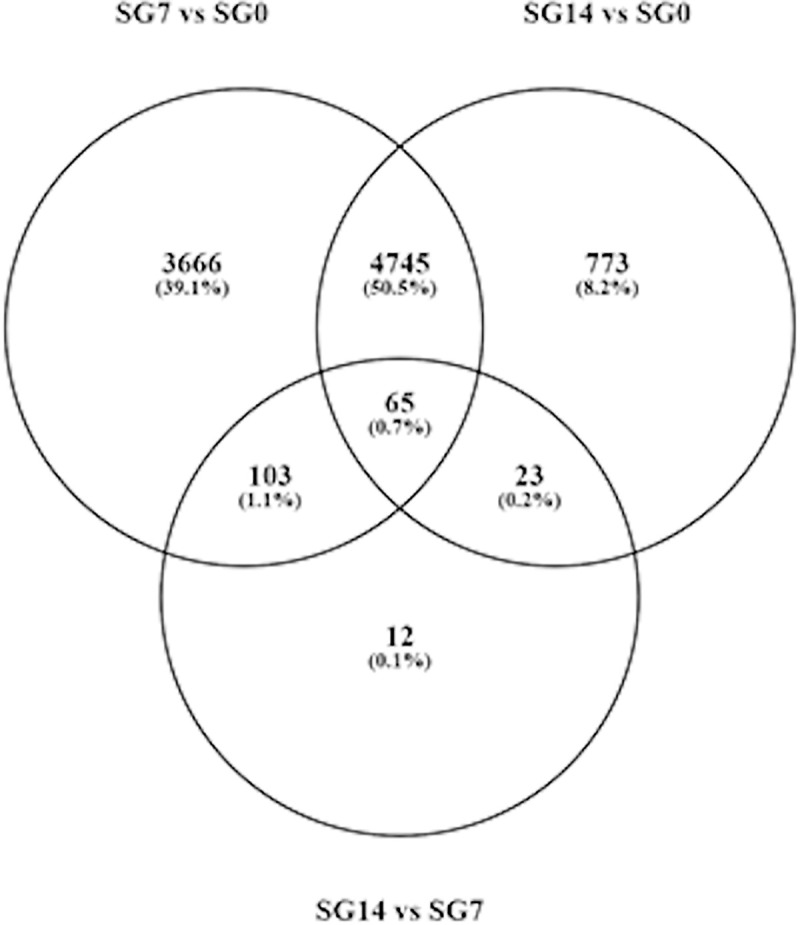
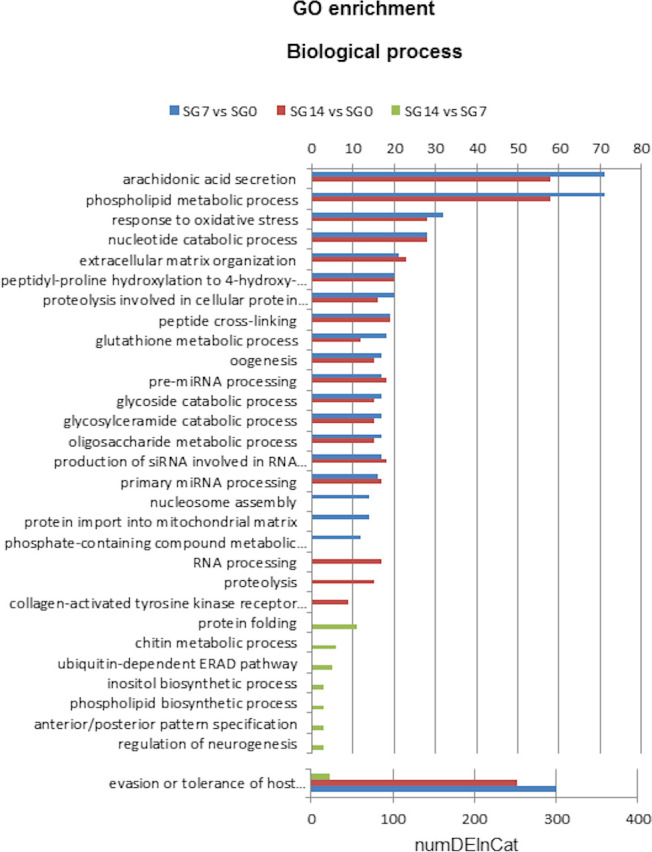
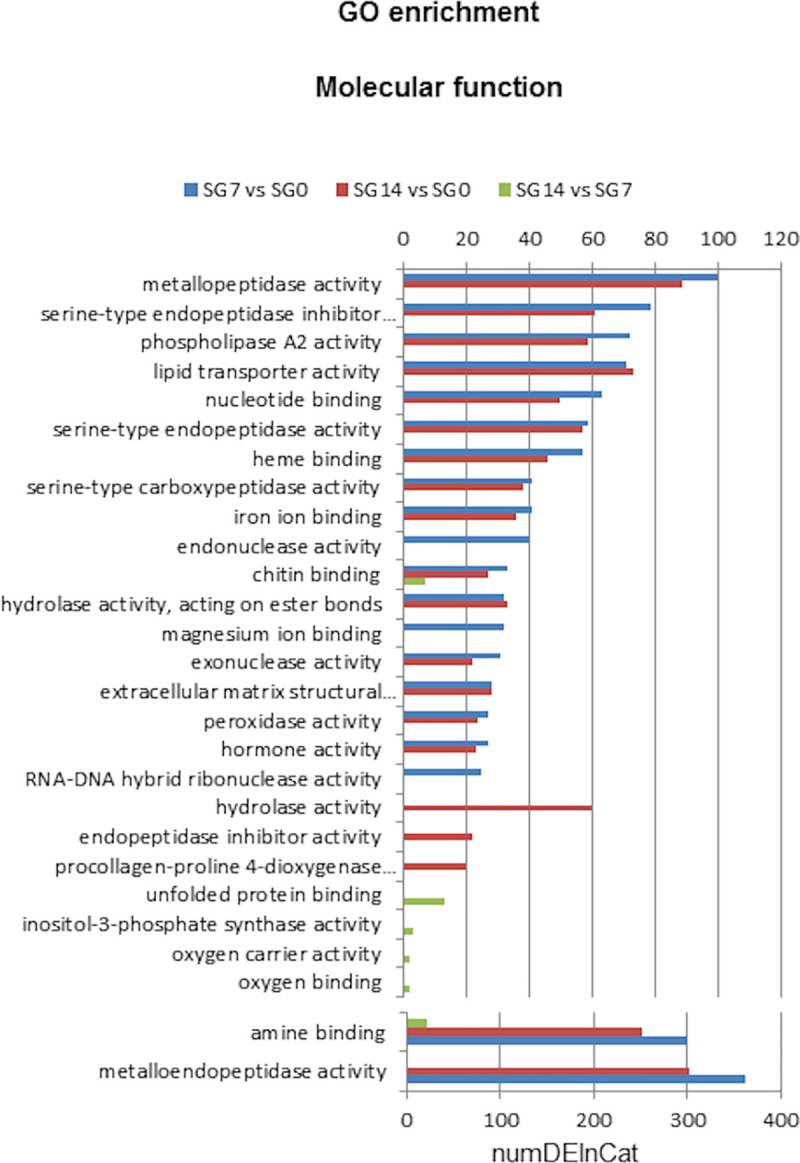
The argasid tick Ornithodoros moubata is the main vector of human relapsing fever (HRF) and African swine fever (ASF) in Africa. Salivary proteins are part of the host-tick interface and play vital roles in the tick feeding process and the host infection by tick-borne pathogens; they represent interesting targets for immune interventions aimed at tick control. The present work describes the transcriptome profile of salivary glands of O. moubata and assesses the gene expression dynamics along the trophogonic cycle using Illumina sequencing. De novo transcriptome assembling resulted in 71,194 transcript clusters and 41,011 annotated transcripts, which represent 57.6% of the annotation success. Most salivary gene expression takes place during the first 7 days after feeding (6,287 upregulated transcripts), while a minority of genes (203 upregulated transcripts) are differentially expressed between 7 and 14 days after feeding. The functional protein groups more abundantly overrepresented after blood feeding were lipocalins, proteases (especially metalloproteases), protease inhibitors including the Kunitz/BPTI-family, proteins with phospholipase A2 activity, acid tail proteins, basic tail proteins, vitellogenins, the 7DB family and proteins involved in tick immunity and defence. The complexity and functional redundancy observed in the sialotranscriptome of O. moubata are comparable to those of the sialomes of other argasid and ixodid ticks. This transcriptome provides a valuable reference database for ongoing proteomics studies of the salivary glands and saliva of O. moubata aimed at confirming and expanding previous data on the O. moubata sialoproteome.
软蜱属的钝缘蜱 Ornithodoros moubata 是非洲人类回归热(HRF)和非洲猪瘟(ASF)的主要传播媒介。唾液蛋白是宿主-蜱接触界面的一部分,在蜱的吸血过程和蜱传播病原体感染宿主中发挥重要作用;它们是针对蜱控制的免疫干预的有趣目标。本研究描述了 O. moubata 唾液腺的转录组图谱,并使用 Illumina 测序评估了沿营养周期的基因表达动态。从头转录组组装产生了 71194 个转录簇和 41011 个注释转录本,代表注释成功率的 57.6%。大多数唾液基因表达发生在吸血后 7 天内(6287 个上调转录本),而少数基因(203 个上调转录本)在吸血后 7 至 14 天之间差异表达。在吸血后丰度更高的功能蛋白组主要是脂类结合蛋白、蛋白酶(特别是金属蛋白酶)、蛋白酶抑制剂(包括 Kunitz/BPTI 家族)、具有磷脂酶 A2 活性的蛋白质、酸尾蛋白、碱性尾蛋白、卵黄蛋白原、7DB 家族和参与蜱免疫和防御的蛋白质。在 O. moubata 的唾液转录组中观察到的复杂性和功能冗余与其他软蜱和硬蜱的唾液组相当。该转录组为正在进行的 O. moubata 唾液腺和唾液的蛋白质组学研究提供了有价值的参考数据库,旨在证实和扩展先前关于 O. moubata 唾液蛋白组的数据。