Department of Internal Medicine/Division of Endocrinology and Metabolism, University of Iowa, The Iowa City Veterans Affairs Medical Center, Iowa City, IA, USA.
Department of Biochemistry, NMR Core facility, University of Iowa, Iowa City, IA, USA.
Pharmacol Res Perspect. 2021 Feb;9(1):e00701. doi: 10.1002/prp2.701.
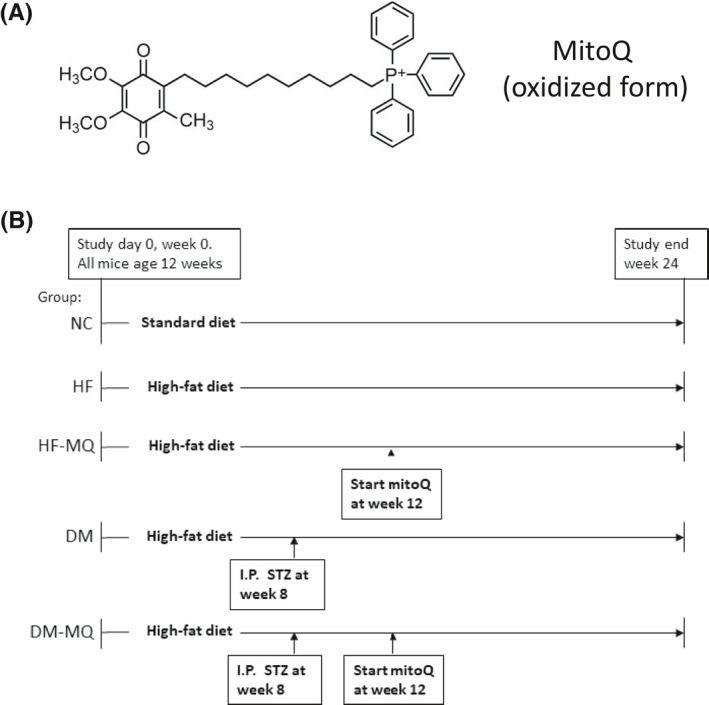
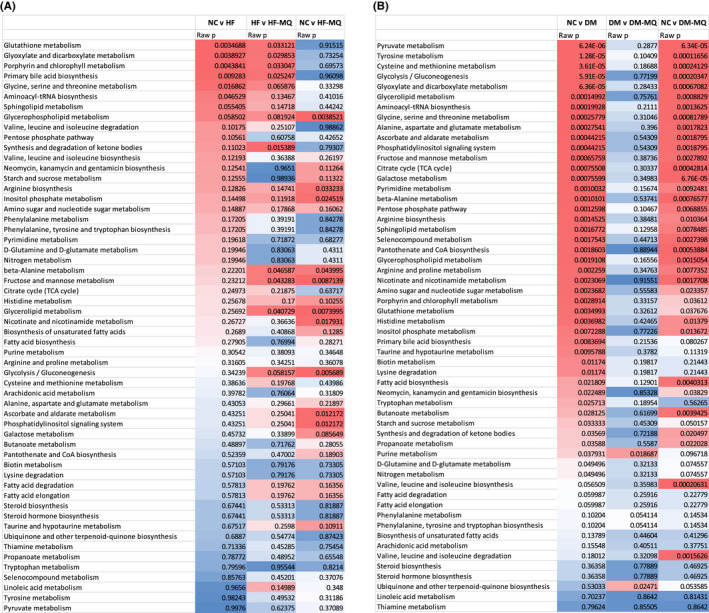
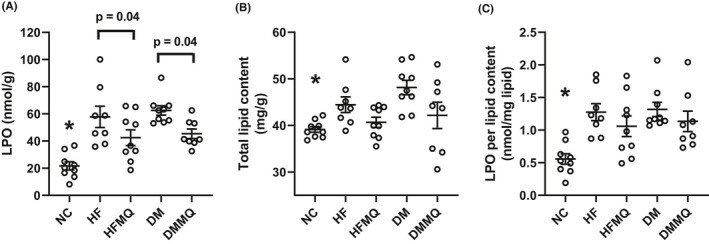
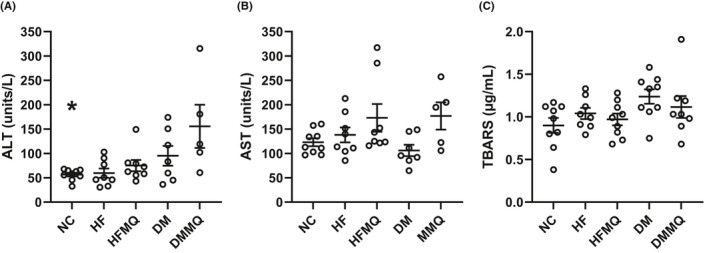
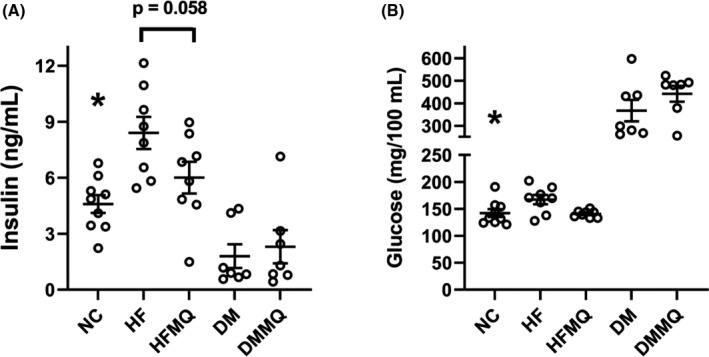
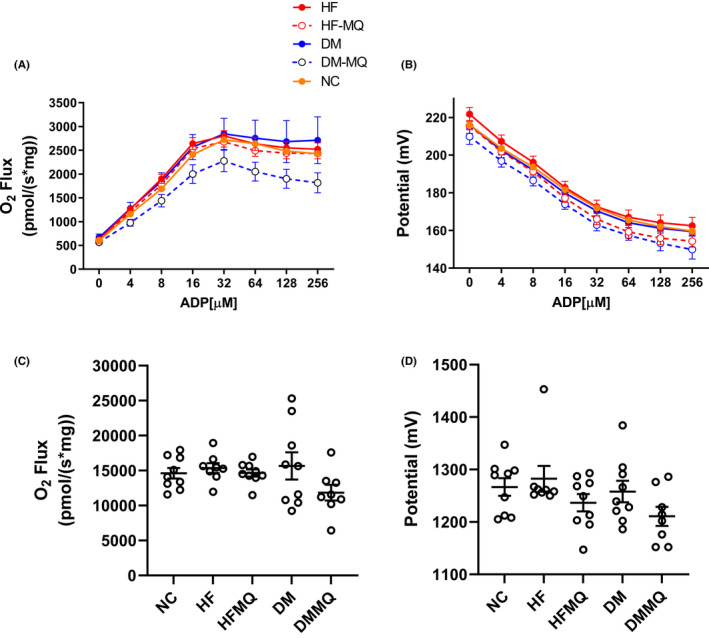
Previous work by ourselves and others showed that mitoquinone (mitoQ) reduced oxidative damage and prevented hepatic fat accumulation in mice made obese with high-fat (HF) feeding. Here we extended these studies to examine the effect of mitoQ on parameters affecting liver function in rats treated with HF to induce obesity and in rats treated with HF plus streptozotocin (STZ) to model a severe form of type 2 diabetes. In prior reported work, we found that mitoQ significantly improved glycemia based on glucose tolerance data in HF rats but not in the diabetic rats. Here we found only non-significant reductions in insulin and glucose measured in the fed state at sacrifice in the HF mice treated with mitoQ. Metabolomic data showed that mitoQ altered several hepatic metabolic pathways in HF-fed obese rats toward those observed in control normal chow-fed non-obese rats. However, mitoQ had little effect on pathways observed in the diabetic rats, wherein diabetes itself induced marked pathway aberrations. MitoQ did not alter respiration or membrane potential in isolated liver mitochondria. MitoQ reduced liver fat and liver hydroperoxide levels but did not improve liver function as marked by circulating levels of aspartate and alanine aminotransferase (ALT). In summary, our results for HF-fed rats are consistent with past findings in HF-fed mice indicating decreased liver lipid hydroperoxides (LPO) and improved glycemia. However, in contrast to the HF obese mice, mitoQ did not improve glycemia or reset perturbed metabolic pathways in the diabetic rats.
先前我们自己和其他人的工作表明,mitoquinone(mitoQ)可减少肥胖高脂肪(HF)喂养小鼠的氧化损伤并防止肝脂肪堆积。在这里,我们将这些研究扩展到检查 mitoQ 对 HF 诱导肥胖的大鼠和 HF 加链脲佐菌素(STZ)治疗的大鼠(模拟 2 型糖尿病的严重形式)的肝功能参数的影响。在之前报道的工作中,我们发现 mitoQ 基于 HF 大鼠的葡萄糖耐量数据显着改善了血糖,但对糖尿病大鼠没有影响。在这里,我们发现接受 mitoQ 治疗的 HF 小鼠在喂食状态下测量的胰岛素和葡萄糖仅略有降低。代谢组学数据表明,mitoQ 改变了 HF 喂养肥胖大鼠的几种肝代谢途径,使其向对照正常饲料喂养的非肥胖大鼠观察到的途径转变。然而,mitoQ 对糖尿病大鼠观察到的途径几乎没有影响,其中糖尿病本身诱导了明显的途径异常。mitoQ 没有改变分离的肝线粒体的呼吸或膜电位。mitoQ 降低了肝脂肪和肝过氧化物水平,但没有像天冬氨酸和丙氨酸氨基转移酶(ALT)的循环水平那样改善肝功能。总之,我们对 HF 喂养大鼠的结果与 HF 喂养小鼠的过去发现一致,表明肝脂质过氧化物(LPO)减少和血糖改善。然而,与 HF 肥胖小鼠不同,mitoQ 没有改善糖尿病大鼠的血糖或重置失调的代谢途径。