European Molecular Biology Laboratory, 71 Avenue des Martyrs, 38042 Grenoble, France.
European Molecular Biology Laboratory, 71 Avenue des Martyrs, 38042 Grenoble, France.
Mol Cell. 2021 Mar 18;81(6):1246-1259.e8. doi: 10.1016/j.molcel.2021.01.005. Epub 2021 Feb 5.
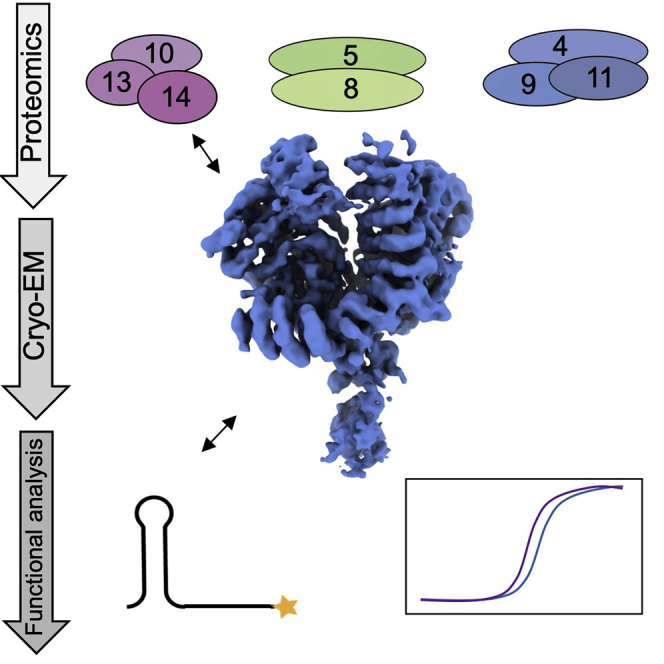
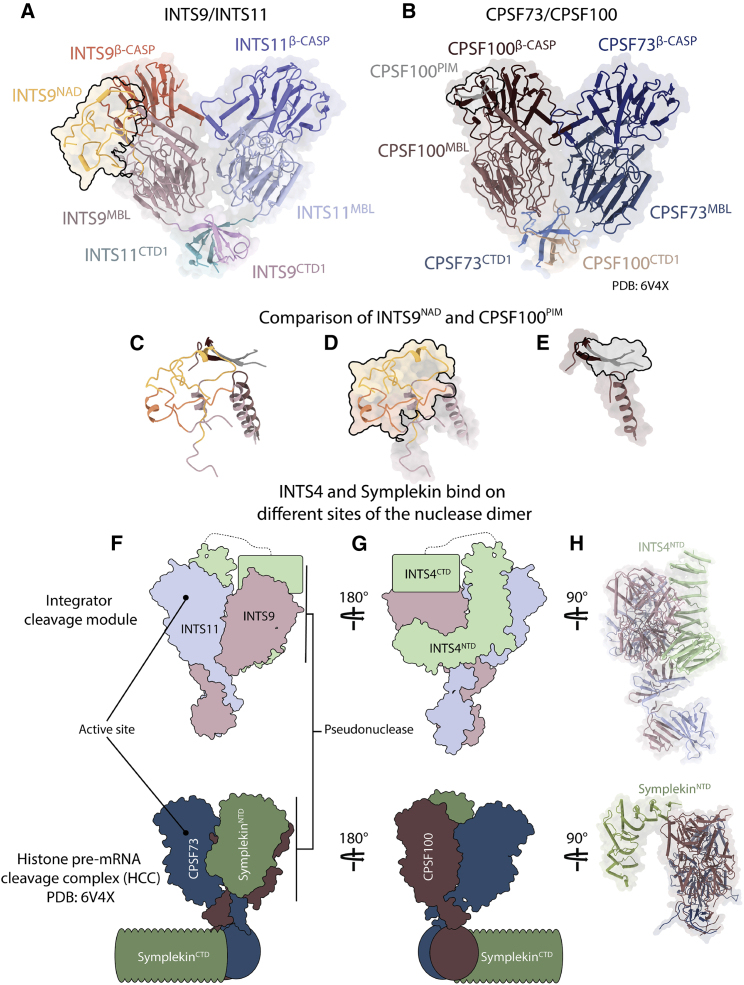
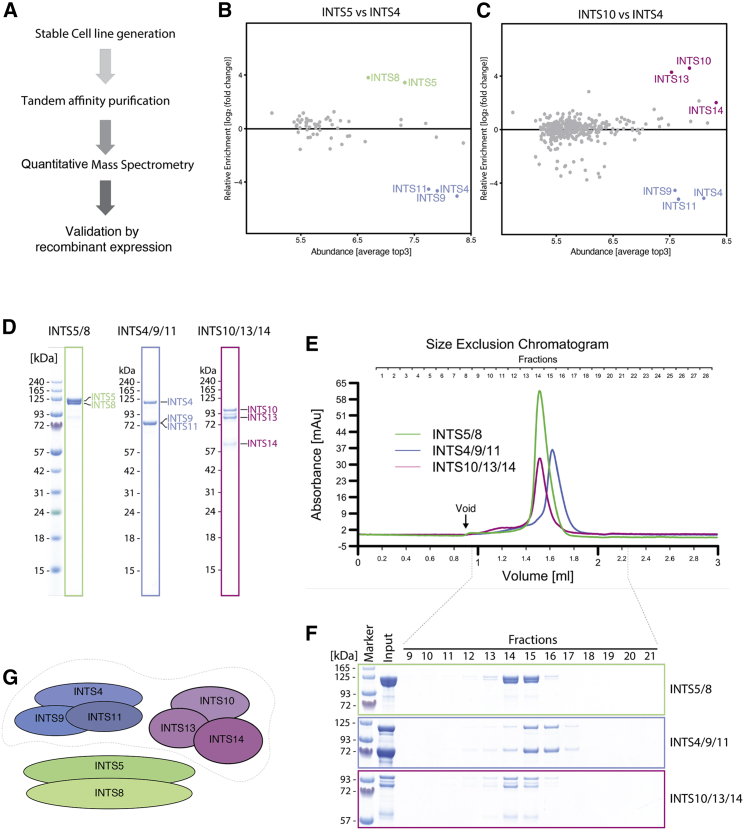
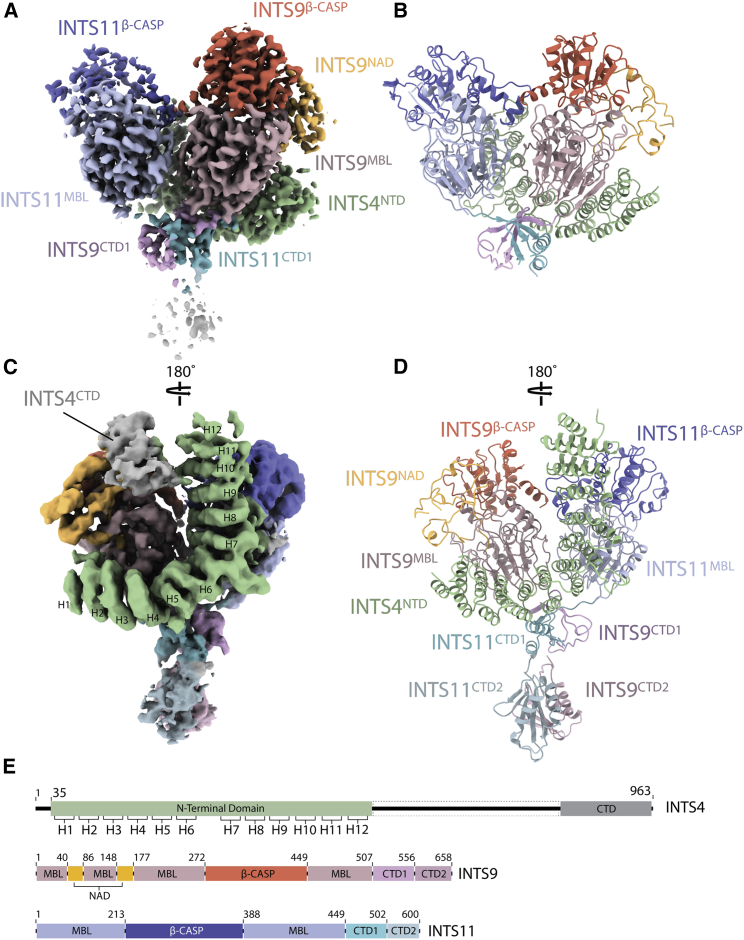
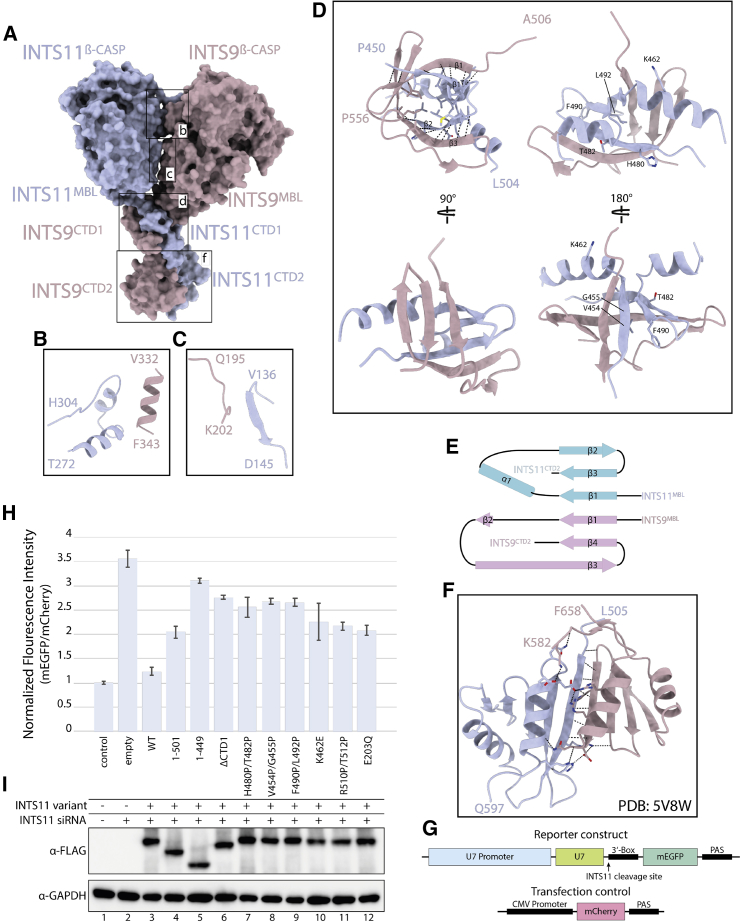
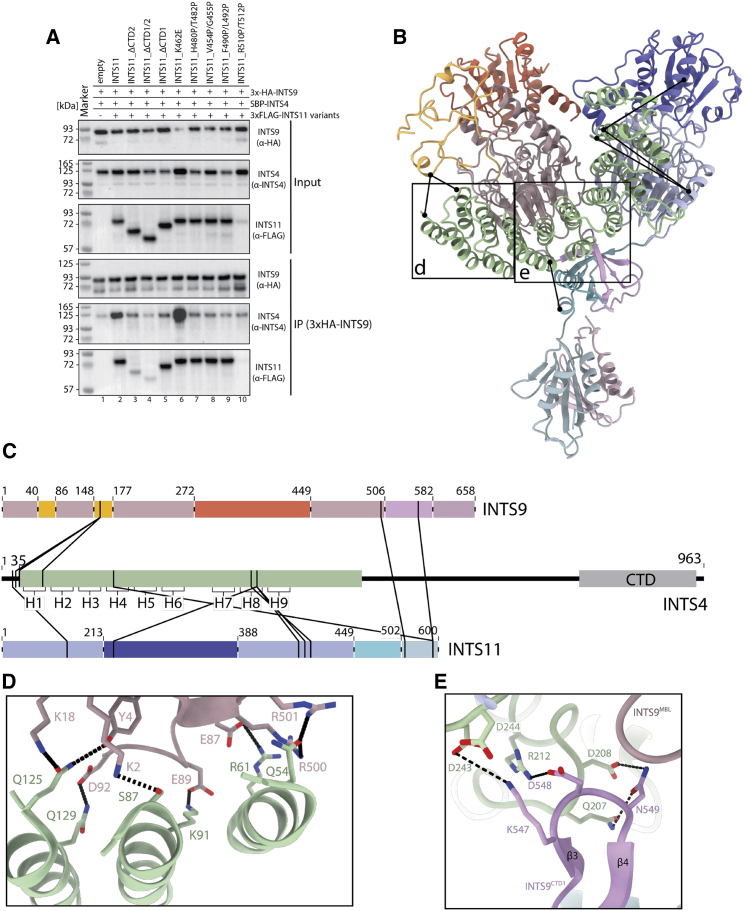
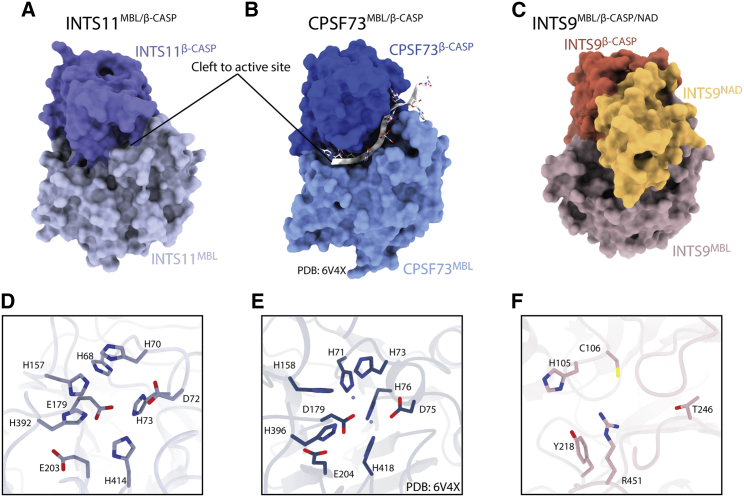
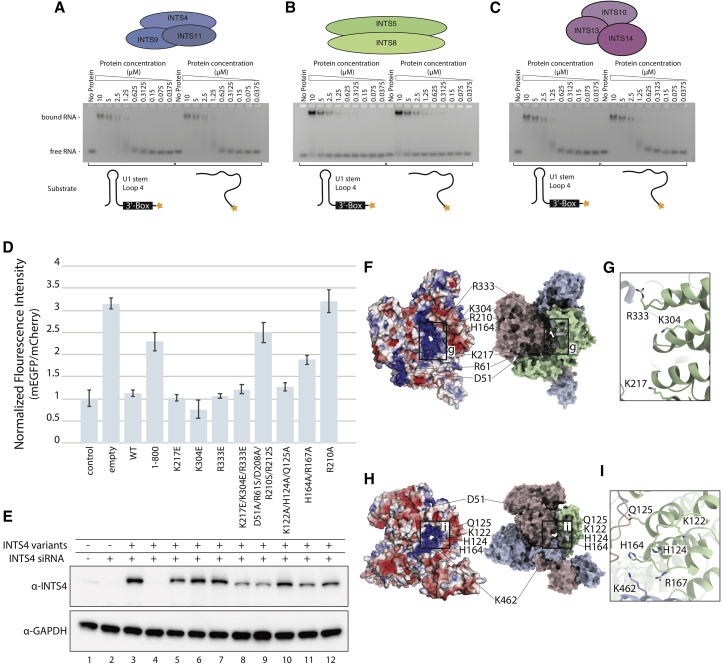
The Integrator is a specialized 3' end-processing complex involved in cleavage and transcription termination of a subset of nascent RNA polymerase II transcripts, including small nuclear RNAs (snRNAs). We provide evidence of the modular nature of the Integrator complex by biochemically characterizing its two subcomplexes, INTS5/8 and INTS10/13/14. Using cryoelectron microscopy (cryo-EM), we determined a 3.5-Å-resolution structure of the INTS4/9/11 ternary complex, which constitutes Integrator's catalytic core. Our structure reveals the spatial organization of the catalytic nuclease INTS11, bound to its catalytically impaired homolog INTS9 via several interdependent interfaces. INTS4, a helical repeat protein, plays a key role in stabilizing nuclease domains and other components. In this assembly, all three proteins form a composite electropositive groove, suggesting a putative RNA binding path within the complex. Comparison with other 3' end-processing machineries points to distinct features and a unique architecture of the Integrator's catalytic module.
整合酶是一种专门的 3'末端加工复合物,参与包括小核 RNA(snRNA)在内的一组新生 RNA 聚合酶 II 转录本的切割和转录终止。我们通过生化特征分析其两个亚复合物 INTS5/8 和 INTS10/13/14,为整合酶复合物的模块化性质提供了证据。我们使用冷冻电子显微镜(cryo-EM)确定了 INTS4/9/11 三元复合物的 3.5 Å分辨率结构,该复合物构成了整合酶的催化核心。我们的结构揭示了催化核酶 INTS11 的空间组织,它通过几个相互依赖的界面与催化受损的同源物 INTS9 结合。螺旋重复蛋白 INTS4 在稳定核酶结构域和其他组件方面发挥着关键作用。在这个组装中,所有三种蛋白质形成一个复合正电荷槽,表明复合物内存在一个潜在的 RNA 结合路径。与其他 3'末端加工机制的比较表明,整合酶的催化模块具有独特的特征和独特的结构。