Rhew Sung-Yong, Park Su-Min, Li Qiang, An Ju-Hyun, Chae Hyung-Kyu, Lee Jung-Hwa, Ahn Jin-Ok, Song Woo-Jin, Youn Hwa-Young
Laboratory of Veterinary Internal Medicine, Department of Veterinary Clinical Science, College of Veterinary Medicine, Seoul National University, Seoul 08826, Republic of Korea.
Department of Veterinary Medicine, College of Agriculture, YanBian University, YanJi, JiLin, 133000, China.
J Vet Med Sci. 2021 Apr 9;83(4):592-600. doi: 10.1292/jvms.20-0195. Epub 2021 Feb 8.
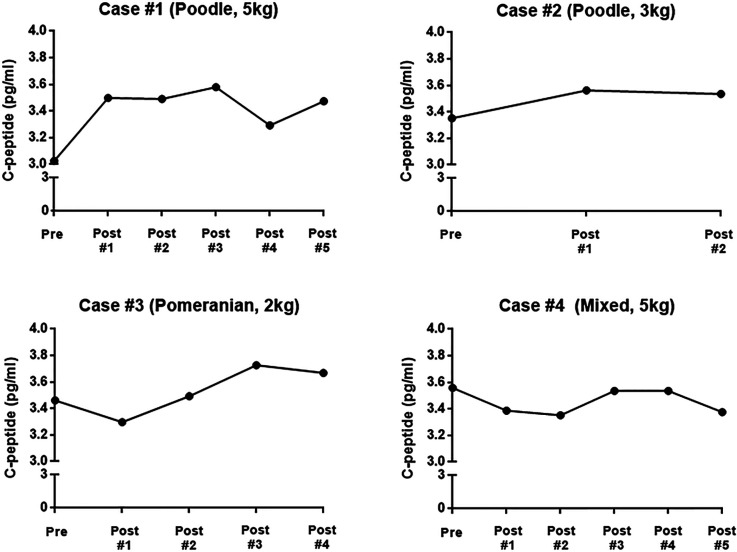
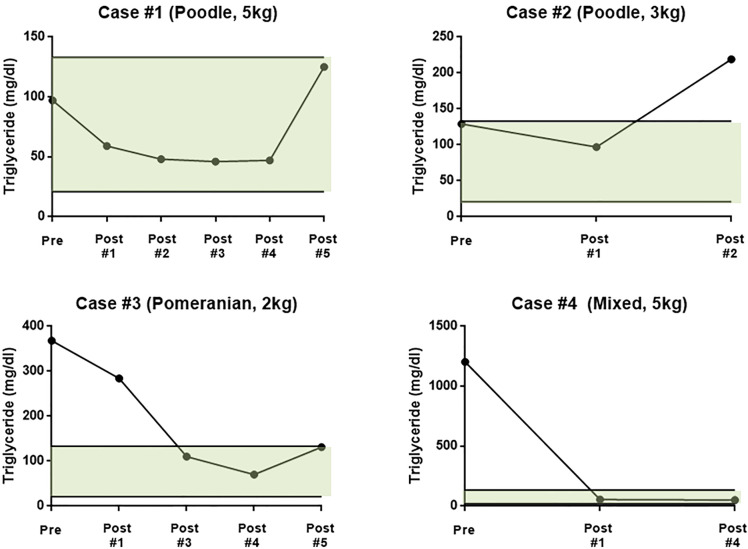
Mesenchymal stem cells (MSCs) possess regenerative and immunomodulatory properties and can control the immune dysregulation that leads to β-cell destruction. Stem-cell transplantation could thus manage insulin-dependent diabetes mellitus (IDDM) in dogs. In this pilot study, we aimed to assess canine adipose tissue-derived MSCs (cAT-MSCs) transplantation as a treatment for canine diabetes mellitus. This study included four dogs with over a year of insulin treatment for IDDM, following diagnosis at the Veterinary Medicine Teaching Hospital of Seoul National University. Allogenic cAT-MSCs were infused intravenously three or five times monthly to dogs with IDDM. Blood and urine samples were obtained monthly. General clinical symptoms, including changes in body weight, vitality, appetite, and water intake were assessed. Three of the four owners observed improvement of vitality after stem cell treatment. Two of the four dogs showed improvement in appetite and body weight, polyuria, and polydipsia. C-peptide has increased by about 5-15% in three of the cases, and fructosamine and HbA1c levels have improved in two of the cases. Hyperlipidemia was resolved in two of the dogs, and there was no concurrent bacterial cystitis in any of the dogs. C-peptide secretion and lipid metabolism are associated with diabetic complications. Improvement in these parameters following the treatment suggests that cAT-MSC transplantation in dogs with IDDM might help to improve their insulin secretory capacity and prevent diabetic complications.
间充质干细胞(MSCs)具有再生和免疫调节特性,能够控制导致β细胞破坏的免疫失调。因此,干细胞移植可用于治疗犬类胰岛素依赖型糖尿病(IDDM)。在这项初步研究中,我们旨在评估犬脂肪组织来源的间充质干细胞(cAT-MSCs)移植对犬糖尿病的治疗效果。本研究纳入了4只在首尔国立大学兽医学院教学医院被诊断为IDDM且接受胰岛素治疗超过一年的犬。将同种异体cAT-MSCs每月静脉输注3次或5次给患有IDDM的犬。每月采集血液和尿液样本。评估一般临床症状,包括体重、活力、食欲和饮水量的变化。4只犬的主人中有3人观察到干细胞治疗后活力有所改善。4只犬中有2只在食欲、体重、多尿和多饮方面有所改善。3例病例的C肽增加了约5%-15%,2例病例的果糖胺和糖化血红蛋白水平有所改善。2只犬的高脂血症得到缓解,所有犬均未并发细菌性膀胱炎。C肽分泌和脂质代谢与糖尿病并发症有关。治疗后这些参数的改善表明,对患有IDDM的犬进行cAT-MSC移植可能有助于提高其胰岛素分泌能力并预防糖尿病并发症。