Meng Yinnan, Wang Wei, Chen Meng, Chen Kuifei, Xia Xinhang, Zhou Suna, Yang Haihua
Laboratory of Cellular and Molecular Radiation Oncology, Radiation Oncology Institute of Enze Medical Health Academy, Department of Radiation Oncology, Affiliated Taizhou Hospital of Wenzhou Medical University, Taizhou, China.
School of Medicine, Shaoxing University, Shaoxing, China.
Front Immunol. 2021 Jan 20;11:622467. doi: 10.3389/fimmu.2020.622467. eCollection 2020.
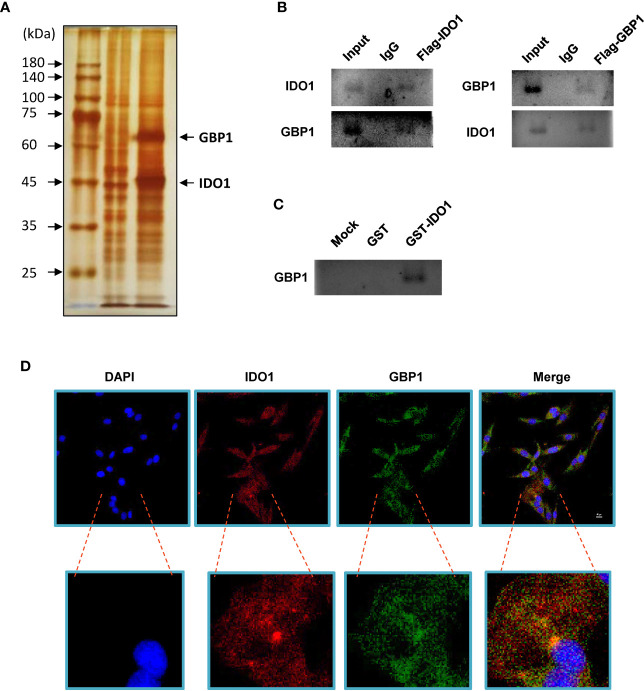
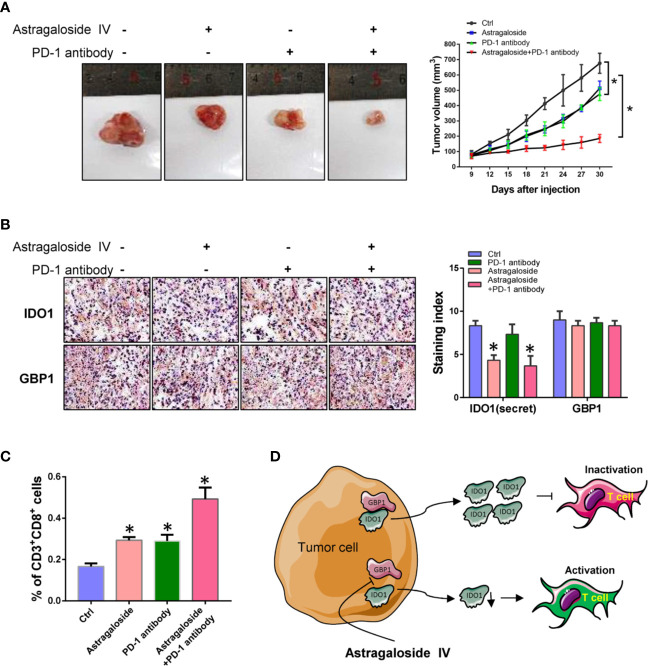
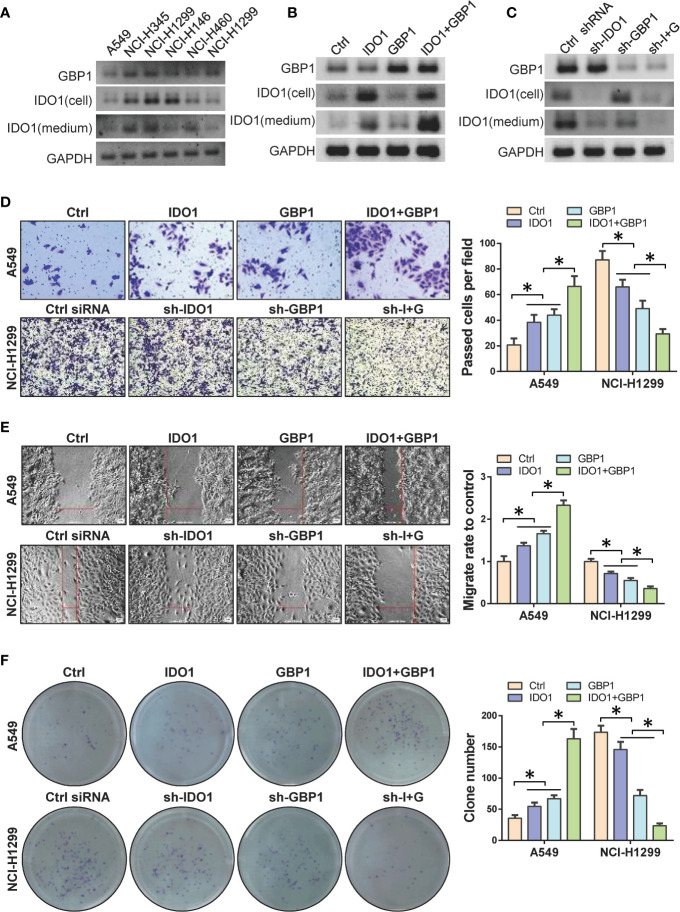
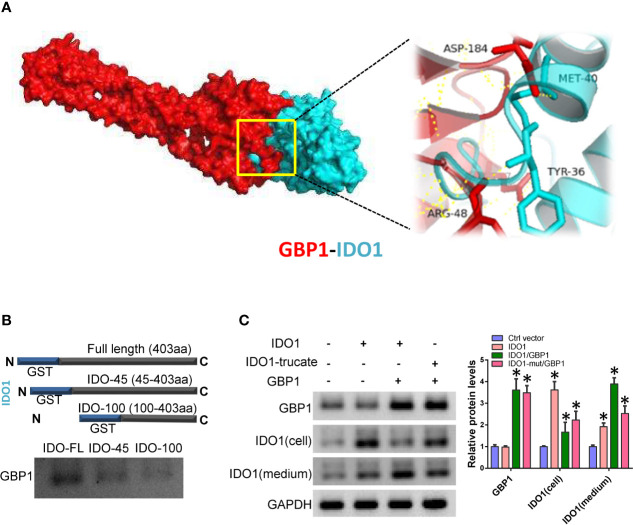
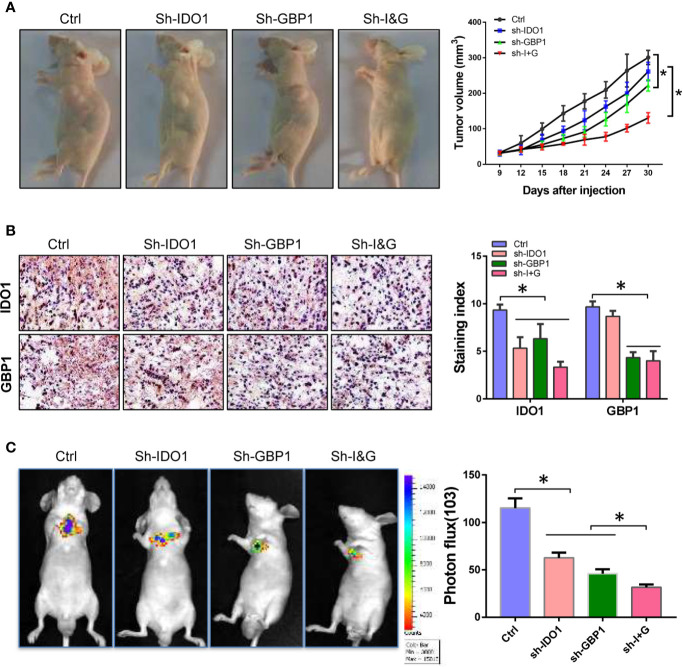
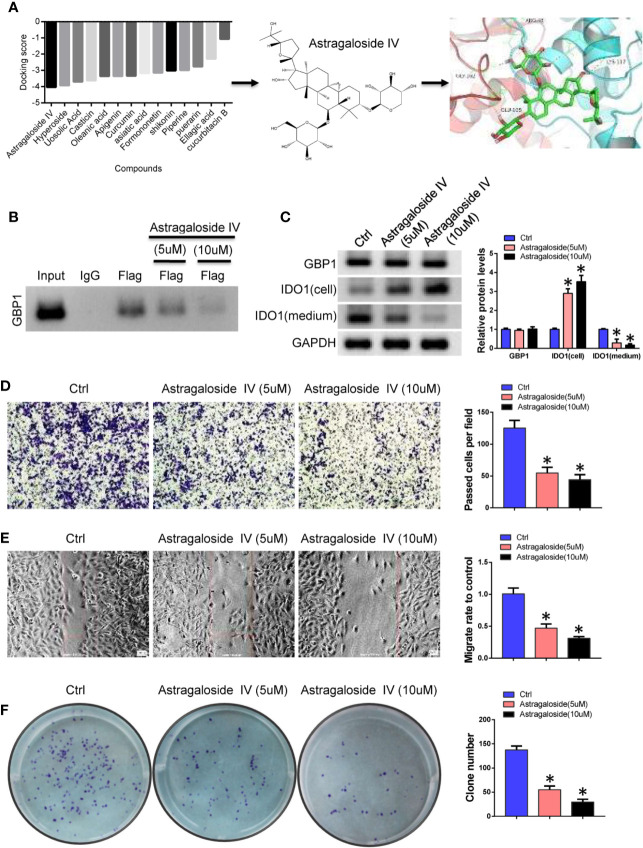
IDO1-mediated immune escape can lead to the malignant progression of tumors. However, the precise mechanism of IDO1 remains unclear. This study showed that IDO1 can bind to GBP1 and increase the extracellular secretion of IDO1 with the assistance of GBP1, thereby promoting the malignant proliferation and metastasis of lung cancer. In vitro study showed that the high expression levels of IDO1 and GBP1 in lung cancer cells promoted cell invasion and migration. In vivo study revealed that knock-down of IDO1 and GBP1 inhibited tumor growth and metastasis. In addition, Astragaloside IV reduces the extracellular secretion of IDO1 by blocking the interaction of IDO1 and GBP1, thereby reducing T cell exhaustion and inhibiting tumor progression. These results suggest that blocking the extracellular secretion of IDO1 may prevent T cell exhaustion and thereby enhance the effect of PD-1 inhibitors on cancer treatment.
吲哚胺2,3-双加氧酶1(IDO1)介导的免疫逃逸可导致肿瘤的恶性进展。然而,IDO1的确切机制仍不清楚。本研究表明,IDO1可与鸟苷结合蛋白1(GBP1)结合,并在GBP1的协助下增加IDO1的细胞外分泌,从而促进肺癌的恶性增殖和转移。体外研究表明,肺癌细胞中IDO1和GBP1的高表达促进细胞侵袭和迁移。体内研究显示,敲低IDO1和GBP1可抑制肿瘤生长和转移。此外,黄芪甲苷通过阻断IDO1与GBP1的相互作用减少IDO1的细胞外分泌,从而减少T细胞耗竭并抑制肿瘤进展。这些结果表明,阻断IDO1的细胞外分泌可能预防T细胞耗竭,从而增强PD-1抑制剂对癌症治疗的效果。