Xu Man, Li Shumin, Wang Jiajia, Huang Songming, Zhang Aihua, Zhang Yue, Gu Wei, Yu Xiaowen, Jia Zhanjun
Department of Endocrinology, Children's Hospital of Nanjing Medical University, Nanjing, China.
Nanjing Key Laboratory of Pediatrics, Children's Hospital of Nanjing Medical University, Nanjing, China.
Front Med (Lausanne). 2021 Jan 21;7:626140. doi: 10.3389/fmed.2020.626140. eCollection 2020.
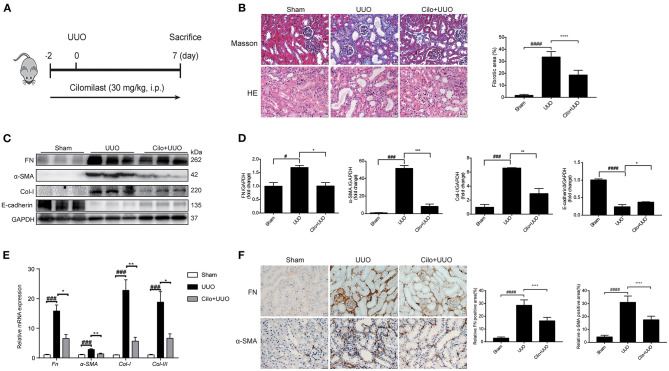
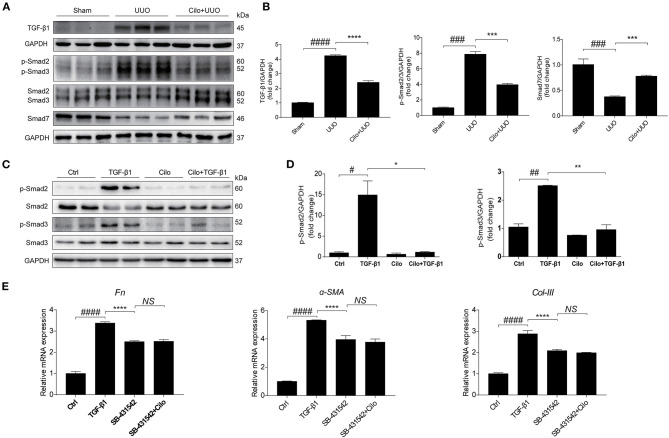
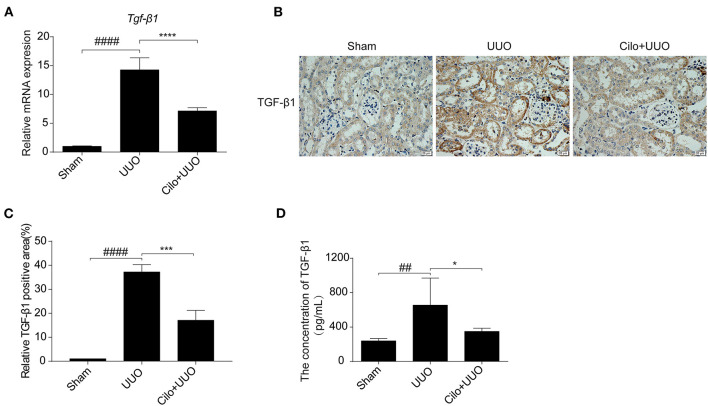
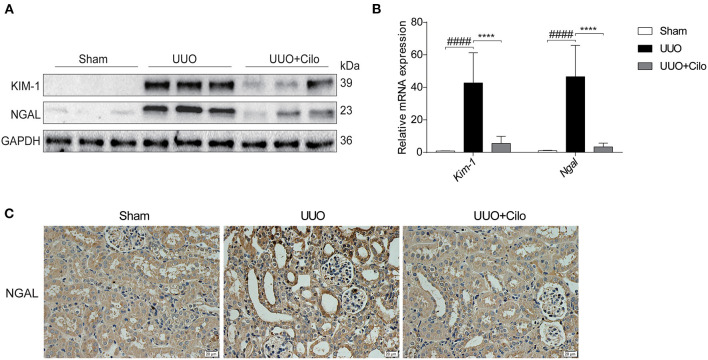
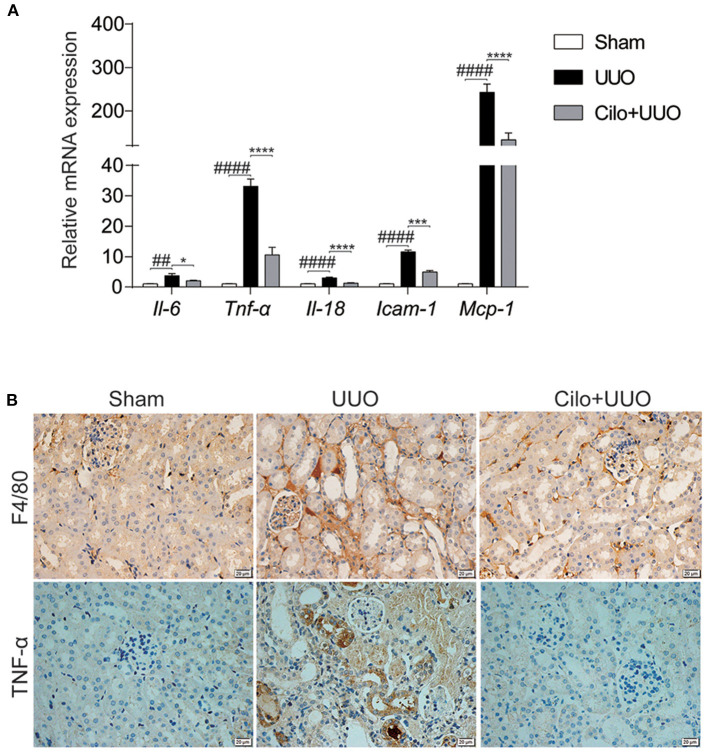
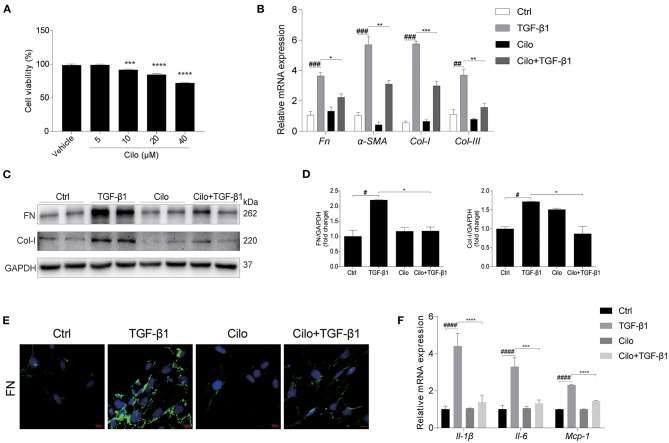
Renal tubulointerstitial fibrosis is the key pathological feature in chronic kidney diseases (CKDs) with no satisfactory therapies in clinic. Cilomilast is a second-generation, selective phosphodiesterase-4 inhibitor, but its role in renal tubulointerstitial fibrosis in CKD remains unclear. Cilomilast was applied to the mice with unilateral ureteric obstruction (UUO) and renal fibroblast cells (NRK-49F) stimulated by TGF-β1. Renal tubulointerstitial fibrosis and inflammation after UUO or TGF-β1 stimulation were examined by histology, Western blotting, real-time PCR and immunohistochemistry. KIM-1 and NGAL were detected to evaluate tubular injury in UUO mice. , immunohistochemistry and western blot data demonstrated that cilomilast treatment inhibited extracellular matrix deposition, profibrotic gene expression, and the inflammatory response. Furthermore, cilomilast prevented tubular injury in UUO mice, as manifested by reduced expression of KIM-1 and NGAL in the kidney. , cilomilast attenuated the activation of fibroblast cells stimulated by TGF-β1, as shown by the reduced expression of fibronectin, α-SMA, collagen I, and collagen III. Cilomilast also inhibited the activation of TGF-β1-Smad2/3 signaling in TGF-β1-treated fibroblast cells. The findings of this study suggest that cilomilast is protective against renal tubulointerstitial fibrosis in CKD, possibly through the inhibition of TGF-β1-Smad2/3 signaling, indicating the translational potential of this drug in treating CKD.
肾小管间质纤维化是慢性肾脏病(CKD)的关键病理特征,临床上尚无令人满意的治疗方法。西洛司特是第二代选择性磷酸二酯酶-4抑制剂,但其在CKD肾小管间质纤维化中的作用仍不清楚。将西洛司特应用于单侧输尿管梗阻(UUO)小鼠以及经转化生长因子-β1(TGF-β1)刺激的肾成纤维细胞(NRK-49F)。通过组织学、蛋白质免疫印迹法、实时聚合酶链反应和免疫组织化学检查UUO或TGF-β1刺激后的肾小管间质纤维化和炎症。检测肾损伤分子-1(KIM-1)和中性粒细胞明胶酶相关脂质运载蛋白(NGAL)以评估UUO小鼠的肾小管损伤。免疫组织化学和蛋白质免疫印迹数据表明,西洛司特治疗可抑制细胞外基质沉积、促纤维化基因表达和炎症反应。此外,西洛司特可预防UUO小鼠的肾小管损伤,表现为肾脏中KIM-1和NGAL表达降低。此外,西洛司特减弱了TGF-β1刺激的成纤维细胞的活化,表现为纤连蛋白、α-平滑肌肌动蛋白(α-SMA)、I型胶原和III型胶原表达降低。西洛司特还抑制了TGF-β1处理的成纤维细胞中TGF-β1-Smad2/3信号通路的活化。本研究结果表明,西洛司特可能通过抑制TGF-β1-Smad2/3信号通路对CKD肾小管间质纤维化具有保护作用,表明该药物在治疗CKD方面具有转化应用潜力。