Cha Sungkyung, Park Inbeom, Jang Kyung Lib
Department of Microbiology, College of Natural Sciences, Pusan National University, Busan 46241, Republic of Korea.
Microbiological Resource Research Institute, Pusan National University, Busan 46241, Republic of Korea.
Heliyon. 2021 Jan 30;7(1):e06134. doi: 10.1016/j.heliyon.2021.e06134. eCollection 2021 Jan.
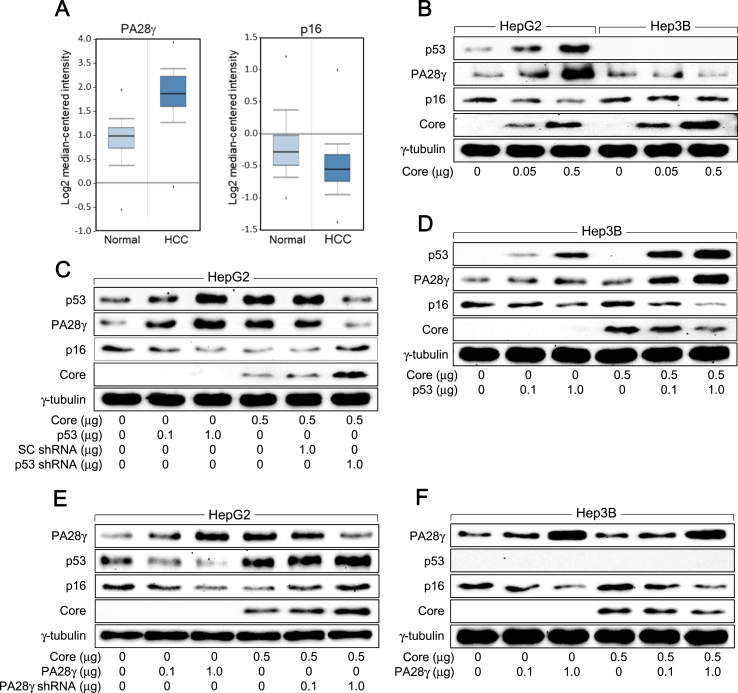
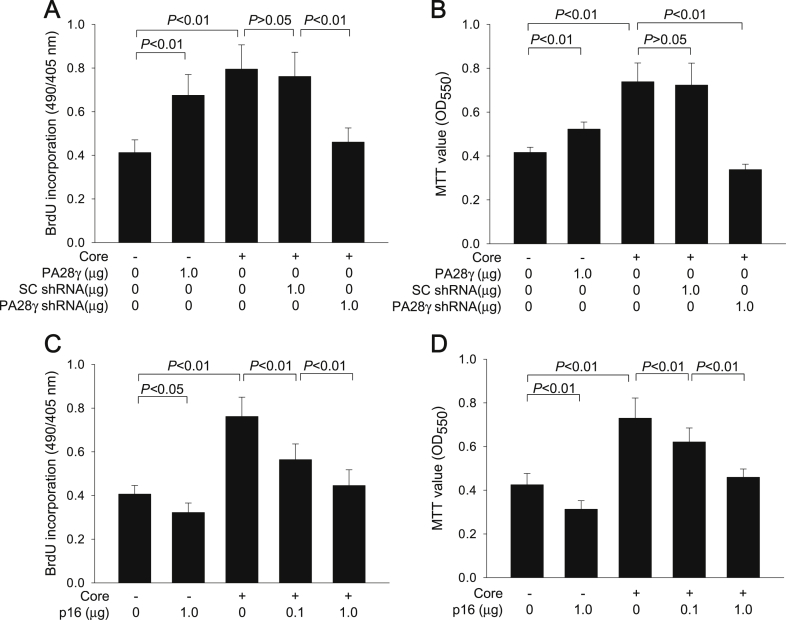
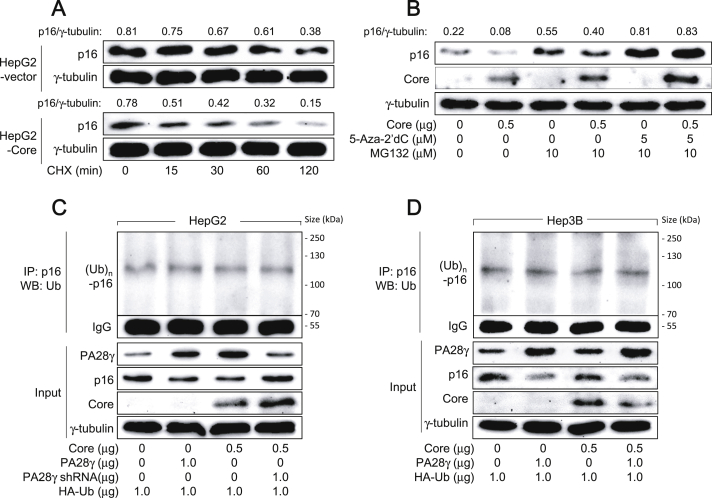
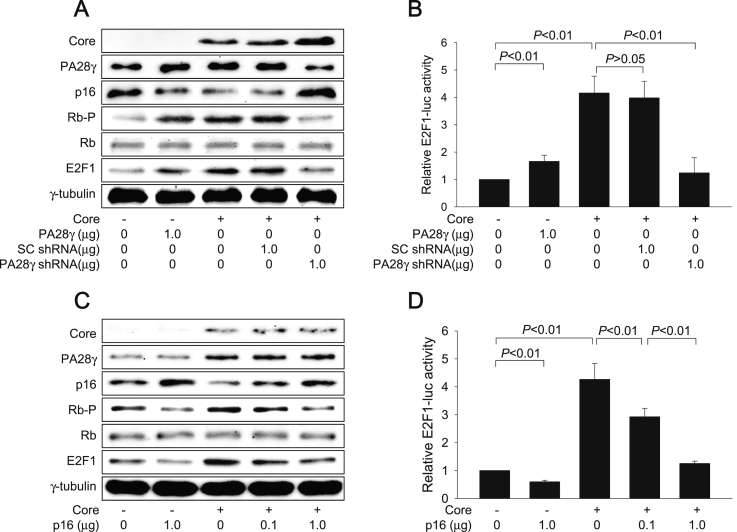
Proteasomal activator 28 gamma (PA28γ), an essential constituent of the 20S proteasome, is frequently overexpressed in hepatocellular carcinoma. Hepatitis C virus (HCV) core protein is recently known to activate PA28γ expression in human hepatocytes via upregulation of p53 levels; however, its role in HCV tumorigenesis remains unknown. Here, we found that HCV core-activated PA28γ downregulates p16 levels via ubiquitin-independent proteasomal degradation. As a result, HCV core protein activated the Rb-E2F pathway to stimulate cell cycle progression from G to S phase, resulting in an increase in cell proliferation. The potential of HCV core protein to induce these effects was almost completely abolished by either PA28γ knockdown or p16 overexpression, confirming the role of the PA28γ-mediated p16 degradation in HCV tumorigenesis.
蛋白酶体激活因子28γ(PA28γ)是20S蛋白酶体的重要组成部分,在肝细胞癌中经常过度表达。最近发现丙型肝炎病毒(HCV)核心蛋白通过上调p53水平来激活人肝细胞中PA28γ的表达;然而,其在HCV肿瘤发生中的作用仍不清楚。在这里,我们发现HCV核心激活的PA28γ通过不依赖泛素的蛋白酶体降解下调p16水平。结果,HCV核心蛋白激活了Rb-E2F途径,以刺激细胞周期从G期进入S期,导致细胞增殖增加。PA28γ敲低或p16过表达几乎完全消除了HCV核心蛋白诱导这些效应的潜力,证实了PA28γ介导的p16降解在HCV肿瘤发生中的作用。