Meiri Shai, Murali Gopal, Zimin Anna, Shak Lior, Itescu Yuval, Caetano Gabriel, Roll Uri
School of Zoology, Tel Aviv University, 6997801, Tel Aviv, Israel.
The Steinhardt Museum of Natural History, Tel Aviv University, 6997801, Tel Aviv, Israel.
J Biol Res (Thessalon). 2021 Feb 8;28(1):3. doi: 10.1186/s40709-021-00134-9.
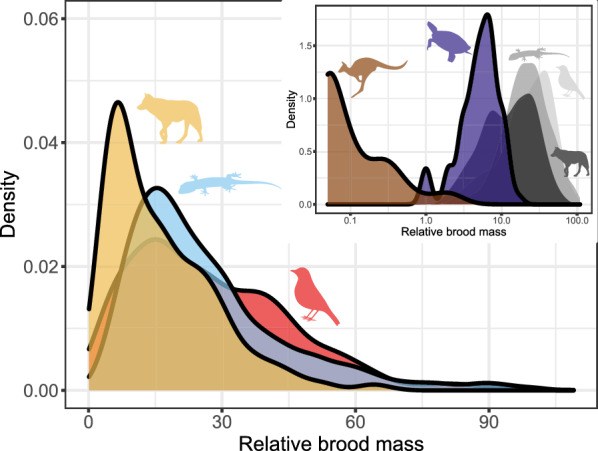
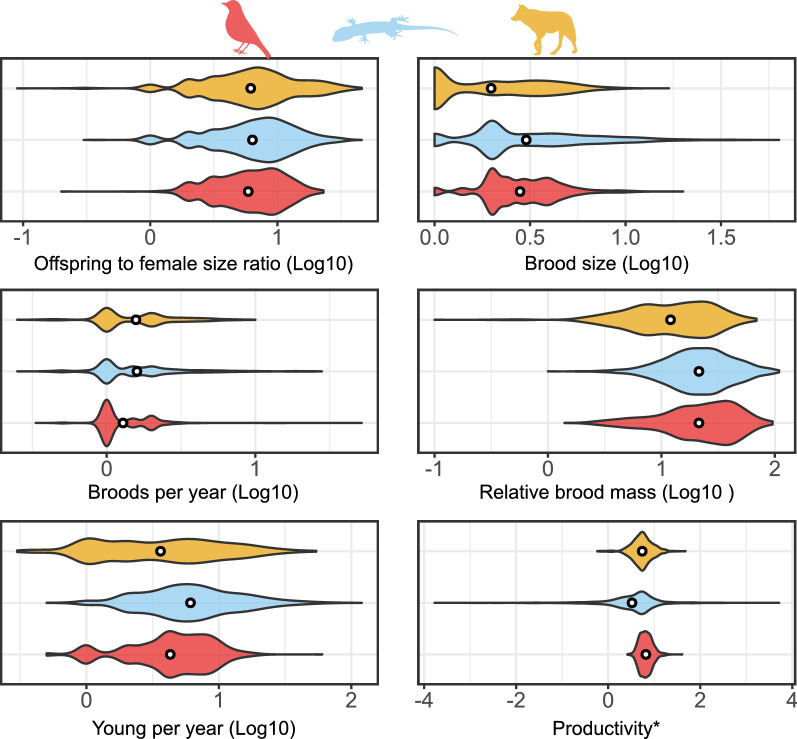
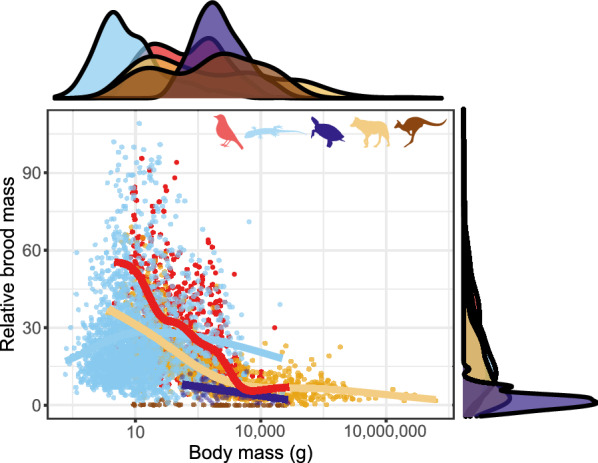
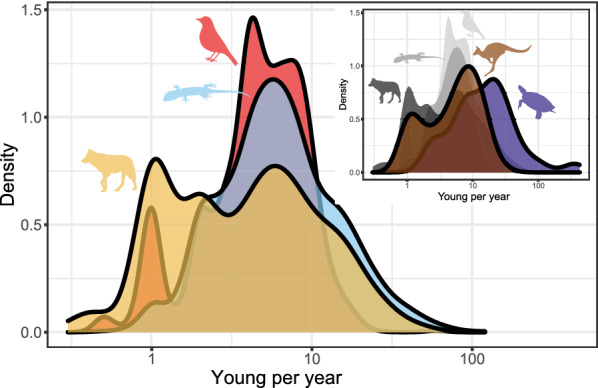
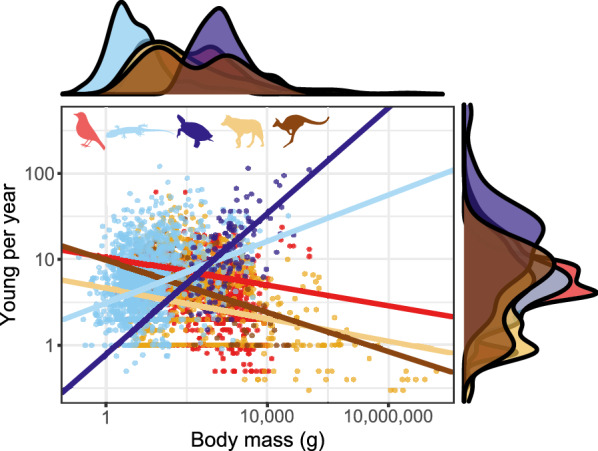
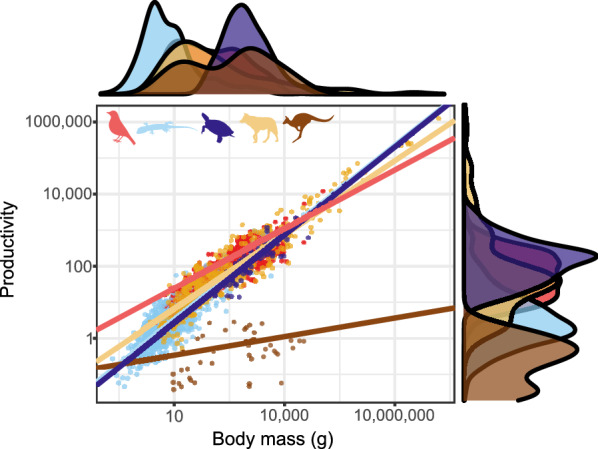
Amniote vertebrates share a suite of extra-embryonic membranes that distinguish them from anamniotes. Other than that, however, their reproductive characteristics could not be more different. They differ in basic ectothermic vs endothermic physiology, in that two clades evolved powered flight, and one clade evolved a protective shell. In terms of reproductive strategies, some produce eggs and others give birth to live young, at various degrees of development. Crucially, endotherms provide lengthy parental care, including thermal and food provisioning-whereas ectotherms seldom do. These differences could be expected to manifest themselves in major differences between clades in quantitative reproductive traits. We review the reproductive characteristics, and the distributions of brood sizes, breeding frequencies, offspring sizes and their derivatives (yearly fecundity and biomass production rates) of the four major amniote clades (mammals, birds, turtles and squamates), and several major subclades (birds: Palaeognathae, Galloanserae, Neoaves; mammals: Metatheria and Eutheria). While there are differences between these clades in some of these traits, they generally show similar ranges, distribution shapes and central tendencies across birds, placental mammals and squamates. Marsupials and turtles, however, differ in having smaller offspring, a strategy which subsequently influences other traits.
羊膜动物脊椎动物具有一套额外的胚胎膜,这使它们有别于无羊膜动物。然而,除此之外,它们的生殖特征却大不相同。它们在基本的变温与恒温生理方面存在差异,有两个类群进化出了动力飞行能力,还有一个类群进化出了保护壳。在生殖策略方面,一些产卵,另一些则产下不同发育程度的幼崽。至关重要的是,恒温动物会提供长时间的亲代抚育,包括提供热量和食物,而变温动物很少这样做。这些差异可能会在不同类群的数量生殖特征上体现出重大差异。我们回顾了四个主要羊膜动物类群(哺乳动物、鸟类、龟类和有鳞目动物)以及几个主要亚类群(鸟类:古颚类、鸡雁小纲、新鸟亚纲;哺乳动物:有袋类和真兽类)的生殖特征、窝卵数、繁殖频率、后代大小及其衍生指标(年繁殖力和生物量生产率)的分布情况。虽然这些类群在其中一些特征上存在差异,但它们在鸟类、胎盘哺乳动物和有鳞目动物中总体上显示出相似的范围、分布形状和中心趋势。然而,有袋类动物和龟类的不同之处在于后代较小,这一策略随后会影响其他特征。