Department of Oral Pathology, Oral Cancer Research Institute, College of Dentistry, Yonsei University, Seoul, South Korea.
Institute of Kidney Disease Research, College of Medicine, Yonsei University, Seoul, South Korea.
Cell Death Dis. 2021 Feb 8;12(2):160. doi: 10.1038/s41419-021-03452-x.
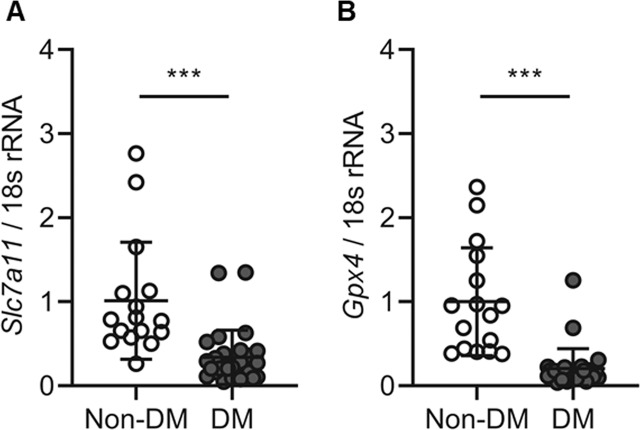
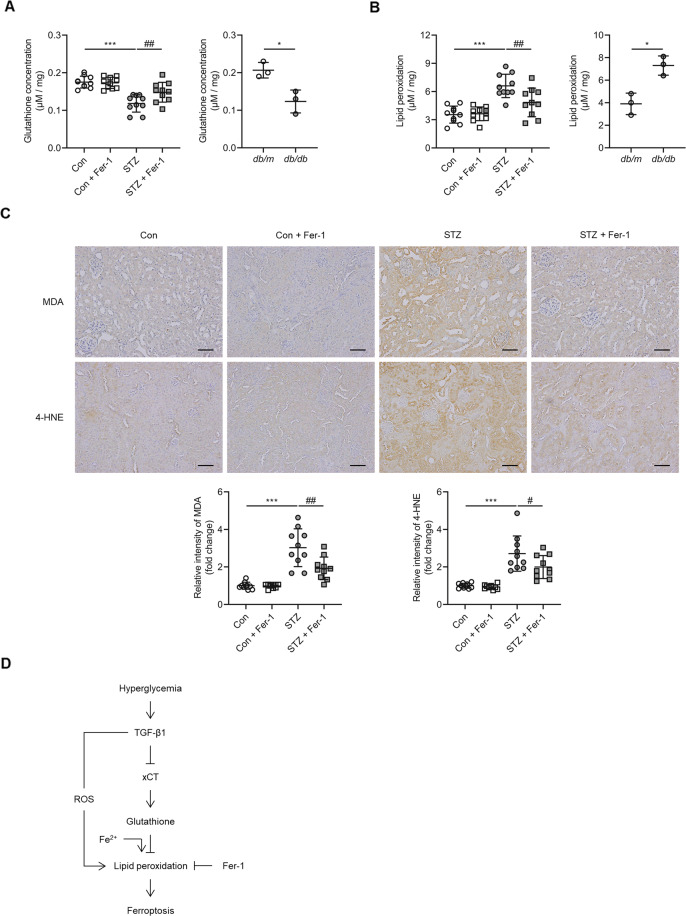
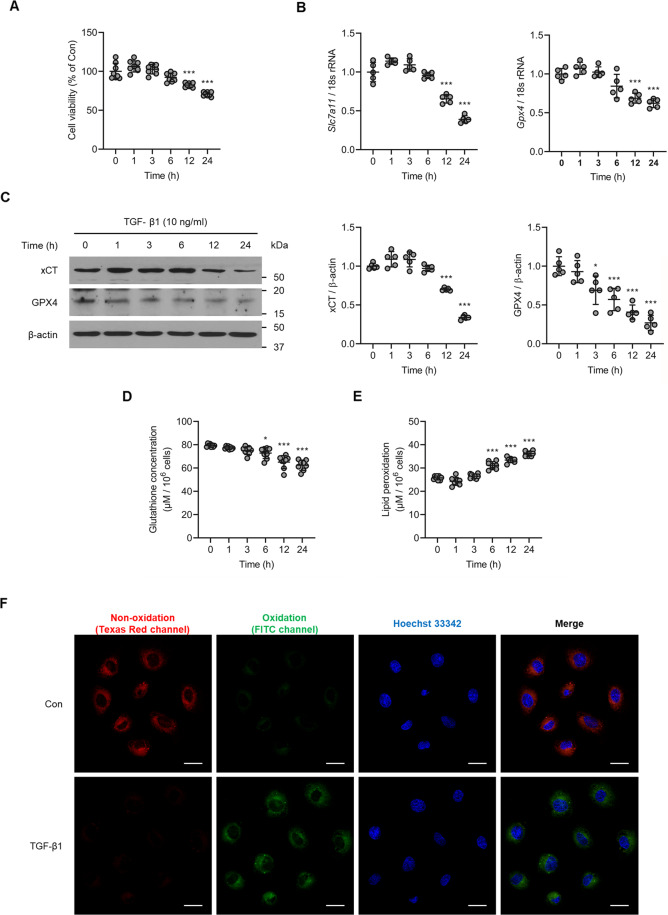
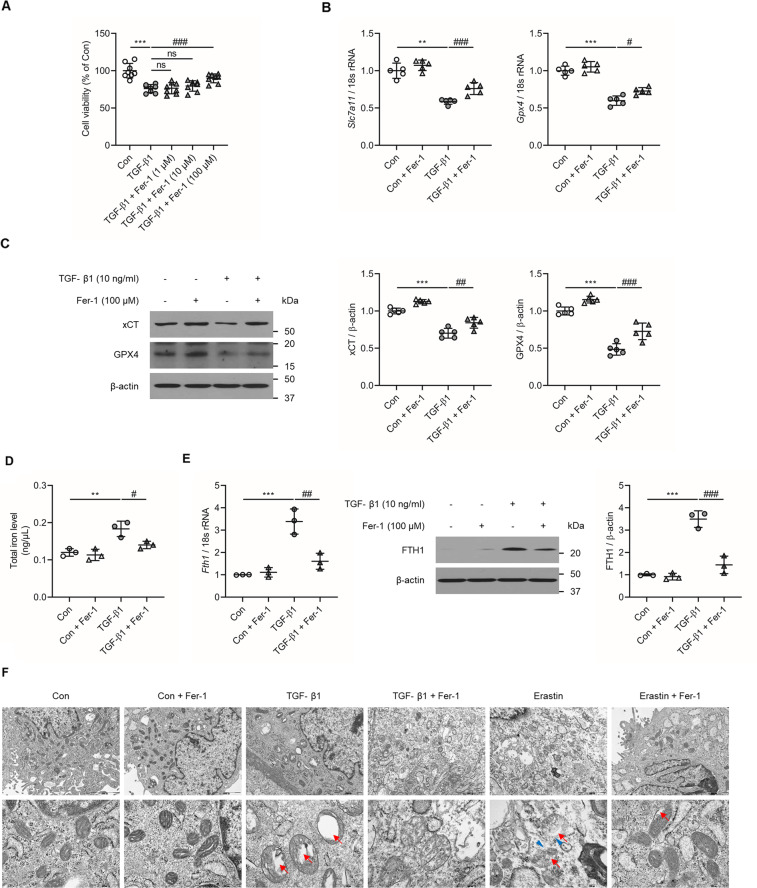
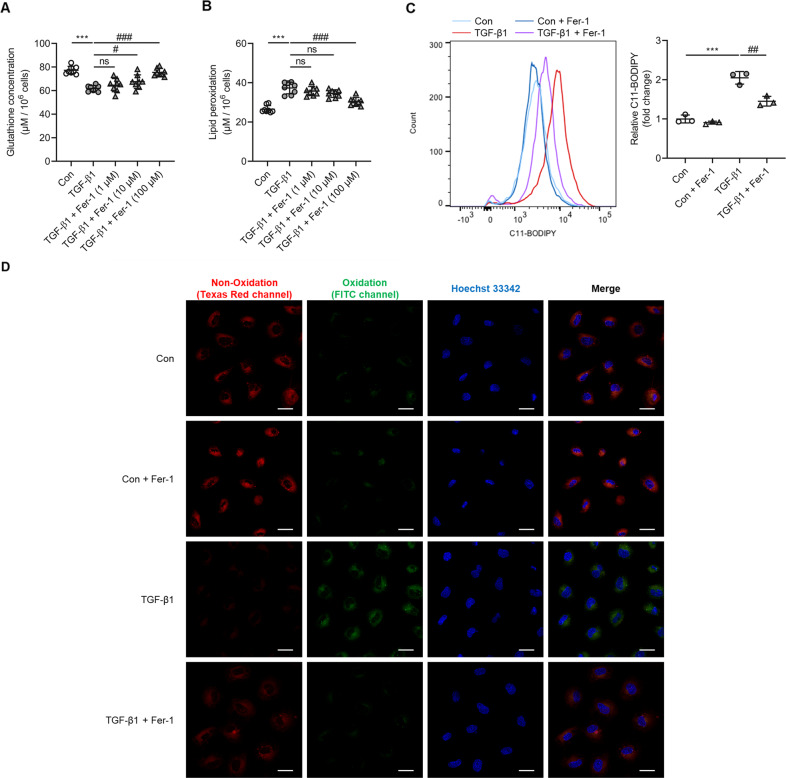
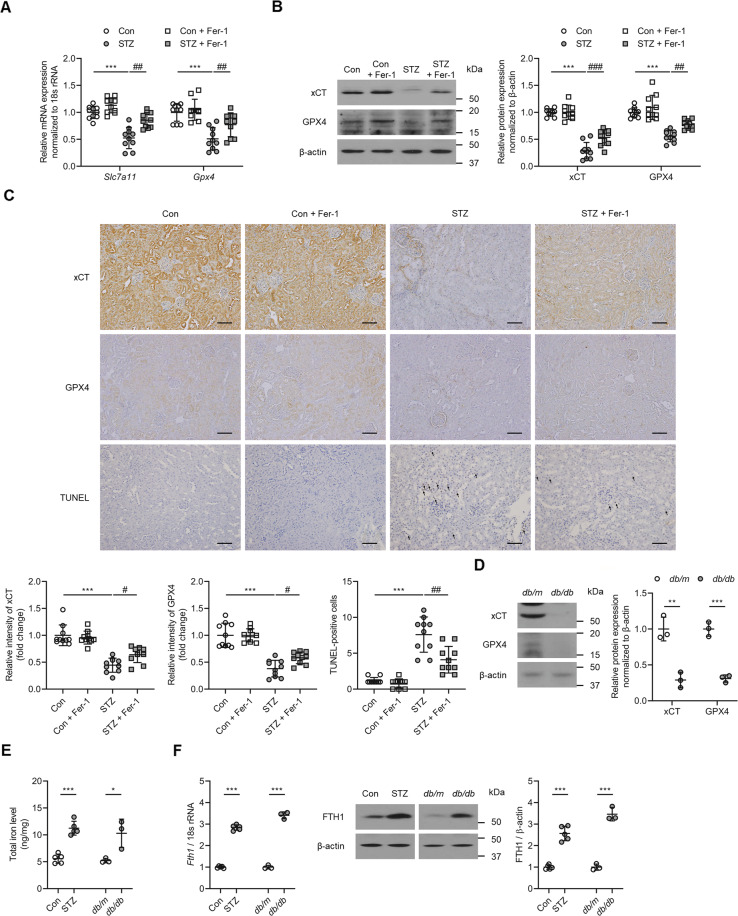
Kidney tubular cell death induced by transforming growth factor-β1 (TGF-β1) is known to contribute to diabetic nephropathy, a major complication of diabetes. Caspase-3-dependent apoptosis and caspase-1-dependent pyroptosis are also involved in tubular cell death under diabetic conditions. Recently, ferroptosis, an atypical form of iron-dependent cell death, was reported to cause kidney disease, including acute kidney injury. Ferroptosis is primed by lipid peroxide accumulation through the cystine/glutamate antiporter system X (xCT) and glutathione peroxidase 4 (GPX4)-dependent mechanisms. The aim of this study was to evaluate the role of ferroptosis in diabetes-induced tubular injury. TGF-β1-stimulated proximal tubular epithelial cells and diabetic mice models were used for in vitro and in vivo experiments, respectively. xCT and GPX4 expression, cell viability, glutathione concentration, and lipid peroxidation were quantified to indicate ferroptosis. The effect of ferroptosis inhibition was also assessed. In kidney biopsy samples from diabetic patients, xCT and GPX4 mRNA expression was decreased compared to nondiabetic samples. In TGF-β1-stimulated tubular cells, intracellular glutathione concentration was reduced and lipid peroxidation was enhanced, both of which are related to ferroptosis-related cell death. Ferrostatin-1 (Fer-1), a ferroptosis inhibitor, alleviated TGF-β1-induced ferroptosis. In diabetic mice, kidney mRNA and protein expressions of xCT and GPX4 were reduced compared to control. Kidney glutathione concentration was decreased, while lipid peroxidation was increased in these mice, and these changes were alleviated by Fer-1 treatment. Ferroptosis is involved in kidney tubular cell death under diabetic conditions. Ferroptosis inhibition could be a therapeutic option for diabetic nephropathy.
转化生长因子-β1(TGF-β1)诱导的肾小管细胞死亡被认为是糖尿病肾病的主要发病机制之一,糖尿病的一种主要并发症。在糖尿病条件下,半胱氨酸/谷氨酸反向转运蛋白系统 X(xCT)和谷胱甘肽过氧化物酶 4(GPX4)依赖性机制也涉及到细胞凋亡和细胞焦亡。最近,铁依赖性细胞死亡的一种非典型形式——铁死亡,被报道可导致包括急性肾损伤在内的肾脏疾病。铁死亡是通过胱氨酸/谷氨酸反向转运蛋白系统 X(xCT)和谷胱甘肽过氧化物酶 4(GPX4)依赖性机制引起的脂质过氧化物积累引发的。本研究旨在评估铁死亡在糖尿病诱导的肾小管损伤中的作用。采用 TGF-β1 刺激的近端肾小管上皮细胞和糖尿病小鼠模型分别进行了体外和体内实验。通过测定 xCT 和 GPX4 的表达、细胞活力、谷胱甘肽浓度和脂质过氧化水平来指示铁死亡。还评估了铁死亡抑制的效果。与非糖尿病样本相比,糖尿病患者的肾脏活检样本中 xCT 和 GPX4 的 mRNA 表达降低。在 TGF-β1 刺激的肾小管细胞中,细胞内谷胱甘肽浓度降低,脂质过氧化增强,这两者都与铁死亡相关的细胞死亡有关。铁死亡抑制剂 Fer-1 减轻了 TGF-β1 诱导的铁死亡。在糖尿病小鼠中,与对照组相比,肾脏中 xCT 和 GPX4 的 mRNA 和蛋白表达均降低。这些小鼠的肾脏谷胱甘肽浓度降低,脂质过氧化增加,Fer-1 治疗缓解了这些变化。铁死亡参与了糖尿病条件下的肾小管细胞死亡。铁死亡抑制可能是糖尿病肾病的一种治疗选择。