Department of Biochemistry, University of Washington, Seattle, WA, USA.
Institute for Protein Design, University of Washington, Seattle, WA, USA.
Nat Commun. 2021 Feb 8;12(1):856. doi: 10.1038/s41467-020-18911-w.
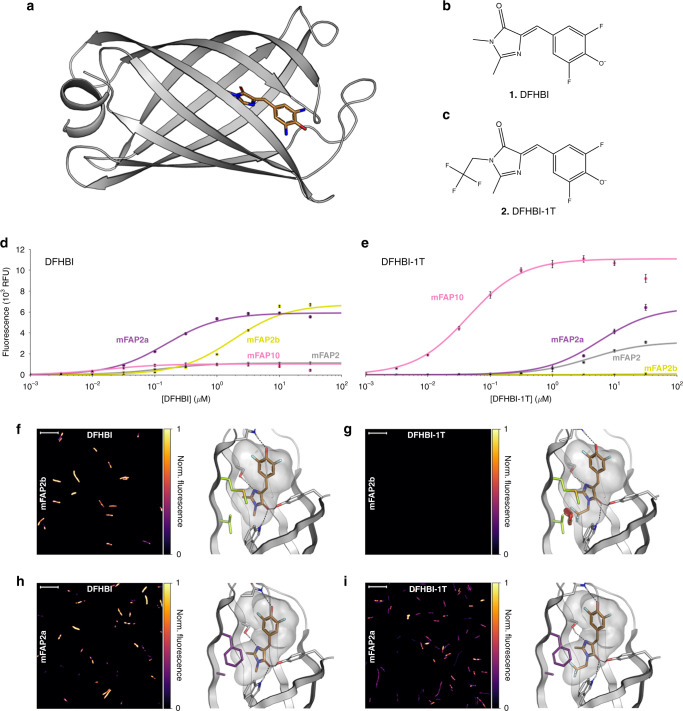
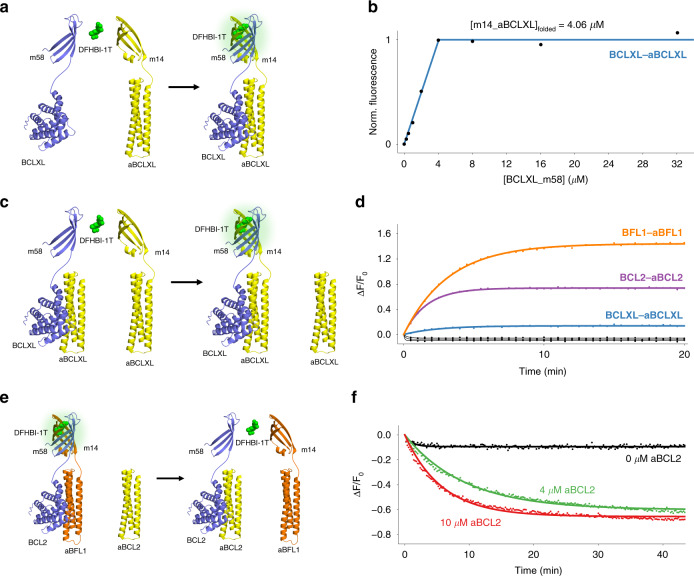
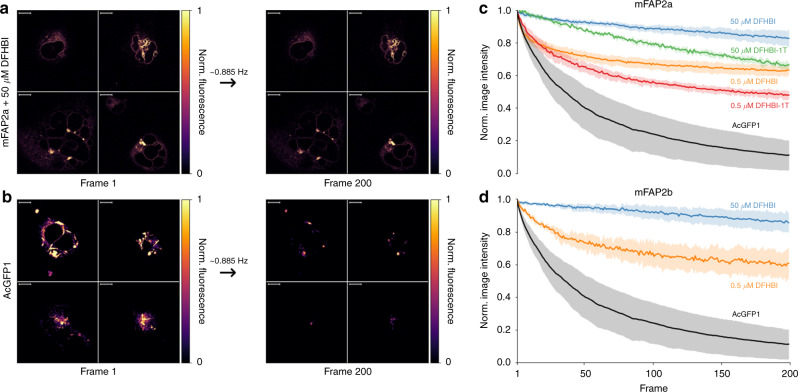
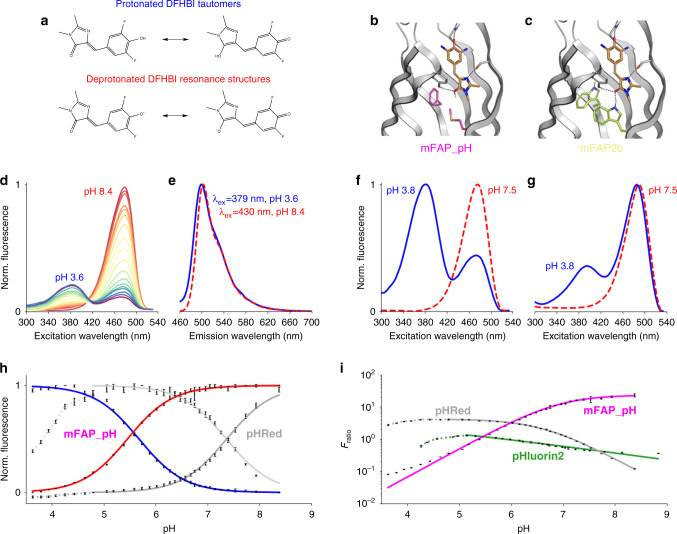
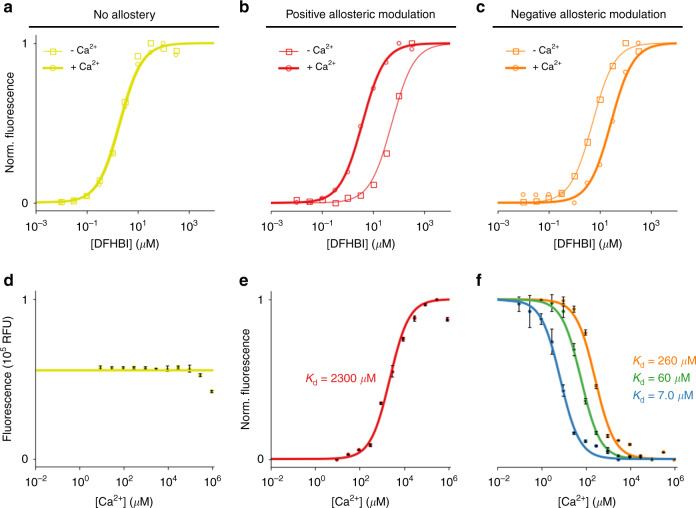
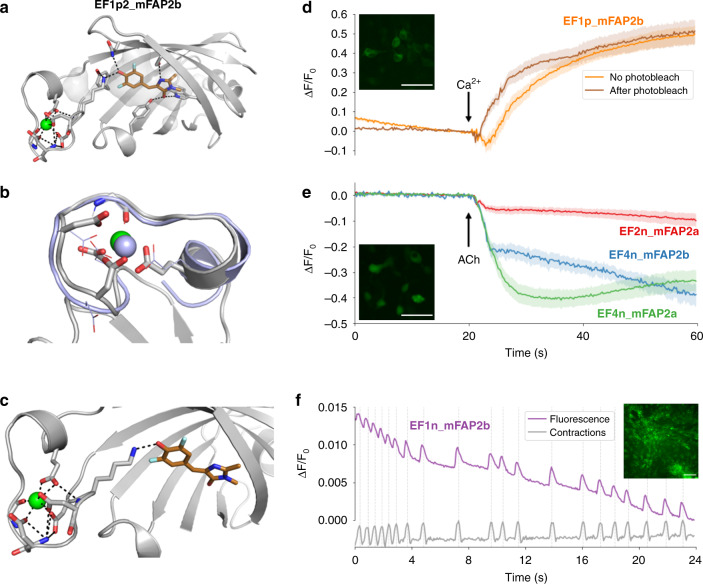
Through the efforts of many groups, a wide range of fluorescent protein reporters and sensors based on green fluorescent protein and its relatives have been engineered in recent years. Here we explore the incorporation of sensing modalities into de novo designed fluorescence-activating proteins, called mini-fluorescence-activating proteins (mFAPs), that bind and stabilize the fluorescent cis-planar state of the fluorogenic compound DFHBI. We show through further design that the fluorescence intensity and specificity of mFAPs for different chromophores can be tuned, and the fluorescence made sensitive to pH and Ca for real-time fluorescence reporting. Bipartite split mFAPs enable real-time monitoring of protein-protein association and (unlike widely used split GFP reporter systems) are fully reversible, allowing direct readout of association and dissociation events. The relative ease with which sensing modalities can be incorporated and advantages in smaller size and photostability make de novo designed fluorescence-activating proteins attractive candidates for optical sensor engineering.
近年来,通过许多研究小组的努力,基于绿色荧光蛋白及其相关蛋白,已经设计出了多种荧光蛋白报告基因和传感器。在这里,我们探索了将感应模式整合到从头设计的荧光激活蛋白(称为 mini-fluorescence-activating proteins,mFAPs)中,这些蛋白可以结合并稳定荧光发色团 DFHBI 的顺式平面状态。我们通过进一步的设计表明,可以调整 mFAPs 对不同生色团的荧光强度和特异性,并使荧光对 pH 和 Ca 敏感,以进行实时荧光报告。二聚体分裂 mFAPs 能够实时监测蛋白-蛋白的相互作用,并且(与广泛使用的分裂 GFP 报告系统不同)是完全可逆的,允许直接读取结合和解离事件。由于可以很容易地将感应模式整合到这些蛋白中,并且具有尺寸更小和光稳定性更好的优势,因此从头设计的荧光激活蛋白成为光学传感器工程的有吸引力的候选者。