Human Genetics Branch, National Institute of Mental Health Intramural Research Program, NIH, DHHS, Bethesda, MD, USA.
Human Brain Collection Core, National Institute of Mental Health Intramural Research Program, NIH, DHHS, Bethesda, MD, USA.
Neuropsychopharmacology. 2021 Jun;46(7):1364-1372. doi: 10.1038/s41386-020-00949-5. Epub 2021 Feb 8.
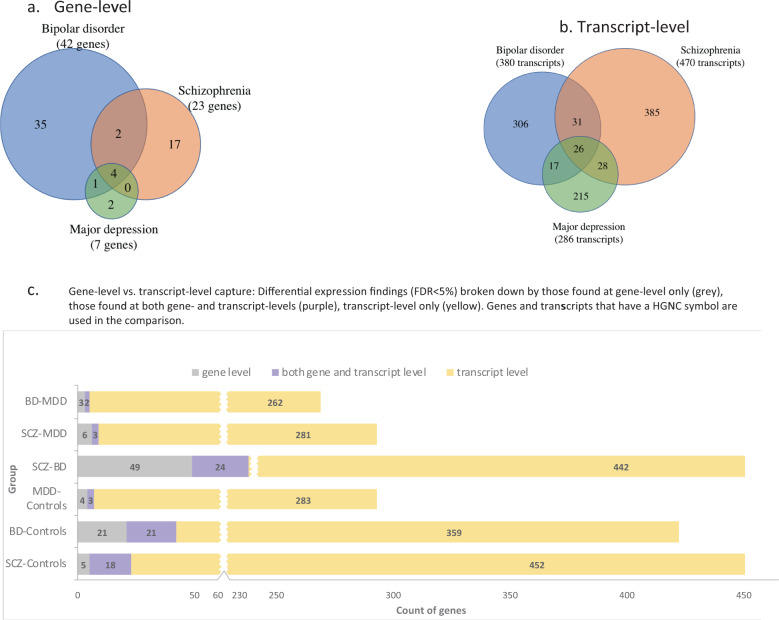
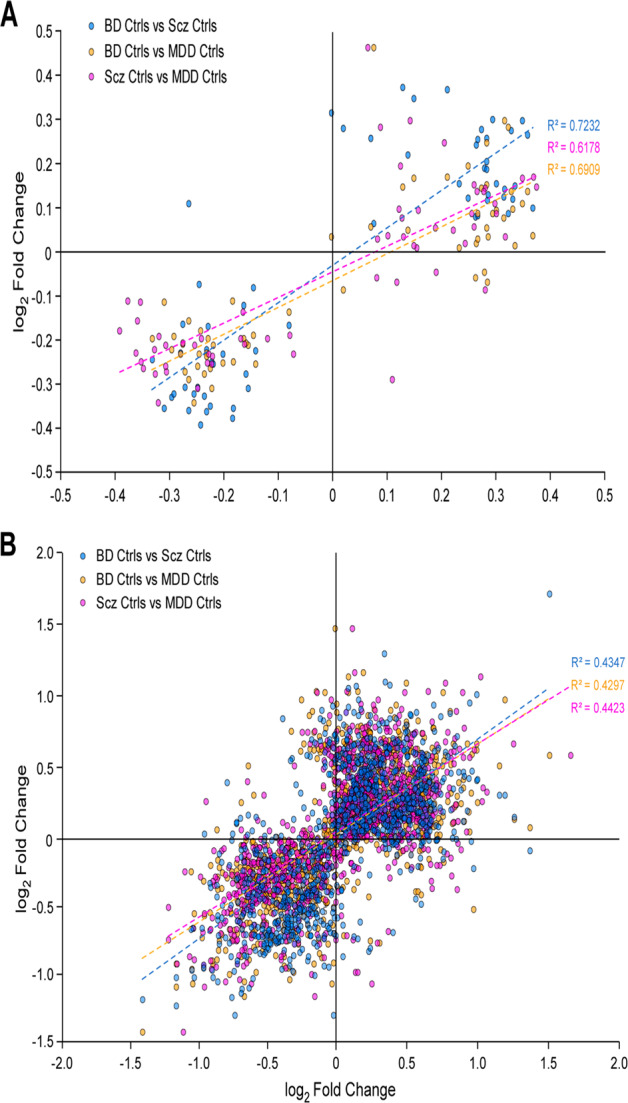
Despite strong evidence of heritability and growing discovery of genetic markers for major mental illness, little is known about how gene expression in the brain differs across psychiatric diagnoses, or how known genetic risk factors shape these differences. Here we investigate expressed genes and gene transcripts in postmortem subgenual anterior cingulate cortex (sgACC), a key component of limbic circuits linked to mental illness. RNA obtained postmortem from 200 donors diagnosed with bipolar disorder, schizophrenia, major depression, or no psychiatric disorder was deeply sequenced to quantify expression of over 85,000 gene transcripts, many of which were rare. Case-control comparisons detected modest expression differences that were correlated across disorders. Case-case comparisons revealed greater expression differences, with some transcripts showing opposing patterns of expression between diagnostic groups, relative to controls. The ~250 rare transcripts that were differentially-expressed in one or more disorder groups were enriched for genes involved in synapse formation, cell junctions, and heterotrimeric G-protein complexes. Common genetic variants were associated with transcript expression (eQTL) or relative abundance of alternatively spliced transcripts (sQTL). Common genetic variants previously associated with disease risk were especially enriched for sQTLs, which together accounted for disproportionate fractions of diagnosis-specific heritability. Genetic risk factors that shape the brain transcriptome may contribute to diagnostic differences between broad classes of mental illness.
尽管有大量证据表明遗传因素在重大精神疾病中起重要作用,并且越来越多的研究发现了精神疾病的遗传标志物,但我们对于大脑中的基因表达在不同精神疾病诊断中的差异,以及已知的遗传风险因素如何影响这些差异知之甚少。在这里,我们研究了死后扣带回前部皮质(sgACC)亚区的基因表达和基因转录本,该脑区是与精神疾病相关的边缘回路的关键组成部分。我们对来自 200 名被诊断患有双相情感障碍、精神分裂症、重度抑郁症或无精神疾病的捐献者死后的 sgACC 组织进行了深度测序,以定量分析超过 85000 个基因转录本的表达情况,其中许多转录本是罕见的。病例对照比较检测到了与多种疾病相关的适度表达差异。病例-病例比较则显示了更大的表达差异,一些转录本相对于对照,在不同诊断组之间表现出相反的表达模式。在一个或多个疾病组中差异表达的约 250 个罕见转录本,富集了与突触形成、细胞连接和异三聚体 G 蛋白复合物相关的基因。常见的遗传变异与转录本表达(eQTL)或可变剪接转录本(sQTL)的相对丰度相关。与疾病风险相关的常见遗传变异特别富集于 sQTL,它们共同解释了特定诊断组内遗传力的不成比例部分。塑造大脑转录组的遗传风险因素可能导致了广泛的精神疾病类别之间的诊断差异。