Toyoda Junya, Morioka Daisuke, Horii Nobutoshi, Nakayama Gakuryu, Oyama Norio, Asano Fumio, Izumisawa Yusuke, Miura Masaru, Sato Yoshiki, Endo Itaru
Department of Surgery, Yokohama Ekisaikai Hospital, 1-2 Yamadacho, Naka-ku, Yokohama, 231-0036, Japan.
Department of Gastroenterological Surgery, Graduate School of Medicine, Yokohama City University, Yokohama, Japan.
J Med Case Rep. 2021 Feb 10;15(1):52. doi: 10.1186/s13256-020-02651-y.
Cirrhosis-associated portal vein thrombosis (CA-PVT) has been reportedly observed in 5-30% of cirrhotic patients. Moreover, the acute exacerbation of CA-PVT is likely to occur after certain situations, such as a status after abdominal surgery. Safety and efficacy of the direct-acting oral anticoagulant (DOAC) used for cirrhotic patients have been being confirmed. However, use of the DOAC as an initial treatment for CA-PVT appears still challenging especially in the early postoperative period after major surgery in terms of unestablished efficacy and safety in such occasion.
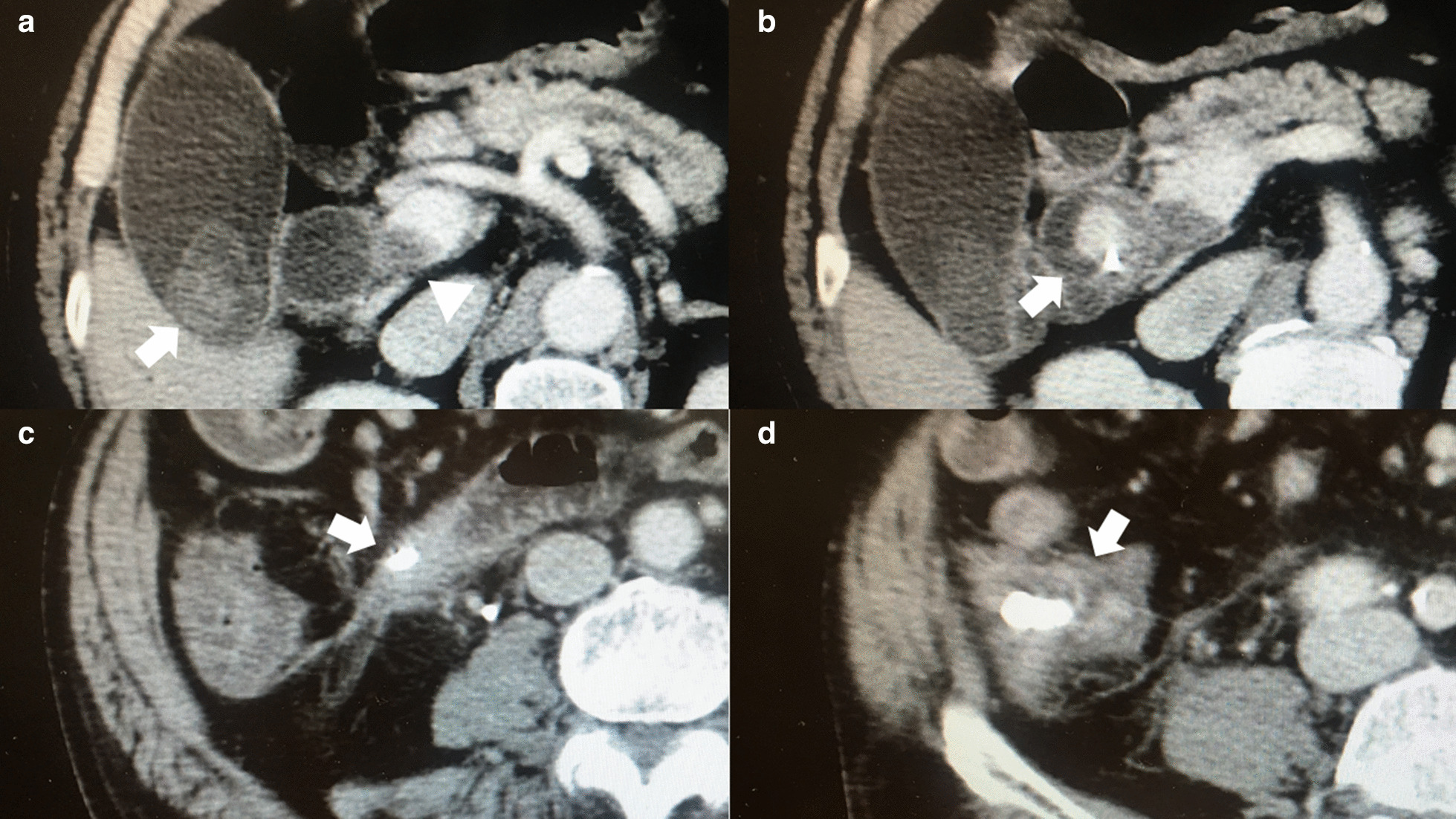
We herein report a case of the acute exacerbation of CA-PVT in the early postoperative period after abdominal surgery, which was successfully treated with DOAC, edoxaban used as an initial treatment. The patient was a 79-year-old Japanese male with alcoholic cirrhosis. The patient suffered choledocholithiasis and had a mural chronic CA-PVT extending from the superior mesenteric vein to the portal trunk. He underwent open cholecystectomy and choledochotomy. Early postoperative clinical course was uneventful except for abdominal distension due to ascites diagnosed on postoperative day (POD)7 when hospital discharge was planned. Contrast enhancement computed tomography (CE-CT) taken on POD 7 revealed the exacerbation of the CA-PVT. Despite recommendation for extension of hospital admission with low molecular weight heparin treatment, the patient strongly hoped to be discharged. Unwillingly, we selected DOAC, edoxaban, as an initial treatment, which was commenced the day after discharge (POD8). As a result, the remarkable improvement of the exacerbated CA-PVT was confirmed by the CE-CT taken on POD21. Any bleeding complications were not observed. Although a slight residue of the CA-PVT remains, the patient is currently doing well 4 years after surgery and is still receiving edoxaban. Any adverse effects of edoxaban have not been observed for 4 years.
A case of successful treatment of the acute exacerbation of CA-PVT with edoxaban was reported. Moreover, edoxaban has been safely administered in a cirrhotic patient for 4 years. The findings obtained from the present case suggest that DOAC can be used as an initial treatment for CA-PVT even in early postoperative period after major abdominal surgery.
据报道,5%-30%的肝硬化患者存在肝硬化相关门静脉血栓形成(CA-PVT)。此外,CA-PVT的急性加重可能发生在某些情况之后,如腹部手术后的状态。用于肝硬化患者的直接口服抗凝剂(DOAC)的安全性和有效性已得到证实。然而,在大手术后的早期术后阶段,将DOAC用作CA-PVT的初始治疗似乎仍具有挑战性,因为在这种情况下其疗效和安全性尚未确定。
我们在此报告一例腹部手术后早期术后阶段CA-PVT急性加重的病例,该病例成功接受了DOAC依度沙班作为初始治疗。患者为一名79岁的日本男性,患有酒精性肝硬化。患者患有胆总管结石,并有从肠系膜上静脉延伸至门静脉主干的壁内慢性CA-PVT。他接受了开腹胆囊切除术和胆总管切开术。术后早期临床过程顺利,除了计划出院时在术后第7天(POD)诊断出因腹水导致的腹胀。POD 7进行的对比增强计算机断层扫描(CE-CT)显示CA-PVT加重。尽管建议延长住院时间并采用低分子量肝素治疗,但患者强烈希望出院。无奈之下,我们选择DOAC依度沙班作为初始治疗,于出院后第二天(POD8)开始使用。结果,POD 21进行的CE-CT证实加重的CA-PVT有显著改善。未观察到任何出血并发症。尽管CA-PVT仍有轻微残留,但患者术后4年目前情况良好,仍在接受依度沙班治疗。4年来未观察到依度沙班的任何不良反应。
报告了一例用依度沙班成功治疗CA-PVT急性加重的病例。此外,依度沙班已在一名肝硬化患者中安全使用了4年。本病例的研究结果表明,即使在腹部大手术后的早期术后阶段,DOAC也可用于CA-PVT的初始治疗。