
从营养变异链球菌中纯化I型血清型抗原。
Purification of serotype I antigen from nutritionally variant streptococci.
作者信息
George M, van de Rijn I
机构信息
Wake Forest University Medical Center, Winston-Salem, North Carolina 27103.
出版信息
Infect Immun. 1988 May;56(5):1222-31. doi: 10.1128/iai.56.5.1222-1231.1988.
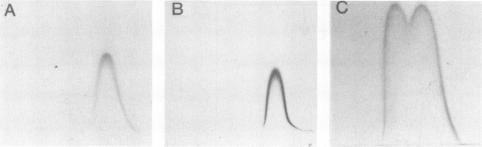
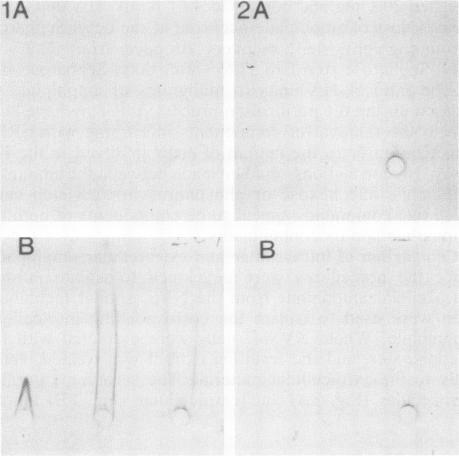
The nutritionally variant streptococci (NVS) are a fastidious group of bacteria first recognized in the early 1960s in the blood cultures of patients with subacute bacterial endocarditis. Since that time, the NVS have been implicated in 5 to 6% of all cases of human bacterial endocarditis. The NVS possess membrane-associated amphipathic molecules different from those described for other streptococci. Unitl recently, chemical characterization of these new amphipathic polymers was hampered by unsuccessful attempts at isolating large quantities of these molecules in a form free from other bacterial components. Presently, stationary-phase-culture supernatants provide an optimum source of crude material for amphiphile purification procedures. Hydrophobic-interaction chromatography in conjunction with immunoaffinity chromatography yields an NVS serotype I amphiphile preparation free of contaminants, as determined by immunoelectrophoretic and chemical analyses. Tandem crossed immunoelectrophoresis of the purified extracellular NVS amphiphile demonstrated that it is immunologically similar to the intracellular amphiphile. Finally, this amphiphile serves as the NVS serotype I antigen.
营养变异型链球菌(NVS)是一类苛求型细菌,于20世纪60年代初在亚急性细菌性心内膜炎患者的血培养物中首次被识别。从那时起,NVS在所有人类细菌性心内膜炎病例中占5%至6%。NVS拥有与其他链球菌不同的膜相关两亲性分子。直到最近,由于未能成功地以不含其他细菌成分的形式大量分离这些分子,这些新的两亲性聚合物的化学特性研究受到了阻碍。目前,稳定期培养上清液为两亲物纯化程序提供了最佳的粗材料来源。疏水相互作用色谱结合免疫亲和色谱产生了一种不含污染物的NVS血清型I两亲物制剂,这是通过免疫电泳和化学分析确定的。纯化的细胞外NVS两亲物的串联交叉免疫电泳表明,它在免疫上与细胞内两亲物相似。最后,这种两亲物作为NVS血清型I抗原。


 Zotero 插件