Department of Pulmonology, Yokohama City University Graduate School of Medicine, Yokohama, Japan.
Department of Respiratory Medicine, Affiliated Hospital of Yanbian University, Yanji, China.
Thorac Cancer. 2021 Apr;12(7):1096-1105. doi: 10.1111/1759-7714.13878. Epub 2021 Feb 9.
Differences in the resistance mechanisms of epidermal growth factor receptor tyrosine kinase inhibitors in patients with non-small cell lung cancer (NSCLC) harboring epidermal growth factor receptor mutations are unknown. This meta-analysis aimed to clarify the differences in resistance mechanisms after treatment with various epidermal growth factor receptor tyrosine kinase inhibitors.
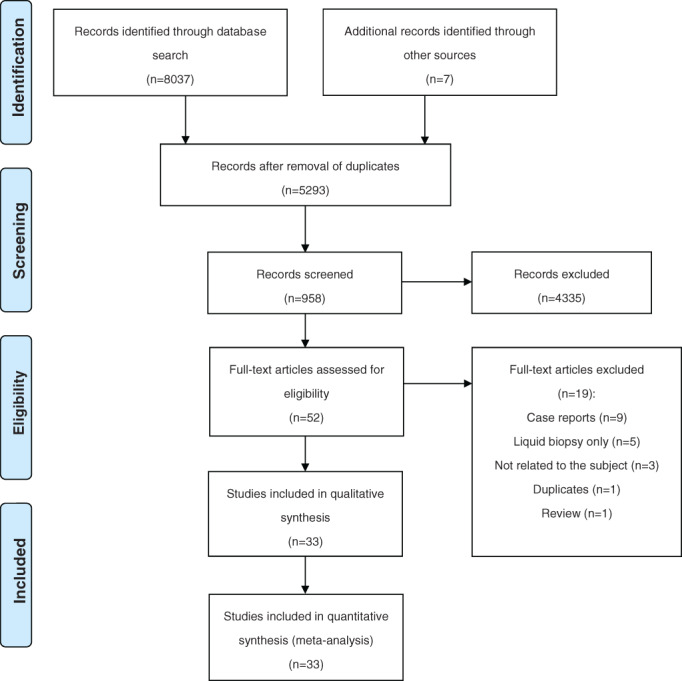
We systematically searched PubMed, Cochrane, and Web of Science on July 29, 2020, for relevant studies on acquired resistance mechanisms against epidermal growth factor receptor tyrosine kinase inhibitors. The primary outcome measure was differences in the resistance mechanism between individual or generations of epidermal growth factor receptor tyrosine kinase inhibitors.
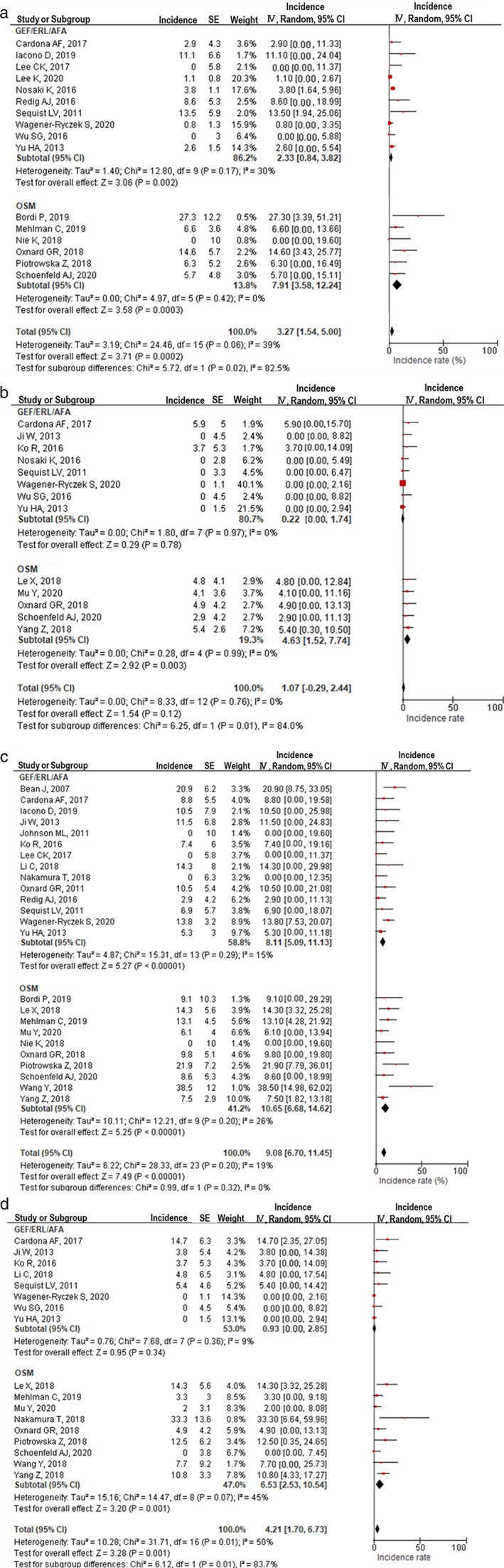
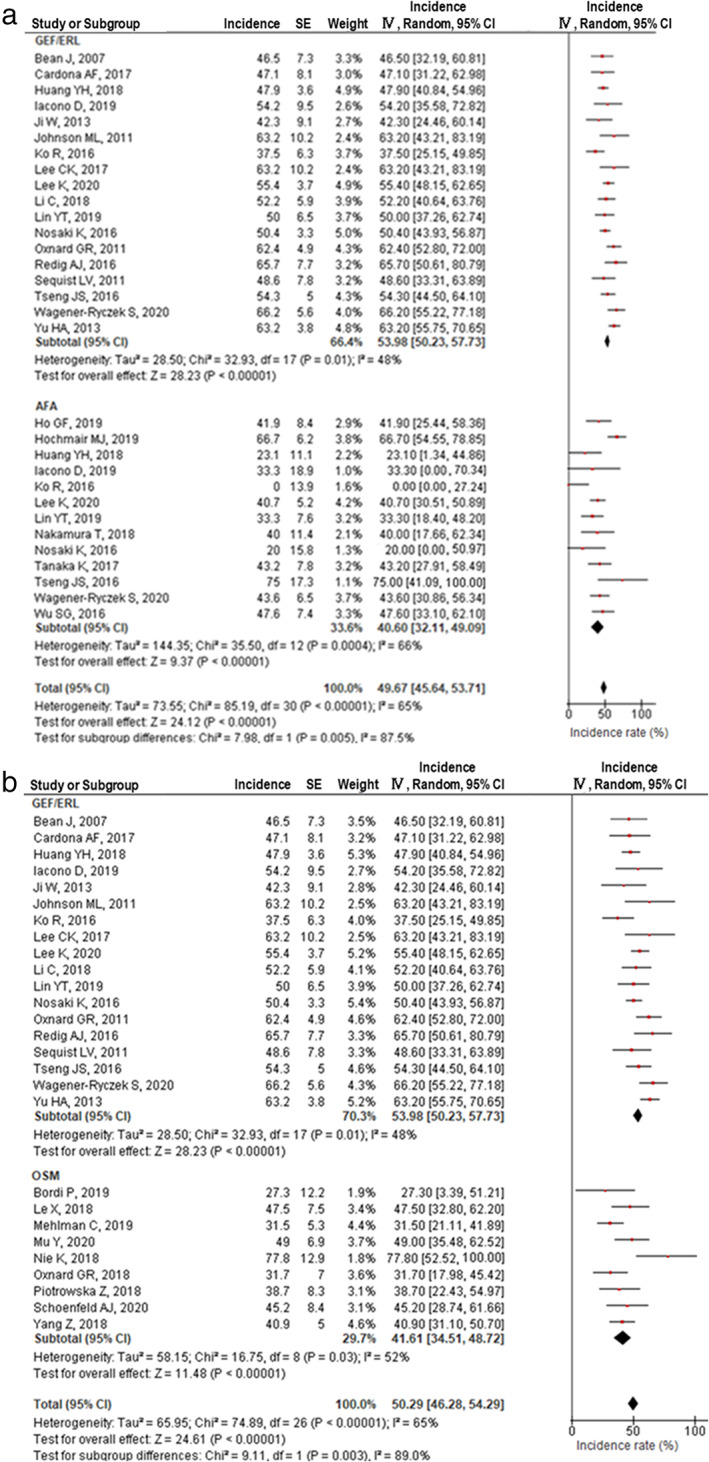
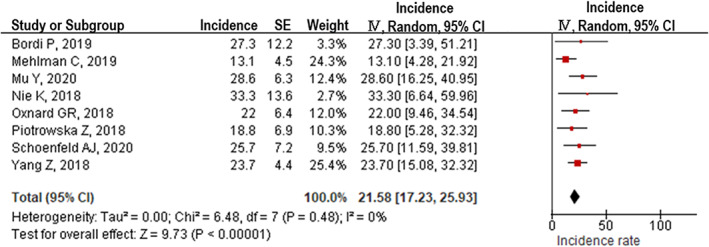
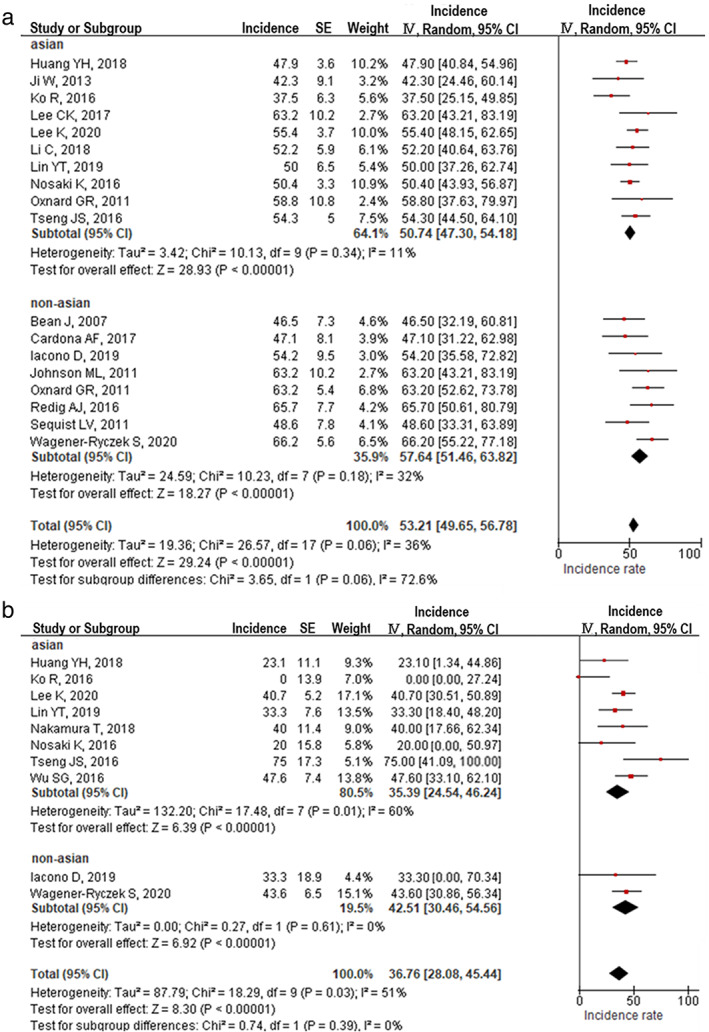
In total, 33 trials involving 2418 individuals were included and analyzed. T790M was significantly less frequent after afatinib treatment (40.2%, 95% confidence interval [CI]: 31.7%-48.7%) than after gefitinib and erlotinib treatments (52.5%, 95% CI: 48.7%-56.3%, p = 0.005). There were no significant differences between Asian and non-Asian patients in the incidence of T790M after gefitinib, erlotinib, and afatinib treatments. Regarding epidermal growth factor receptor pathway-independent resistant mechanisms, the incidences of small cell lung cancer transformation (osimertinib: 7.9%, 95% CI: 3.6%-12.2%, others: 2.3%, 95% CI: 0.8%-3.8%) and Kirsten rat sarcoma (KRAS) viral oncogene homolog mutation (osimertinib: 4.6%, 95% CI: 1.5%-7.7%, others: 0.2%, 95% CI: 0.0%-1.7%) were significantly higher following osimertinib treatment than with others.
Significant differences in the incidence of resistance mechanisms among epidermal growth factor receptor tyrosine kinase inhibitors exist, which should be taken into consideration when choosing the treatment strategy.
表皮生长因子受体酪氨酸激酶抑制剂(EGFR-TKI)在携带有表皮生长因子受体(EGFR)突变的非小细胞肺癌(NSCLC)患者中的耐药机制存在差异。本研究旨在通过荟萃分析明确不同 EGFR-TKI 治疗后的耐药机制差异。
系统检索 2020 年 7 月 29 日 PubMed、Cochrane 和 Web of Science 中有关 EGFR-TKI 获得性耐药机制的相关研究。主要结局指标为不同代或不同种类的 EGFR-TKI 之间耐药机制的差异。
共纳入 33 项涉及 2418 例患者的研究进行分析。与吉非替尼和厄洛替尼相比,阿法替尼治疗后 T790M 的发生率明显较低(40.2%,95%可信区间[CI]:31.7%48.7%)(P=0.005)。亚洲和非亚洲患者中,吉非替尼、厄洛替尼和阿法替尼治疗后 T790M 的发生率无显著差异。关于表皮生长因子受体通路非依赖性耐药机制,奥希替尼治疗后小细胞肺癌转化的发生率(7.9%,95%CI:3.6%12.2%)和克罗斯大鼠肉瘤(KRAS)病毒癌基因同源突变(奥希替尼:4.6%,95%CI:1.5%7.7%)明显高于其他药物(奥希替尼:2.3%,95%CI:0.8%3.8%)(P<0.05)。
EGFR-TKI 之间存在明显的耐药机制差异,在选择治疗策略时应予以考虑。