1Institute of Psychology, Polish Academy of Sciences, Warsaw, Poland.
2Faculty of Psychology, SWPS University of Social Sciences and Humanities, Warsaw, Poland.
J Behav Addict. 2021 Feb 10;10(1):55-64. doi: 10.1556/2006.2021.00002.
Even though the Compulsive Sexual Behavior Disorder (CSBD) was added to the ICD-11 under the impulse control category in 2019, its neural mechanisms are still debated. Researchers have noted its similarity both to addiction and to Obssesive-Compulsive Disorder (OCD). The aim of our study was to address this question by investigating the pattern of anatomical brain abnormalities among CSBD patients.
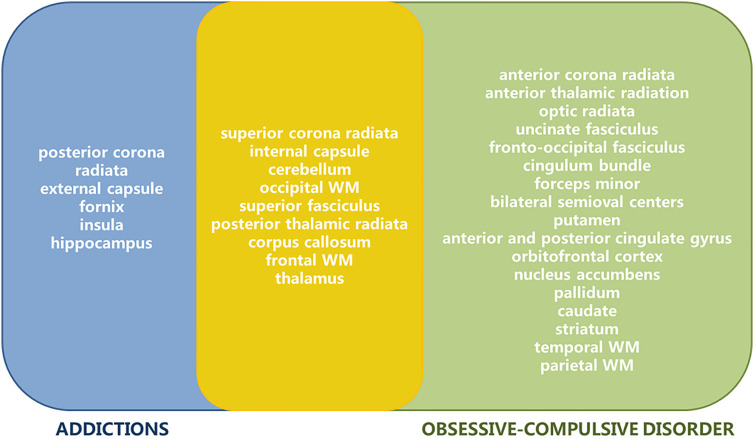
Reviewing 39 publications on Diffusion Tensor Imaging (DTI) we have identified main abnormalities specific for addictions and OCD. Than we have collected DTI data from 36 heterosexual males diagnosed with CSBD and 31 matched healthy controls. These results were then compared to the addiction and OCD patterns.
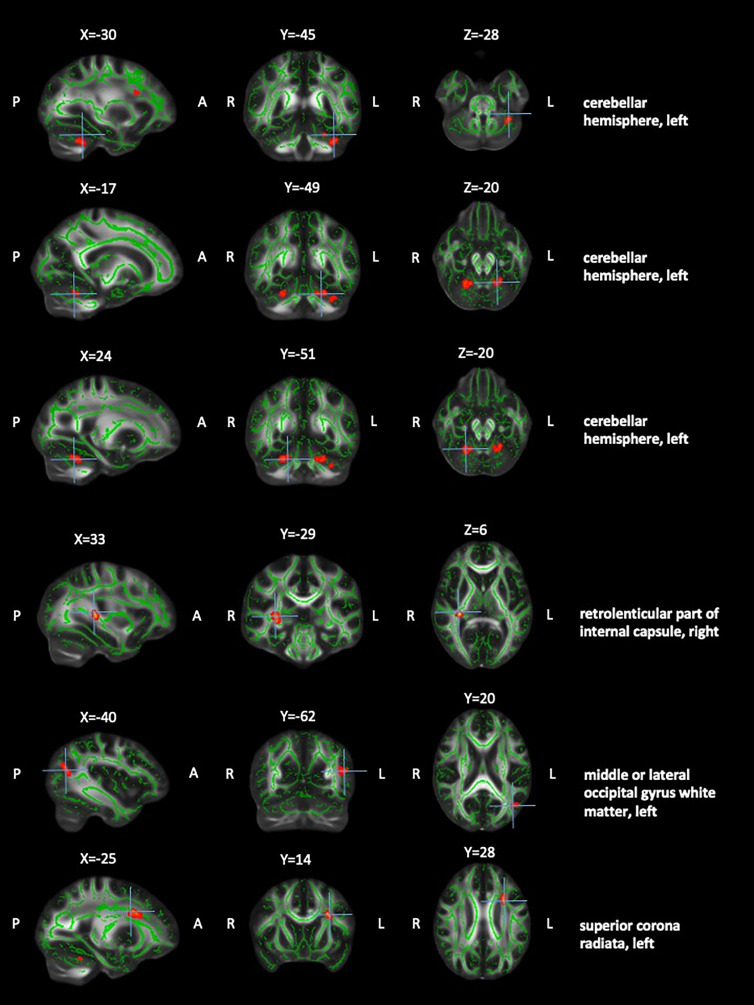
Compared to controls, CSBD individuals showed significant fractional anisotropy (FA) reduction in the superior corona radiata tract, the internal capsule tract, cerebellar tracts and occipital gyrus white matter. Interestingly, all these regions were also identified in previous studies as shared DTI correlates in both OCD and addiction.
Results of our study suggest that CSBD shares similar pattern of abnormalities with both OCD and addiction. As one of the first DTI study comparing structural brain differences between CSBD, addictions and OCD, although it reveals new aspects of CSBD, it is insufficient to determine whether CSBD resembles more an addiction or OCD. Further research, especially comparing directly individuals with all three disorders may provide more conclusive results.
尽管强迫性行为障碍(CSBD)于 2019 年在冲动控制类别下被纳入 ICD-11,但它的神经机制仍存在争议。研究人员注意到它与成瘾和强迫症(OCD)既有相似之处。我们的研究目的是通过研究 CSBD 患者的大脑解剖结构异常模式来解决这个问题。
通过对 39 篇关于弥散张量成像(DTI)的研究进行综述,我们确定了与成瘾和 OCD 特异性相关的主要异常。然后,我们收集了 36 名被诊断为 CSBD 的异性恋男性和 31 名匹配的健康对照者的 DTI 数据。然后将这些结果与成瘾和 OCD 模式进行比较。
与对照组相比,CSBD 个体的上辐射冠束、内囊束、小脑束和枕叶白质的分数各向异性(FA)明显降低。有趣的是,所有这些区域在之前的研究中也被确定为 OCD 和成瘾的共享 DTI 相关区域。
我们的研究结果表明,CSBD 与 OCD 和成瘾具有相似的异常模式。作为比较 CSBD、成瘾和 OCD 之间大脑结构差异的第一项 DTI 研究之一,虽然它揭示了 CSBD 的新方面,但还不足以确定 CSBD 更类似于成瘾还是 OCD。进一步的研究,特别是直接比较所有三种疾病的个体,可能会提供更具结论性的结果。