UCSF Center for Translational and Policy Research on Personalized Medicine (TRANSPERS); Department of Clinical Pharmacy, University of California San Francisco, San Francisco, California, USA
UCSF Center for Translational and Policy Research on Personalized Medicine (TRANSPERS); Department of Clinical Pharmacy, University of California San Francisco, San Francisco, California, USA.
BMJ Glob Health. 2021 Feb;6(2). doi: 10.1136/bmjgh-2020-004415.
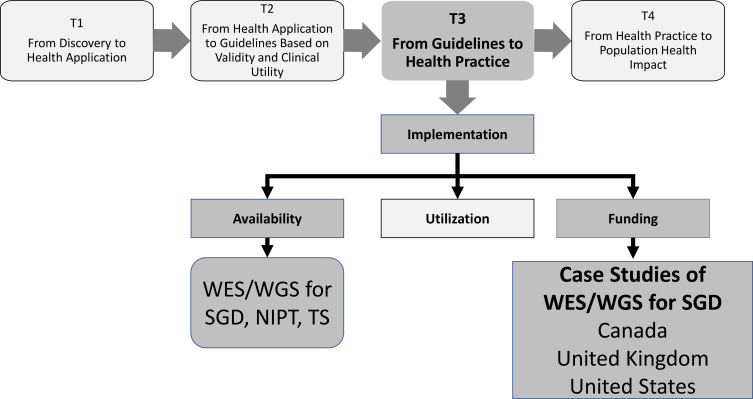
The emergence of next-generation genomic sequencing (NGS) tests for use in clinical care has generated widespread interest around the globe, but little is known about the availability and funding of these tests worldwide. We examined NGS availability across world regions and countries, with a particular focus on availability of three key NGS tests-Whole-Exome Sequencing or Whole-Genome Sequencing for diagnosis of suspected genetic diseases such as intellectual disability disorders or rare diseases, non-invasive prenatal testing for common genetic abnormalities in fetuses and tumor sequencing for therapy selection and monitoring of cancer treatment. We found that these NGS tests are available or becoming available in every major region of the world. This includes both high-income countries with robust genomic programmes such as the USA and the UK, and growing availability in countries with upper-middle-income economies. We used exploratory case studies across three diverse health care systems (publicly funded/national (UK), publicly funded/provincial (Canada) and mixed private/public system (USA)) to illustrate the funding challenges and approaches used to address those challenges that might be adopted by other countries. We conclude by assessing what type of data and initiatives will be needed to better track and understand the use of NGS around the world as such testing continues to expand.
下一代基因组测序(NGS)测试在临床护理中的应用的出现引起了全球广泛关注,但对于这些测试在全球的可用性和资金情况知之甚少。我们研究了世界各地区和国家的 NGS 可用性,特别关注三种关键的 NGS 测试——全外显子组测序或全基因组测序,用于诊断疑似遗传疾病,如智力障碍疾病或罕见疾病、非侵入性产前检测胎儿常见遗传异常和肿瘤测序用于癌症治疗的选择和监测。我们发现,这些 NGS 测试在世界上每个主要地区都可用或即将可用。这包括基因组计划健全的高收入国家,如美国和英国,以及中高收入经济体中不断增加的可用性。我们使用三个不同医疗保健系统(公共资助/国家(英国)、公共资助/省级(加拿大)和混合私人/公共系统(美国))的探索性案例研究来说明为解决这些挑战而采用的资金挑战和方法,这些方法可能被其他国家采用。最后,我们评估了需要什么样的数据和举措来更好地跟踪和了解全球范围内 NGS 的使用情况,因为这种测试在不断扩展。