Academic Department of Radiation Oncology, Centre Oscar Lambret, 3 rue Frédéric Combemale, 59000, Lille, France.
CRIStAL UMR CNRS 9189, Lille University, Avenue Carl Gauss, 59650, Villeneuve-d'Ascq, France.
Sci Rep. 2021 Feb 11;11(1):3626. doi: 10.1038/s41598-021-83159-3.
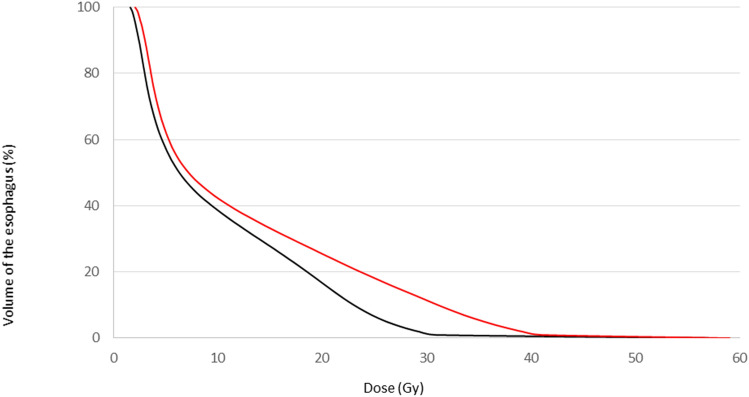
0000-0001-6019-7309. In the treatment of breast cancer, intensity-modulated radiation therapy (IMRT) reportedly reduces the high-dose irradiation of at-risk organs and decreases the frequency of adverse events (AEs). Comparisons with conventional radiotherapy have shown that IMRT is associated with lower frequencies of acute and late-onset AEs. Here, we extended a prospective, observational, single-center study of the safety of IMRT to a second investigating center. Patients scheduled for adjuvant IMRT after partial or total mastectomy were given a dose of 50 Gy (25 fractions of 2 Gy over 5 weeks), with a simultaneous integrated boost in patients having undergone conservative surgery. 300 patients were included in the study, and 288 were analyzed. The median follow-up period was 2.1 years. The 2-year disease-free survival rate [95% CI] was 93.4% [89.2-96.0%]. Most AEs were mild. The most common AEs were skin-related-mainly radiodermatitis [in 266 patients (92.4%)] and hyperpigmentation (in 178 (61.8%)). 35% and 6% of the patients presented with grade 2 acute skin and esophageal toxicity, respectively. Only 4 patients presented with a grade 3 event (radiodermatitis). Smoking (odds ratio) [95% CI] = 2.10 [1.14-3.87]; p = 0.017), no prior chemotherapy (0.52 [0.27-0.98]; p = 0.044), and D98% for subclavicular skin (1.030 [1.001-1.061]; p = 0.045) were associated with grade ≥ 2 acute AEs. In a univariate analysis, the mean dose, (p < 0.0001), D2% (p < 0.0001), D50% (p = 0.037), D95% (p = 0.0005), D98% (p = 0.0007), V30Gy (p < 0.0001), and V45Gy (p = 0.0001) were significantly associated with grade ≥ 1 acute esophageal AEs. In a multivariate analysis, D95% for the skin (p < 0.001), D98% for the subclavicular skin and low D95% for the internal mammary lymph nodes were associated with grade ≥ 1 medium-term AEs. The safety profile of adjuvant IMRT after partial or total mastectomy is influenced by dosimetric parameters.
ClinicalTrials.gov NCT02281149.
0000-0001-6019-7309。在乳腺癌的治疗中,调强放疗(IMRT)据报道可降低高危器官的高剂量照射,并降低不良事件(AE)的频率。与常规放疗的比较表明,IMRT 与急性和迟发性 AE 的发生率较低有关。在这里,我们将 IMRT 安全性的前瞻性、观察性、单中心研究扩展到第二个研究中心。接受部分或全乳切除术的辅助 IMRT 患者给予 50Gy(2Gy 分 25 次,5 周内完成),接受保乳手术的患者同时给予同步整合增敏。共有 300 例患者入组,288 例进行了分析。中位随访时间为 2.1 年。2 年无病生存率[95%CI]为 93.4%[89.2-96.0%]。大多数 AE 为轻度。最常见的 AE 是皮肤相关的-主要是放射性皮炎[266 例(92.4%)]和色素沉着过度[178 例(61.8%)]。35%和 6%的患者出现 2 级急性皮肤和食管毒性。仅 4 例患者出现 3 级事件(放射性皮炎)。吸烟(比值比)[95%CI] = 2.10[1.14-3.87];p = 0.017)、无既往化疗(0.52[0.27-0.98];p = 0.044)和锁骨下皮肤的 D98%(1.030[1.001-1.061];p = 0.045)与 2 级及以上急性 AE 相关。在单变量分析中,平均剂量(p < 0.0001)、D2%(p < 0.0001)、D50%(p = 0.037)、D95%(p = 0.0005)、D98%(p = 0.0007)、V30Gy(p < 0.0001)和 V45Gy(p = 0.0001)与 2 级及以上急性食管 AE 显著相关。在多变量分析中,皮肤的 D95%(p < 0.001)、锁骨下皮肤的 D98%和内乳淋巴结的低 D95%与 2 级及以上中期 AE 相关。部分或全乳切除术后辅助 IMRT 的安全性受剂量学参数的影响。
ClinicalTrials.gov NCT02281149。