Hu Changkun, Huang Yuan, Luo Peixiao, Yang Yixin
Division of Biology, Kansas State University, Manhattan, KS 66506, USA.
Department of Hematopathology, Anqing Municipal Hospital, Anqing, Anhui 246004, P.R. China.
Oncol Lett. 2021 Mar;21(3):208. doi: 10.3892/ol.2021.12469. Epub 2021 Jan 14.
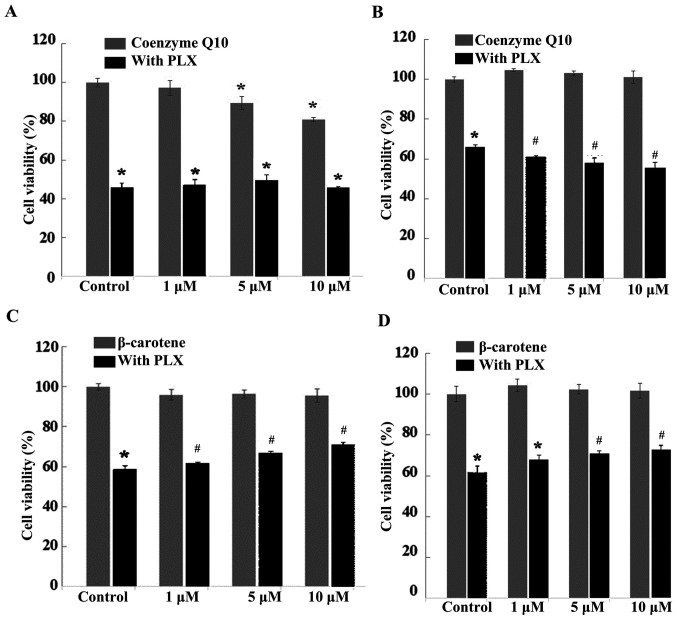
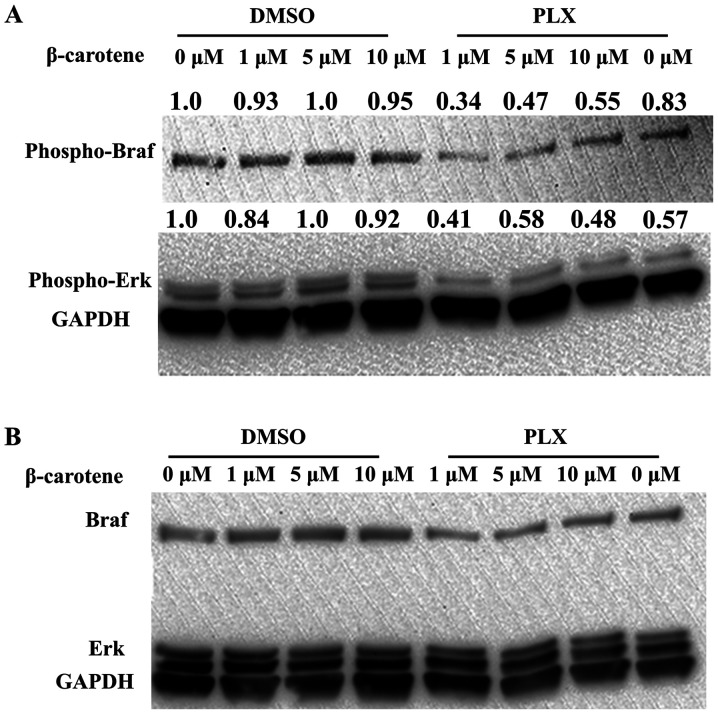
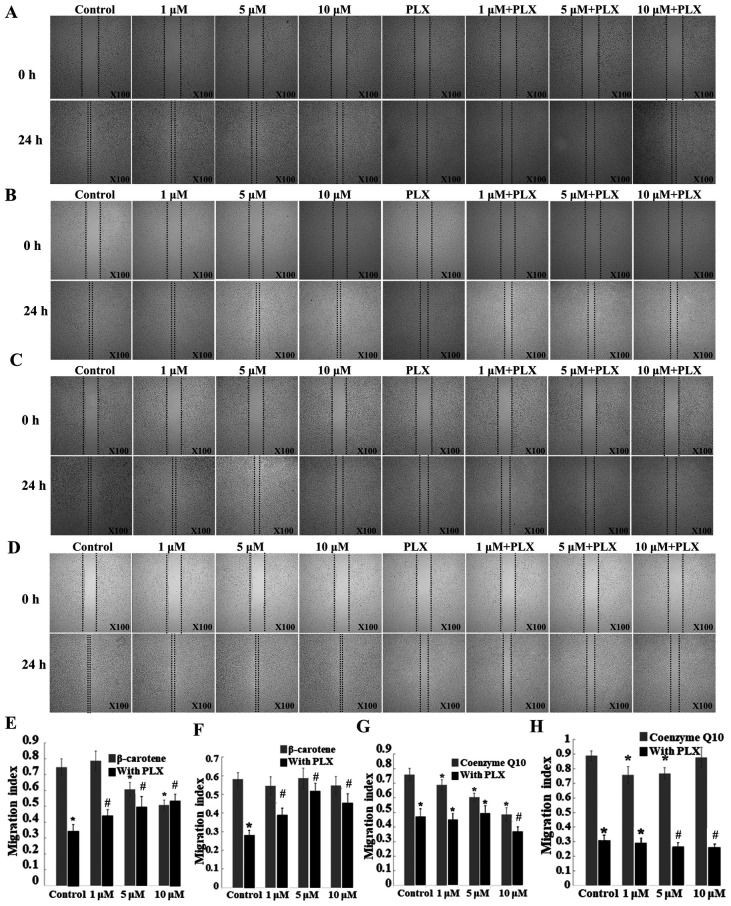
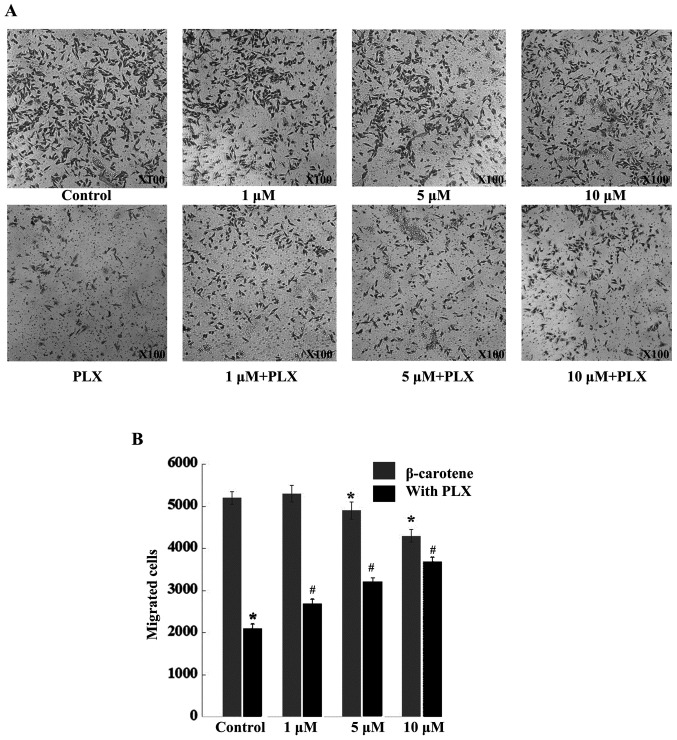
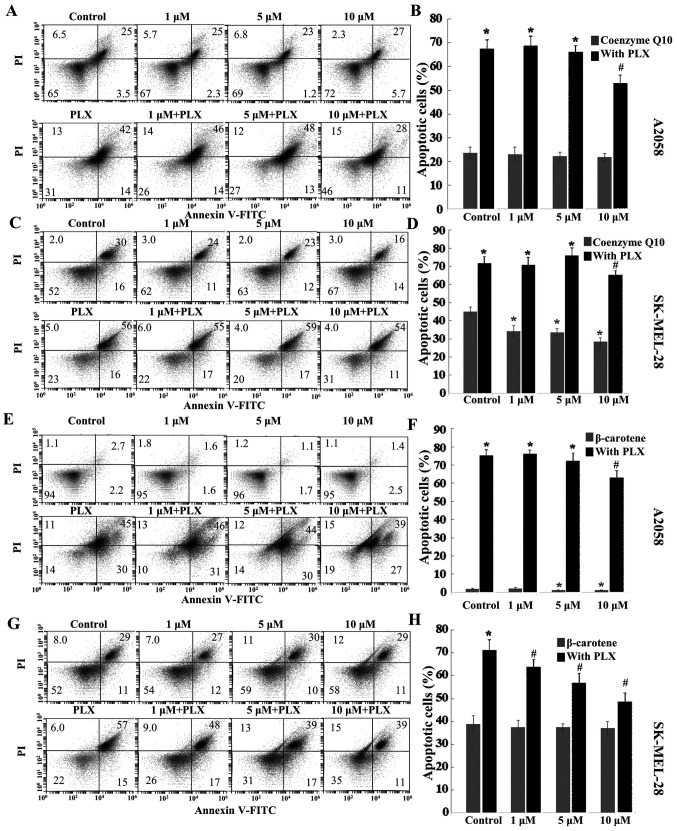
Melanoma is a type of highly invasive skin cancer derived from melanocytes with poor prognosis. Vemurafenib (PLX4032) is a clinically approved targeted therapeutic for BRAF mutant melanoma that has a high therapeutic response rate and significantly prolongs the overall survival time of patients with melanoma. Antioxidants have been widely used as supplements for cancer prevention and for decreasing the side effects of cancer therapy. However, antioxidants can also protect cancer cells from oxidative stress and promote cancer growth and progression. The present study aimed to examine the effect of the antioxidants coenzyme Q10 (CoQ10) and β-carotene on melanoma cell growth and invasiveness and on the cytotoxicity of vemurafenib against both vemurafenib-sensitive (SK-MEL-28) and vemurafenib-resistant (A2058) human malignant melanoma cell lines. MTS assay and wound-healing assay demonstrated that CoQ10 alone significantly reduced the viability and migration of melanoma cells, respectively, and synergistically worked with vemurafenib to decrease the viability and migration of human melanoma cells. In contrast, MTS assay and flow cytometry revealed that β-carotene alone did not affect the viability and apoptosis induction of melanoma cells; however, it inhibited cell migration and invasiveness. Wound-healing and Transwell assay demonstrated that β-carotene alleviated the cytotoxicity of vemurafenib and mitigated the inhibitory effect of vemurafenib on cell migration and invasion. Both CoQ10 and β-carotene protected melanoma cells from undergoing apoptosis induced by vemurafenib. Immunoblotting demonstrated that β-carotene at physiological concentration worked synergistically with vemurafenib to suppress the Ras-Raf-Mek-Erk intracellular signaling pathway. The present study aimed to add to the evidence of the effects of CoQ10 and β-carotene on the antimelanoma effects of vemurafenib.
黑色素瘤是一种源自黑素细胞的高侵袭性皮肤癌,预后较差。维莫非尼(PLX4032)是一种临床批准的针对BRAF突变黑色素瘤的靶向治疗药物,具有较高的治疗反应率,并能显著延长黑色素瘤患者的总生存时间。抗氧化剂已被广泛用作癌症预防的补充剂以及用于降低癌症治疗的副作用。然而,抗氧化剂也可以保护癌细胞免受氧化应激,并促进癌症的生长和进展。本研究旨在探讨抗氧化剂辅酶Q10(CoQ10)和β-胡萝卜素对黑色素瘤细胞生长、侵袭以及维莫非尼对维莫非尼敏感(SK-MEL-28)和维莫非尼耐药(A2058)人恶性黑色素瘤细胞系细胞毒性的影响。MTS法和伤口愈合试验表明,单独使用CoQ10分别显著降低了黑色素瘤细胞的活力和迁移能力,并与维莫非尼协同作用以降低人黑色素瘤细胞的活力和迁移能力。相比之下,MTS法和流式细胞术显示,单独使用β-胡萝卜素不影响黑色素瘤细胞的活力和凋亡诱导;然而,它抑制细胞迁移和侵袭。伤口愈合试验和Transwell试验表明,β-胡萝卜素减轻了维莫非尼的细胞毒性,并减轻了维莫非尼对细胞迁移和侵袭的抑制作用。CoQ10和β-胡萝卜素均保护黑色素瘤细胞免受维莫非尼诱导的凋亡。免疫印迹表明,生理浓度的β-胡萝卜素与维莫非尼协同作用以抑制Ras-Raf-Mek-Erk细胞内信号通路。本研究旨在补充CoQ10和β-胡萝卜素对维莫非尼抗黑色素瘤作用影响的证据。